Workers on scaffolding repaint the NASA logo near the top of the Vehicle Assembly Building at the Kennedy Space Center in Cape Canaveral, Fla., May 20, 2020. (AP Photo/John Raoux, File)
The space agency televised the hourslong hearing featuring an independent panel of experts. The team includes 16 scientists and other experts selected by NASA including retired astronaut Scott Kelly, the first American to spend nearly a year in space.
Several committee members have been subjected to “online abuse” for serving on the team, which detracts from the scientific process, said NASA's Dan Evans, adding that NASA security is dealing with it.
“It’s precisely this rigorous, evidence-based approach that allows one to separate the fact from fiction," Evans said.
The study is a first step in trying to explain mysterious sightings in the sky that NASA calls UAPs, or unidentified aerial phenomena.
The group is looking at what unclassified information is available on the subject and how much more is needed to understand what's going on in the sky, according to astrophysicist David Spergel, the committee's chair who runs the Simons Foundation.
No secret military data are included, such as anything surrounding the suspected spy balloons from China spotted flying over the U.S. earlier this year.
The meeting was held at at NASA headquarters in Washington with the public taking part remotely.
A final report is expected by the end of July.
The Associated Press Health and Science Department receives support from the Howard Hughes Medical Institute’s Science and Educational Media Group. The AP is solely responsible for all content.
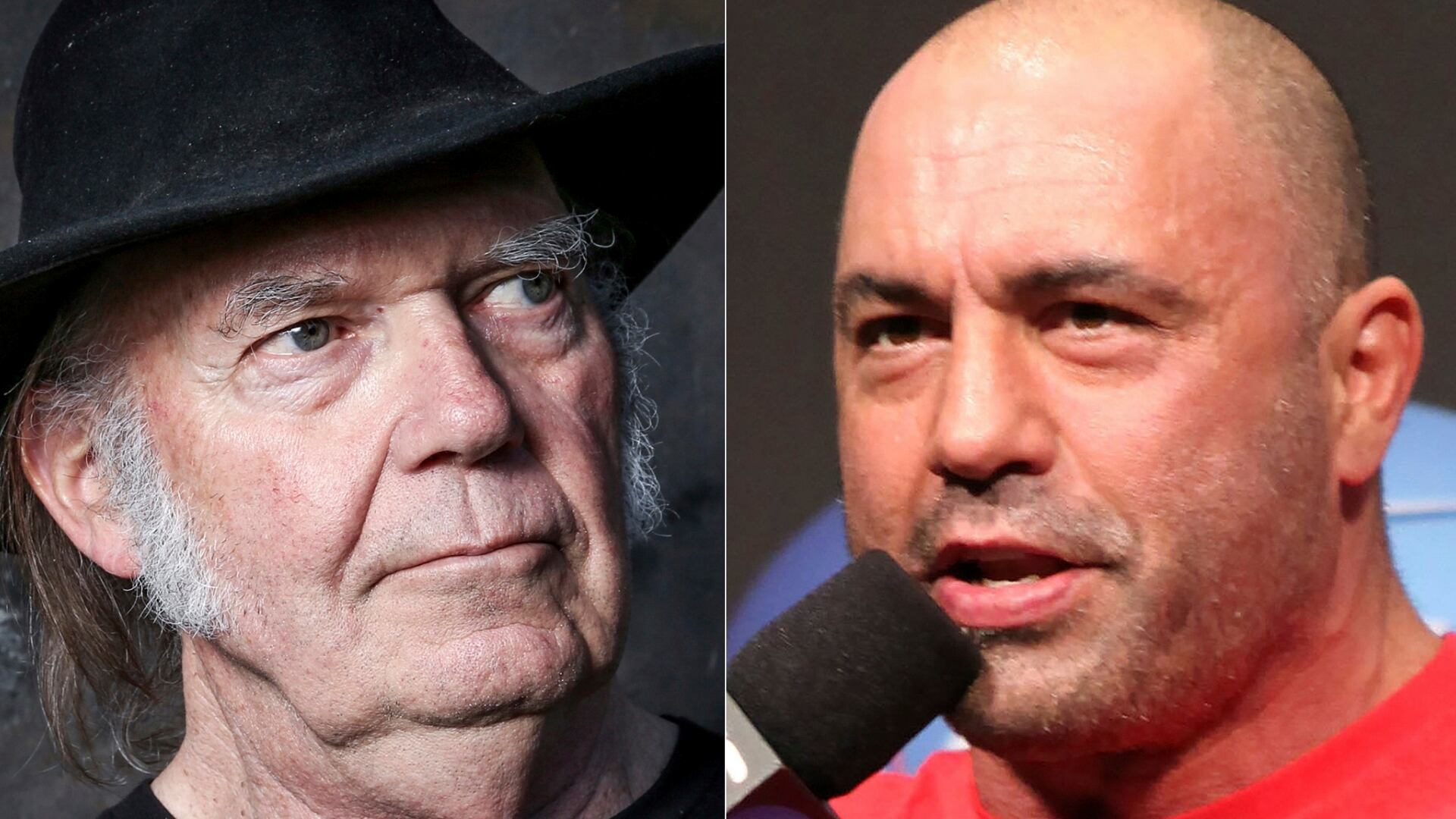
Neil Young has come up with an ultimatum for Spotify: his music or Joe Rogan’s podcast. This comes over concerns that the podcast is spreading COVID-19 vaccine misinformation to its listeners. "The Joe Rogan Experience," which is exclusive to Spotify, is currently the number one streamed podcast on the platform.
Commercial and residential buildings account for 13% of carbon emissions in the U.S., according to the EPA, and one company says it has a solution. Runwise says it has updated the boiler and heating systems of thousands of buildings, and that its technology not only lowers carbon output but also saves landlords money. Lee Hoffman, Co-Founder and COO of Runwise, joined Cheddar Climate to discuss.
Jo Ruxton, Founder of Ocean Generation, joins Cheddar Climate, where she explains the threat that plastic pollution poses to marine life, but elaborates on why we shouldn't be looking to ban plastic entirely. Ruxton also discusses her biggest takeaways while producing the film ‘A Plastic Ocean.'
President Joe Biden's Build Back Better deal seems all but finished after months of Democratic infighting and the Senate's deadlock over certain provisions. But Biden mentioned during a press conference marking his first year in office that 'chunks' of the bill could be passed. Is that enough motivation to force Democrats to rally around certain parts of the bill - especially those that focus on climate and green energy? Andrew Freedman, Energy and Climate Reporter at Axios, joins Cheddar Climate to discuss whether Senate Democrats will be able to rally around climate provisions, if the idea of passing Build Back Better in 'chunks' is doable, and more.
Anyone who remembers the 70s and 80s will probably remember acid rain. Industrial emissions acidified precipitation around the globe, which killed forests and crops, rendered lakes inhospitable, corroded buildings, and exacerbated human health problems.
But anyone who follows environmental news will be surprised to learn this: we solved it! Countries came together to limit acid rain-causing emissions, eliminating the problem altogether.
…kind of. Acidic precipitation may not be a thing of the past after all.
Natalie Ginsberg, Global Impact Officer, MAPS, joins Cheddar Reveals to discuss MAPS organization and its current initiatives and their work to get FDA approval for MDMA to treat PTSD.
Kelsey Ramsden, Co-Founder, President & CEO, Mind Cure Health, joins Cheddar Reveals to break down what 'psychedelic therapy' could look like once it's legalized and how Mind Cure Health is using AI to help treat everything from addiction to depression.
On this episode of Cheddar Reveals, Natalie Ginsberg, Global Impact Officer, MAPS, discusses the MAPS organization and its current initiatives and their work to get FDA approval for MDMA to treat PTSD; Kelsey Ramsden, Co-Founder, President & CEO, Mind Cure Health, breaks down what 'psychedelic therapy' could look like once it's legalized and how Mind Cure Health is using AI to help treat everything from addiction to depression; Cheddar gets a look at Curiosity Stream's 'Pain, Pus and Poison.'