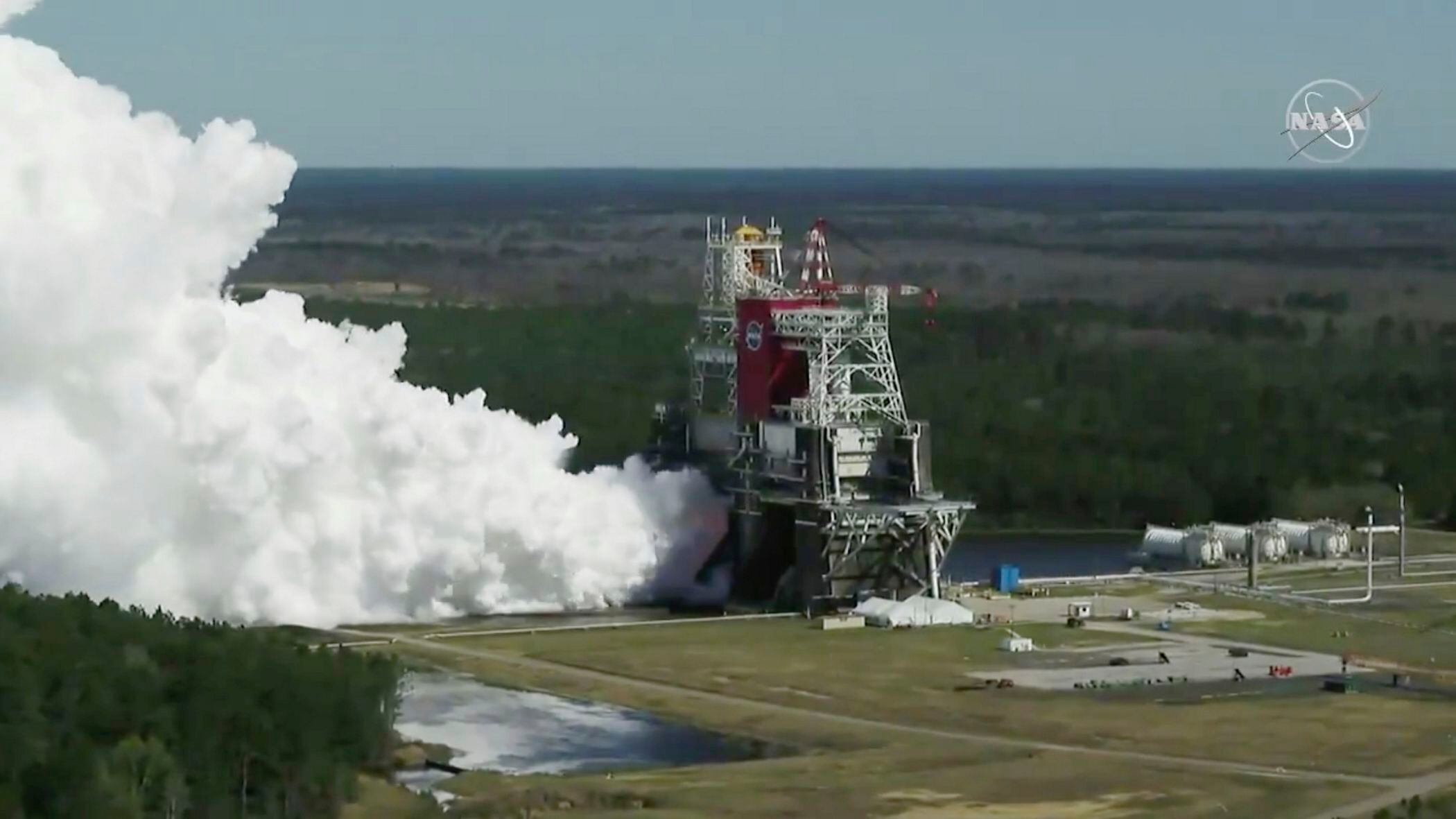
In this image from video made available by NASA, the core stage of the Space Launch System, NASA’s planned moon rocket, is tested at the Stennis Space Center near Bay St. Louis, Miss., on Thursday, Mar. 18, 2021. With this critical test finally finished, NASA now will send the rocket segment to Kennedy Space Center for launch preparations. (NASA via AP)
By Marcia Dunn
NASA completed an engine test firing of its moon rocket Thursday, after the first attempt in January ended prematurely.
This time, the four main engines of the rocket’s core stage remained ignited for the full eight minutes. Applause broke out in the control room at Mississippi's Stennis Space Flight Center once the engines shut down on the test stand.
NASA officials called it a major milestone in sending astronauts back to the moon, but declined to say when that might occur or even whether the first test flight without a crew would occur by year's end as planned.
John Honeycutt, NASA's program manager for the Space Launch System or SLS rocket, said everything seemed to go well in Thursday's test firing. “The core stage ... got an A-plus today,” he told reporters.
During the first test, the engines fired for just a minute, automatically cut short by strict test limits that were relaxed for the redo. Valve issues also had to be resolved prior to Thursday's countdown.
With this critical test finally finished — and assuming everything went well — NASA can now send the rocket segment to Florida's Kennedy Space Center to prepare it for launch.
Noting they're taking it one step at a time, officials declined to say whether this first SLS launch will occur by year's end as had been planned or will bump into 2022. The SLS rocket will send an empty Orion capsule to the moon and back.
The four engines tested Thursday actually flew into orbit on NASA's space shuttles and were upgraded for the more powerful SLS system. The orange core stage is reminiscent of the shuttle's external fuel tank, which held the liquid hydrogen and oxygen that fed the main engines.
Boeing built the core stage, which stands 212 feet (65 meters.)
The Trump administration had pressed for a moon landing by astronauts by 2024, a deadline increasingly difficult if not impossible to achieve at this point. The current White House has yet to issue a revised timeline.
NASA Acting Administrator Steve Jurczyk said the space agency is conducting an internal study to determine a schedule for the astronaut moon landings — “what we can optimally do” based on budgets. The review will take a few months, he noted.
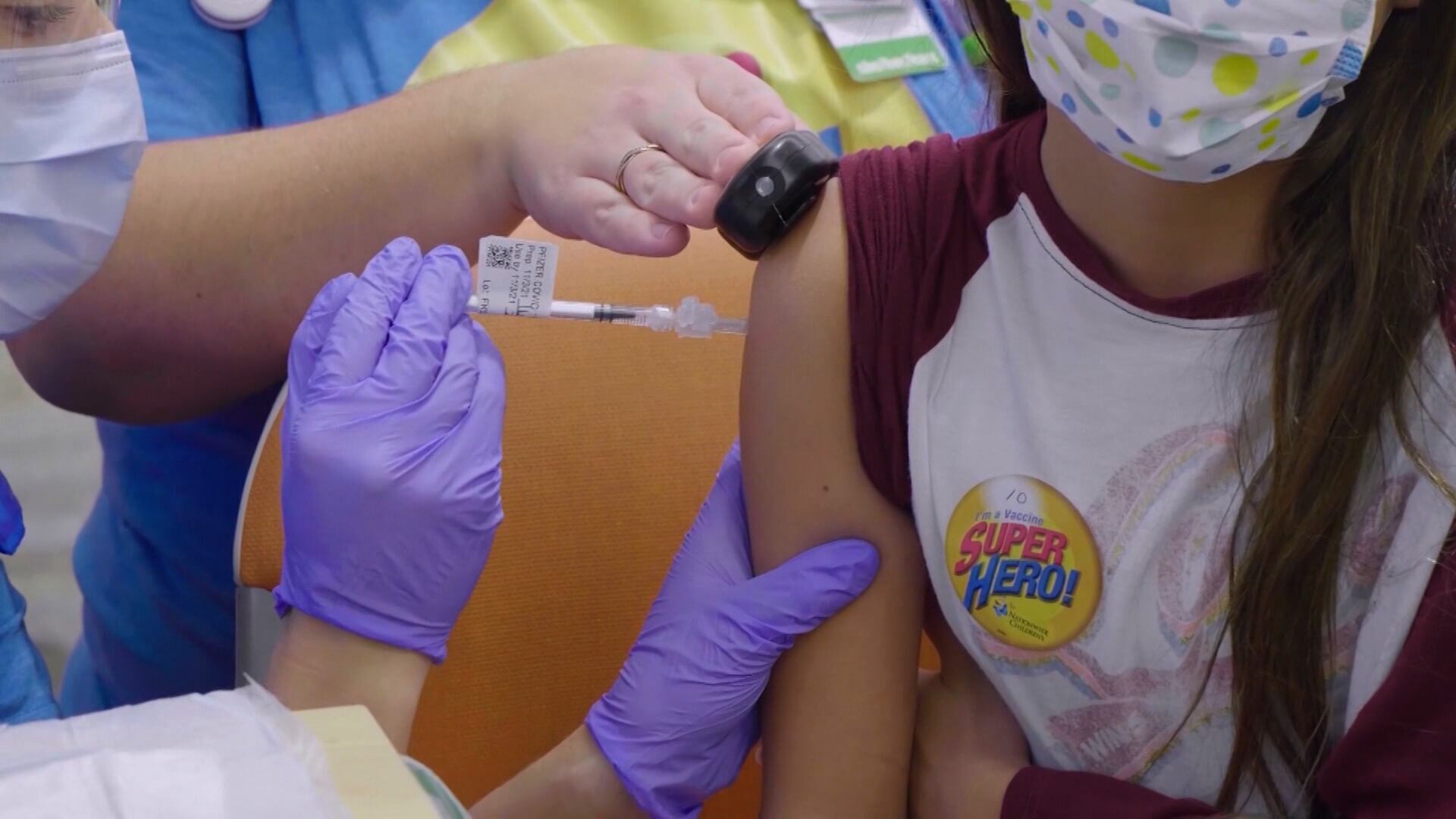
With a rising number of COVID-19 cases due to the omicron variant, the FDA is making big moves. First, Pfizer's COVID-19 booster has been authorized for those ages 12 to 15. The agency also reduced the amount of time to wait between receiving a second vaccine dose and booster from six months to five. Finally, a third primary series dose of Pfizer's shot is approved for immunocompromised children five to 11 years old. Professor Peter Pitts joins Cheddar News to discuss.
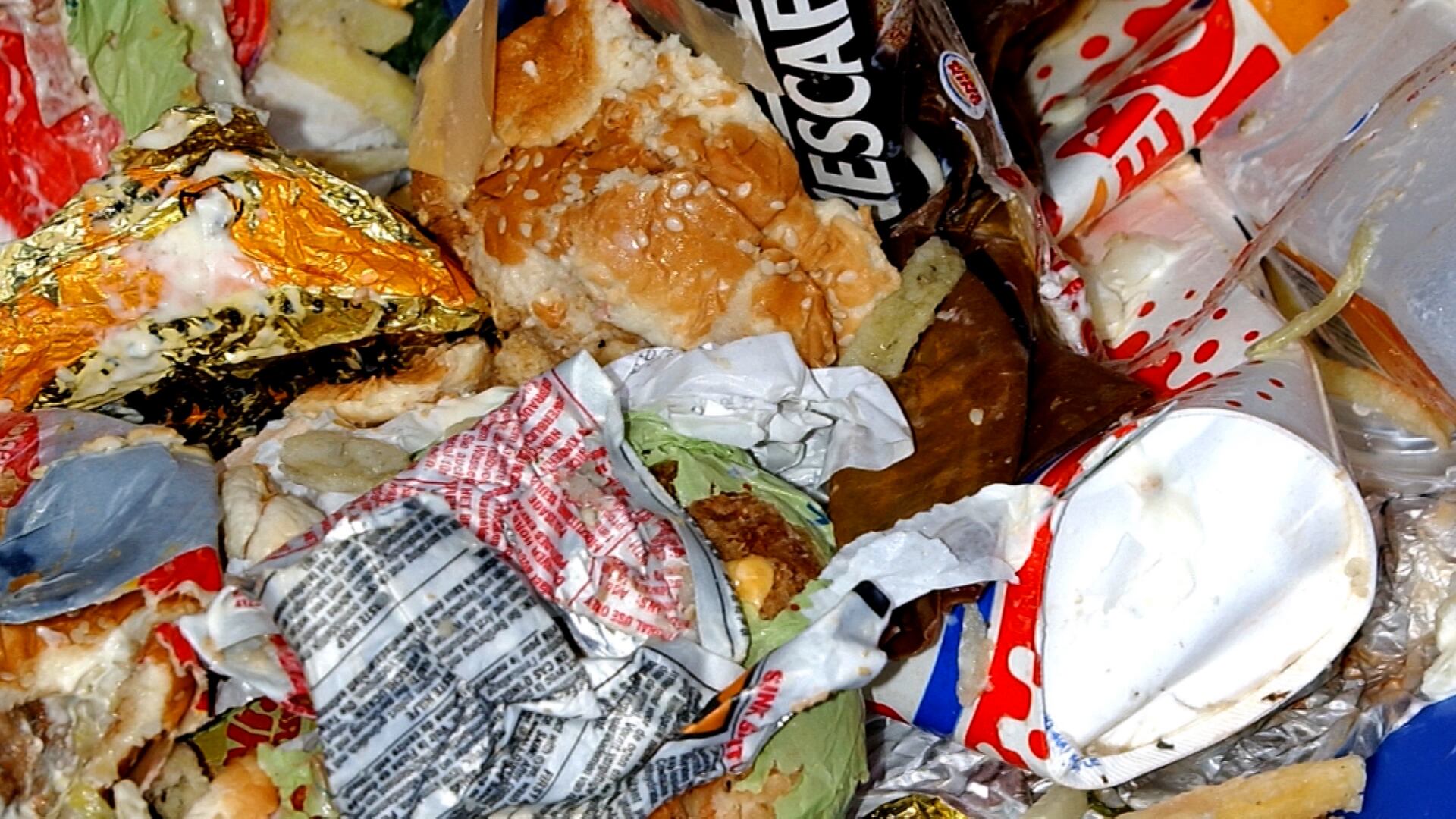
California's new composting law will affect what residents do in their kitchens. As of this week, Californians will have to recycle excess food in an effort to reduce emissions caused by food waste. Cities and counties will turn recycled food into compost or use it as a renewable energy source. California's new law is the largest mandatory residential food waste recycling program in the country. Rachel Wagoner, Director of the California Department of Resources, Recycling and Recovery called the law 'the biggest change to trash' since recycling started in the 1980s. She joined Cheddar Climate to discuss.
Deborah Brosnan, President of Deborah Brosnan & Associates, joins Cheddar Climate, where she explains why global warming brought about 'a year of reckoning' in 2021 and why previously unprecedented weather events could become the norm going forward.
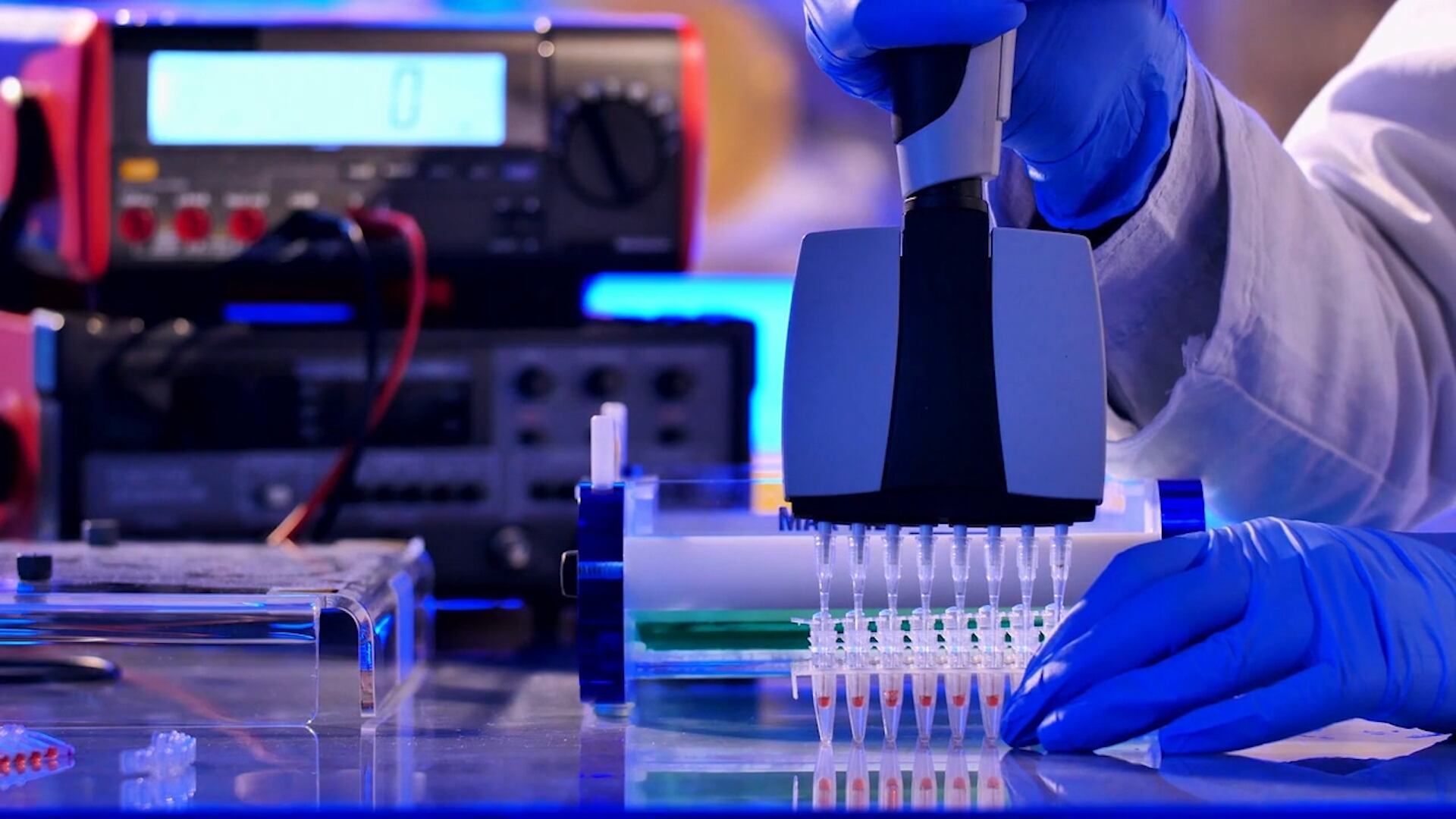
On this episode of Cheddar Reveals, Dr. Anita Gupta, Adjunct assistant professor of anesthesiology and critical care medicine at the Johns Hopkins University School of Medicine, shares her forecast for the healthcare industry in 2022; Waseem Asghar, Ph.D., Associate Professor, Department of Computer & Electrical Engineering and Computer Science, Florida Atlantic University, breaks down the latest progress, trends, and innovations in wearable health tech; Cheddar gets a look at Curiosity Stream's 'Hacking our Biome.'
Dr. Anita Gupta, Adjunct assistant professor of anesthesiology and critical care medicine at the Johns Hopkins University School of Medicine, joins Cheddar Reveals to share her forecast for the healthcare industry in 2022.
Waseem Asghar, Ph.D., Associate Professor, Department of Computer & Electrical Engineering and Computer Science, Florida Atlantic University, joins Cheddar Reveals to break down the latest progress, trends, and innovations in wearable health tech.
Washington DC and the surrounding areas saw a record breaking snow storm Monday as a strong storm system works its way across the eastern U.S. The extreme weather event caused extensive damage in the greater Washington area, leaving thousands in the region without power. Jonathan Porter, Chief Meteorologist, AccuWeather, joined Wake Up with Cheddar to discuss the fierce storm.
Sweta Chakraborty, U.S. President of We Don't Have Time and climate change expert, joins Cheddar News to discuss how mining the proper resources for the clean energy sector is crucial.
Over the past year alone, we've seen an increasing push-back on fossil fuels, legislation to reduce plastic pollution, greater protection over our worlds' forests, and a growing number of companies working to reduce total carbon footprint. To discuss the sustainability trends that defined 2021 and the changes individuals can make in 2022, J.D. Durkin is joined by Ashlee Piper, a sustainability expert and author of 'Give a Sh*t: Do Good. Live Better. Save the Planet,' joins Cheddar News.