By Lauran Neergaard
Moderna’s COVID-19 vaccine works in babies, toddlers and preschoolers, the company announced Wednesday -- and if regulators agree it could mean a chance to finally start vaccinating the littlest kids by summer.
Moderna said in the coming weeks it would ask regulators in the U.S. and Europe to authorize two small-dose shots for youngsters under 6. The company also is seeking to have larger doses cleared for older children and teens in the U.S.
Early results from the study found that tots developed high levels of virus-fighting antibodies from shots containing a quarter of the dose given to adults — although just like with all ages, the vaccine was less effective against the super-contagious omicron mutant.
“The vaccine provides the same level of protection against COVID in young kids as it does in adults. We think that's good news,” Dr. Stephen Hoge, Moderna's president, told The Associated Press.
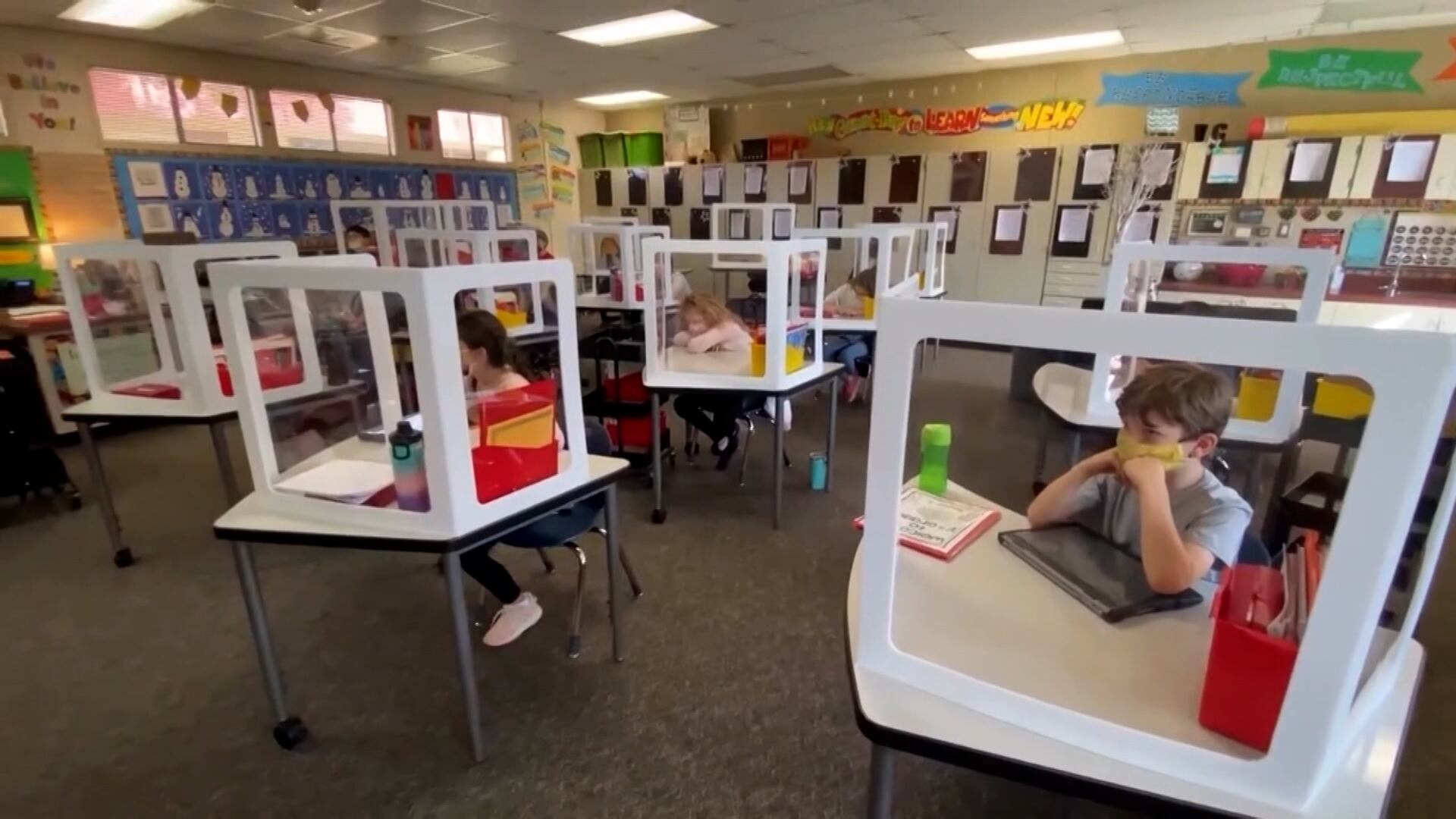
The nation’s 18 million children under 5 are the only age group not yet eligible for vaccination. Competitor Pfizer currently offers kid-sized doses for school-age children and full-strength shots for those 12 and older.
Outside experts caution that Moderna has revealed only limited data, and the Food and Drug Administration will have to determine if those high antibody levels translate into what's most important for vaccination — protection against severe illness — for tots like they do for adults.
"Not a home run" but the shots still could be helpful for the youngest children, said Dr. Jesse Goodman of Georgetown University, a former FDA vaccine chief.
Parents have anxiously awaited protection for younger tots, disappointed by setbacks and confusion over which shots might work and when. Pfizer is testing even smaller doses for children under 5 but had to add a third shot to its study when two didn't prove strong enough. Those results are expected by early April.
Vaccinating the littlest “has been somewhat of a moving target over the last couple of months,” Dr. Bill Muller of Northwestern University, who is helping study Moderna's pediatric doses, said in an interview before the company released its findings. “There’s still, I think, a lingering urgency to try to get that done as soon as possible.”
The younger the child, the smaller the dose being tested. Moderna enrolled about 6,900 kids under 6 — including babies as young as 6 months — in a study of the 25-microgram doses. They developed levels of antibodies just as strong as young adults who get full-strength shots, the company said.
COVID-19 vaccines in general don’t prevent infection with the omicron mutant as well as they fended off earlier variants -- although they do still offer strong protection against severe illness.
Moderna's study in tots was conducted during the omicron surge and found the same trend: While there were no severe illnesses, the vaccine proved about 44% effective at preventing milder infections in babies up to age 2, and nearly 38% effective in the preschoolers.
Still, the kids' high antibody levels “should translate into higher efficacy against severe infections,” Goodman said.
While the study wasn't large enough to detect very rare side effects, Moderna said the small doses were safe and that mild fevers, like those associated with other common pediatric vaccines, were the main reaction.
Booster doses have proved crucial for adults to fight omicron and Moderna currently is testing them doses for children, either a third shot of the original vaccine or an extra dose that combines protection against the original virus and the omicron variant.
The FDA will determine whether to authorize emergency use of little-kid shots once Moderna submits its full data. Then the Centers for Disease Control and Prevention would recommend who should get them — and Goodman said there may be debate about shots for higher-risk children or everyone.
While COVID-19 generally isn’t as dangerous to youngsters as to adults, some do become severely ill. The CDC says about 400 children younger than 5 have died from COVID-19 since the pandemic’s start. The omicron variant hit children especially hard, with those under 5 hospitalized at higher rates than at the peak of the previous delta surge.
Parents may find it confusing that Moderna is seeking to vaccinate the youngest children before it's cleared to vaccinate teens. While other countries already have allowed Moderna’s shots to be used in children as young as 6, the U.S. has limited its vaccine to adults. A Moderna request to expand its shots to 12- to 17-year-olds has been stalled for months.
The company said Wednesday that, armed with additional evidence, it is updating its FDA application for teen shots and requesting a green light for 6- to 11-year-olds, too.
Hoge said he’s optimistic the company will be able to offer its vaccine “across all age groups in the United States by the summer.”
Moderna says its original adult dose -- two 100-microgram shots -- is safe and effective in 12- to 17-year-olds. For elementary-age kids, it’s using half the adult dose.
But the FDA never ruled on Moderna’s application for teen shots because of concern about a very rare side effect. Heart inflammation sometimes occurs in teens and young adults, mostly males, after receiving either the Pfizer or Moderna vaccines. Moderna is getting extra scrutiny because its shots are a far higher dose than Pfizer's.
About 1.5 million adolescents have used the Moderna vaccine in other countries, “and so far we've seen very reassuring safety from that experience," Hoge said.
The heart risk also seems linked to puberty, and regulators in Canada, Europe and elsewhere recently expanded Moderna vaccinations to kids as young as 6.
“That concern has not been seen in the younger children,” said Northwestern’s Muller.
___
The Associated Press Health and Science Department receives support from the Howard Hughes Medical Institute’s Department of Science Education. The AP is solely responsible for all content.