Microsoft "permanently disabled" Internet Explorer on Valentine's Day, shutting down a web browser that for a long time has stood in the shadow of newer, better web browsers.
Microsoft Edge has co-existed with Internet Explorer for years, but now it will be the default browser on all Windows devices.
“Not only is Microsoft Edge a faster, more secure and more modern browsing experience than Internet Explorer, but it is also able to address a key concern: compatibility for older, legacy websites and applications,” Sean Lyndersay, general manager of Microsoft Edge Enterprise, wrote in a 2021 blog post announcing Internet Explorer's eventual demise.
The browser launched in 1995 and for a long time was the most popular entry point to the web. Then federal regulators in 1997 sued Microsoft for requiring computer makers to use Internet Explorer as part of Windows.
The legal pressure eventually forced Microsoft to open up Windows to other browsers, which soon gained market share.
Google's Chrome now makes up 65 percent of the browser market, and Apple's Safari makes up 19 percent, according to analytics company Statcounter. As for Microsoft Edge, it currently stands at around 4 percent.
Internet Explorer's final version came out in 2013.
While more nostalgic web denizens lamented the brower's passing, others commented that it had become "bug-ridden and insecure," and noted that it was primarily used for downloading other browsers.
High-speed connectivity solutions provider Credo went public on the Nasdaq on Thursday, raising $200 million in its IPO. CEO Bill Brennan, joined Cheddar to discuss its entry into the capital markets and the next chapter for the company. "We're going to be focused on what we have been focused on, which is really creating, creating innovative connectivity solutions that really pushed the edge on efficient power as well as very effective cost," he said.
BD Veritor is a variation of the at-home COVID test that uses a smartphone to interpret the results. The test is taken via a nose swab test strip that is then scanned by your phone’s camera with the result clearly displayed as positive or negative. James Walker, vice president of integrated diagnostics USA for BD, joined Cheddar to discuss how the test hopefully takes the "guesswork out of testing." Walker also went into what BD is doing to deal with the surging demand for at-home tests amid the omicron spread. "While we don't disclose how much we produce, we have capacity to manufacture up to 12 million rapid antigen tests per month and are delivering on our commitments to distributors and retailers," he said.
Low-code app development platform Crowdbotics raised $22 million in a Series A funding round led by Jackson Square Ventures. Crowdbotics has helped more than 14,000 customers launch apps without having to learn how to code. The company can offer a team of expert developers to help companies launch custom apps, or provide the means for companies to develop apps themselves. Crowdbotics CEO Anand Kulkarni joined Cheddar News' Closing Bell to discuss.
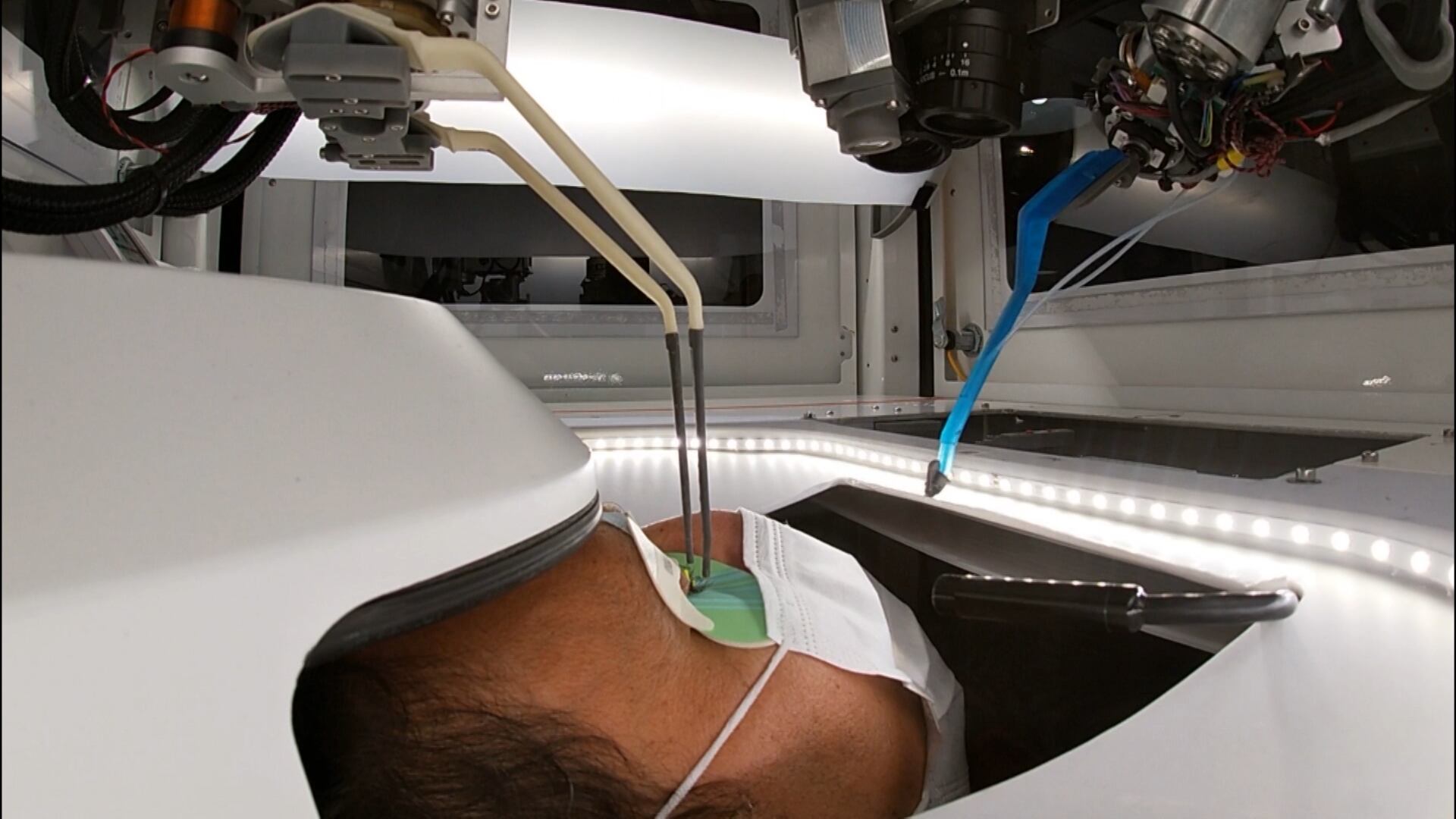
Nathan Harding, CEO of Luum, joins Cheddar Innovates to discuss the process of having a robot put on eyelash extensions, and how automation is making its way into the beauty industry
Kevin Yu, Founder and CEO of Sidechef, joins Cheddar Innovates to discuss how it's building a platform to make recipe shopping easy, and how its features help you discover new recipes with the same ingredients to fight the massive problem of food waste.
On this episode of Cheddar Innovates: Sidechef CEO breaks down how it's building a platform to make recipe shopping easy; Luum CEO explains the process of having a robot put on eyelash extensions; A look at Curiosity Stream's new original series, 'Evolve.'