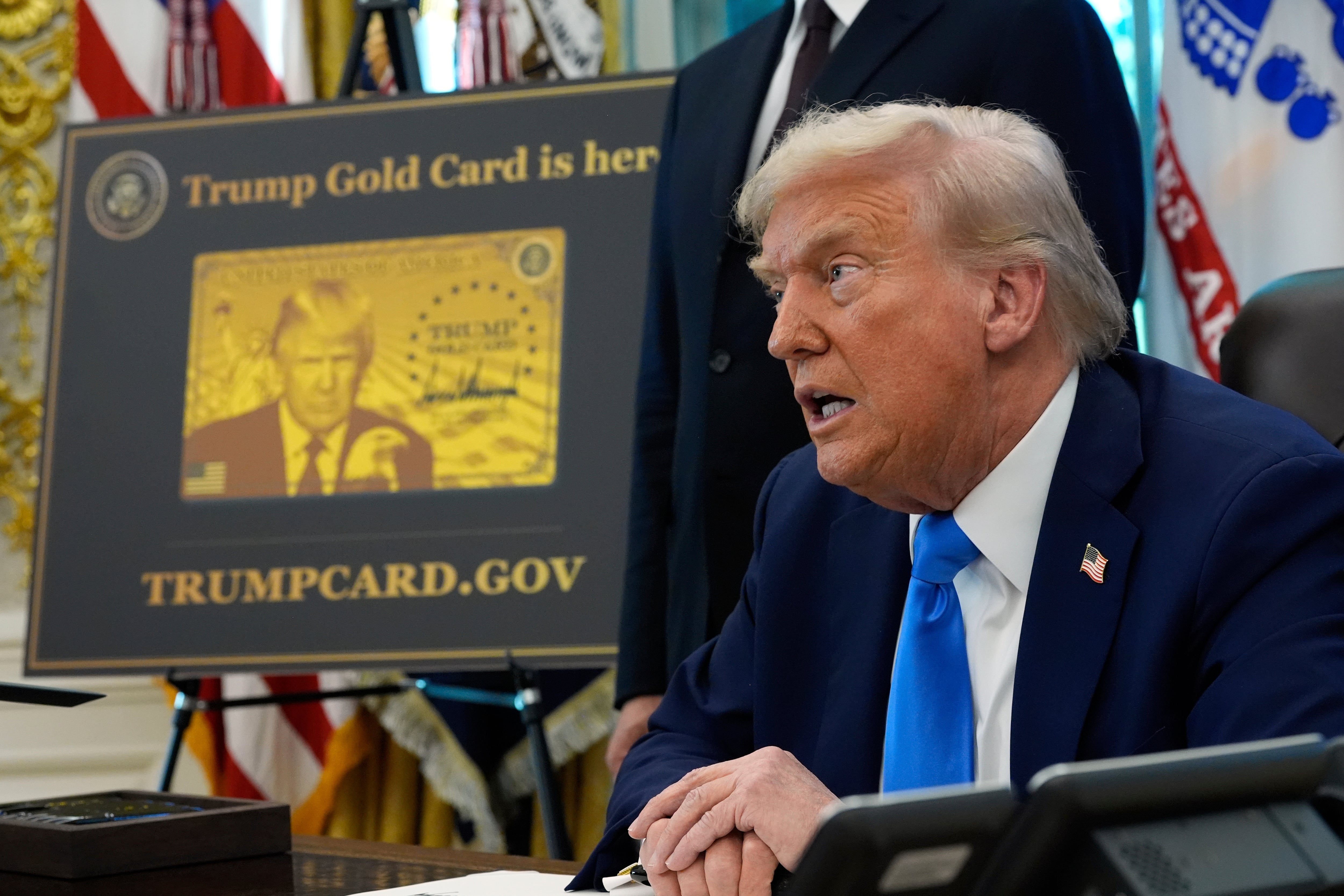
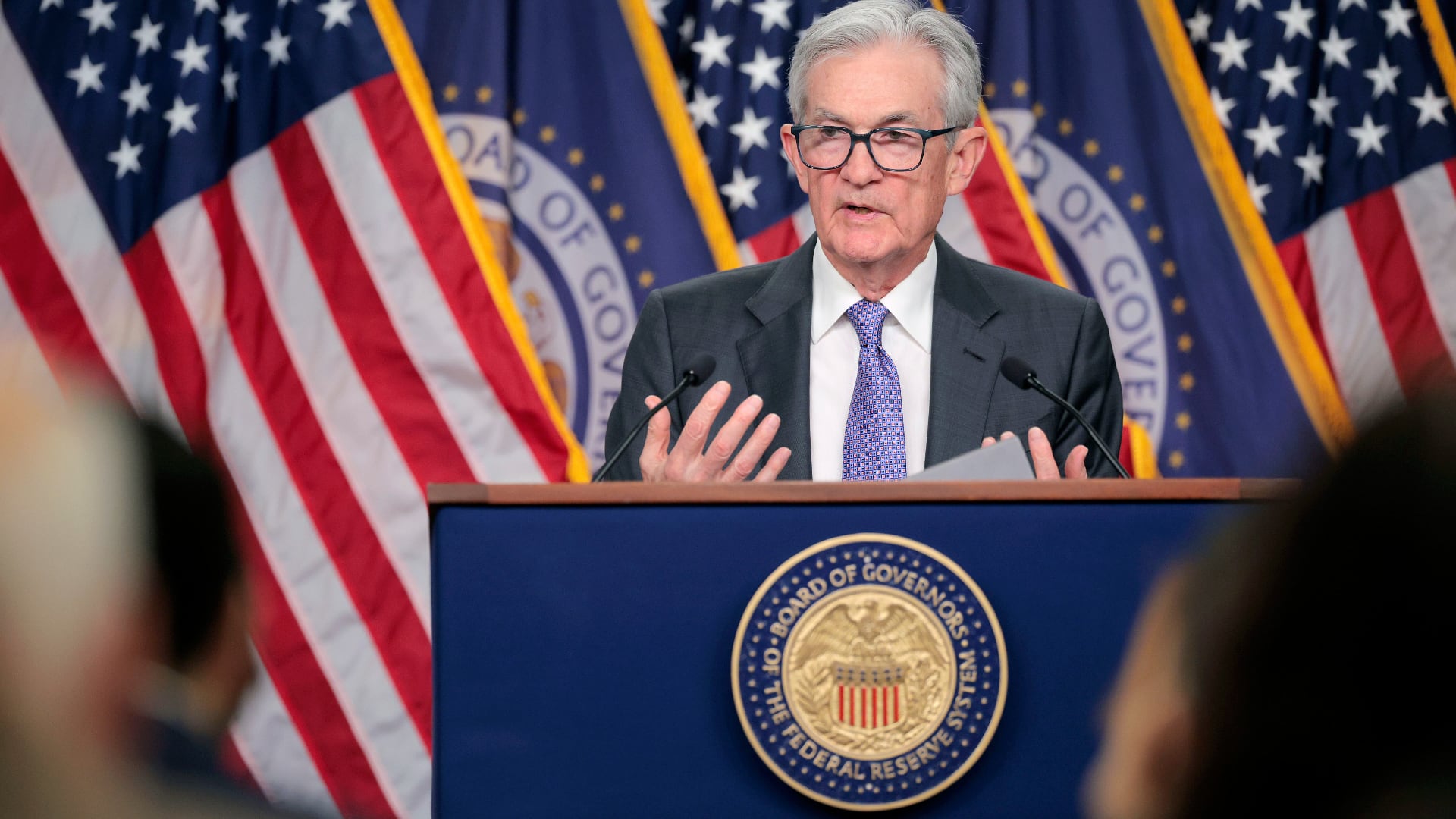
*By Chloe Aiello* Stocks surged following Federal Reserve chair Jerome Powell's comments at the Economic Club of New York during which he addressed risk factors to the health of the economy, softened his tone on monetary policy, and offered a fairly reassuring check-up on the economy on the heels of sharp disapproval from President Trump. The speech, widely considered the most important of the year and of Powell's career, follows months of blistering criticism of Powell and his monetary policy. "Interest rates are still low by historical standards, and they remain just below the broad range of estimates of the level that would be neutral for the economy ー that is, neither speeding up nor slowing down growth," Powell said during his speech. "My \[Federal Open Market Committee\] colleagues and I, as well as many private-sector economists, are forecasting continued solid growth, low unemployment, and inflation remaining near 2 percent." Many economists and investors latched on to Powell's assessment that interest rates remain just below "neutral," suggesting a departure from comments [the chair made in October](https://www.marketwatch.com/story/bond-markets-may-have-overreacted-to-powells-long-way-from-neutral-remark-economists-say-2018-10-04) that the economy is "a long way from neutral at this point, probably.” Those comments sparked selling on fears the Fed would continue to hike rates at a rapid clip, not yet priced into the market. This softer language indicates the Fed will likely raise rates in December. Powell said there is "no preset policy path" for future rate hikes, but that the Fed will have to rely on financial and economic data for clarity. The Federal Reserve is responsible for establishing interest rates, or the cost of borrowing money. The higher the interest rate, the greater the cost to pay off credit. Higher rates can put downward pressure on the economy, but often combat inflation. President Trump has been a vocal critic of the Fed's rate hikes ー and of Powell personally. James Bianco, president and strategist at Bianco Research, said Powell's change in tune has less to do with the president and more with the state of the stock markets, which endured a rough October and have continued their decline this month. "It looks like, at the end of the day, that financial stability or the stock market has a role in setting Fed policy. If it sells off enough, the Fed will blink," Bianco told Cheddar Wednesday. "Notice I said the stock markets. I'm not going to say it's so much Trump ー that Trump has been sending mean tweets about Chairman Powell. I think he looks past that, but I don't think he looks past the potential effects of a further decline in the stock market," he added. In an interview with [The Washington Post on Tuesday](https://www.washingtonpost.com/politics/trump-slams-fed-chair-questions-climate-change-and-threatens-to-cancel-putin-meeting-in-wide-ranging-interview-with-the-post/2018/11/27/4362fae8-f26c-11e8-aeea-b85fd44449f5_story.html?utm_term=.a9f5d3ecea0d), Trump slammed Powell for raising interest rates and lamented his decision to appoint him to the role of Fed chairman. "I’m not happy with the Fed. So far, I’m not even a little bit happy with my selection of Jay \[Powell for Federal Reserve Board chair\]. Not even a little bit," [Trump told the Washington Post.](https://www.washingtonpost.com/politics/2018/11/27/president-trumps-full-washington-post-interview-transcript-annotated/?utm_term=.cdf875c5626b) "And I’m not blaming anybody, but I’m just telling you I think that the Fed is way off base with what they’re doing, number one." Following the interview, Trump sent out a flurry of tweets criticizing General Motors' ($GM) CEO Mary Barra for her decision to shutter plants and cut jobs across North America. As of Wednesday afternoon, Trump was silent concerning Powell's comments at the Economic Club, later firing off some additional tweets about GM and tariffs. Reporting from the club in New York just as Powell's speech was wrapping up, Cheddar's Kristen Scholer said Powell avoided the subject of Trump altogether and fielded no questions about the President's ongoing criticism. Powell's speech addressed the central bank's first ever [financial stability report](https://www.federalreserve.gov/publications/files/financial-stability-report-201811.pdf), which was released Wednesday morning. The report detailed four major risks factors to the stability of the economy: excessive leverage in the financial sector; funding risk, which refers to financial entities relying on sources of funding that can be rapidly withdrawn; excessive leverage in businesses and households; and overvaluation, known in extreme cases as a bubble. Powell seemed to think financial leverage and funding were fine, but acknowledged subtler risks from rising corporate debt load, especially since businesses with high leverage and interest burdens have increased their debt loads most of all. Businesses with weak balance sheets could prove problematic in the event of an economic downturn, as they would be less likely to weather selling and could exacerbate a dip in the market, Powell explained. "For now, my view is that such losses are unlikely to pose a threat to the safety and soundness of the institutions at the core of the system and, instead, are likely to fall on investors ... Of course, we will continue to monitor developments in this sector carefully," Powell said. For his part, Bianco also said anxiety aside, old sources of risk ー like the banking system, the credit markets, the mortgage markets, or too much leverage ー won't cause the next financial crisis. "I think we are so enamored on those issues after 2008 ... it would be very hard for them to surprise us into a crisis one more time. We would have to look where we aren't looking," he said. Powell also identified several potential triggers to financial distress, including global trade conflicts, Brexit negotiations, Italy's budget plan, and "cyber-related disruptions." "My own assessment is that, while risks are above normal in some areas and below normal in others, overall financial stability vulnerabilities are at a moderate level," Powell said.