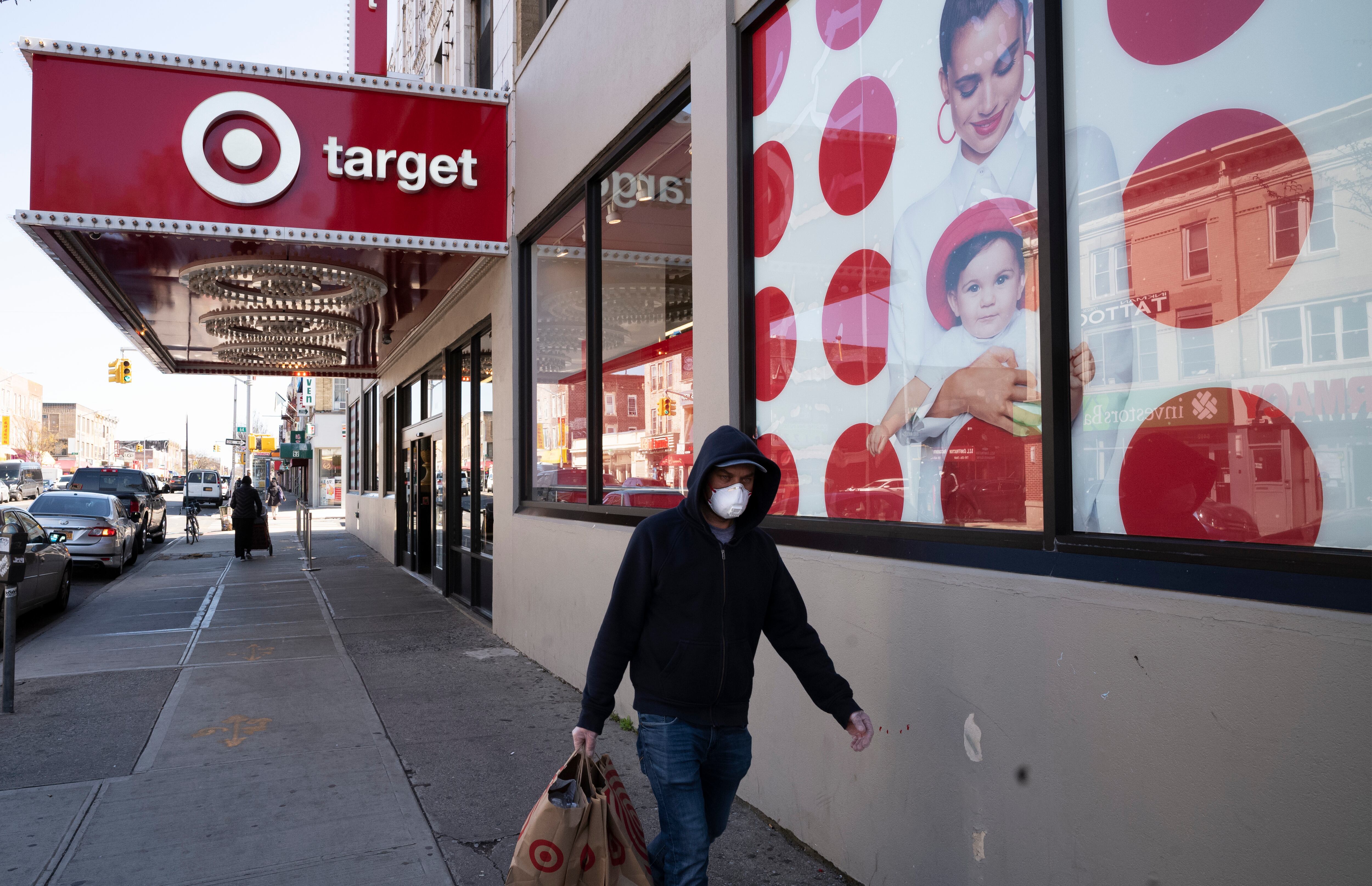
In this April 6, 2020 file photo, a customer wearing a mask carries his purchases as he leaves a Target store during the coronavirus pandemic in the Brooklyn borough of New York. Target has joined a growing list of major retailers that will require customers at all their stores to wear face coverings. The Minneapolis, Minnesota-based discounter said Thursday, July 16, that the policy will go into effect Aug. 1.(AP Photo/Mark Lennihan, File)
By Anne D'Innocenzio
Two major retailers on Thursday joined the growing list of national chains that will require customers to wear face masks regardless of where cities or states stand on the issue.
Target's mandatory face mask policy will go into effect Aug. 1, and all CVS stores will begin requiring them on Monday.
More than 80 percent of Target's 1,800 stores already require customers to wear masks due to local and state regulations. Target will hand out masks at entrances to those who need them.
The announcements come one day after the nation's largest retailer, Walmart, said that it would mandate face shields for all customers starting Monday.
Starbucks, Best Buy, Kohl's, and Kroger Co. have also announced mandatory masks nationwide.
Retailers have hesitated to make masks mandatory nationwide out of fear of angering some customers over what, even in a pandemic, has become a political issue.
They have been reluctant to put employees in the position of becoming enforcers. Confrontations with customers and store employees have played out in multiple incidents caught on video.
It was difficult to enforce such rules even in states that mandate face masks. However, the recent surge of new virus cases — particularly in Florida, California, Texas, and Arizona — has left them with no choice, retail experts say.
"To be clear, we're not asking our store employees to play the role of enforcer, " said Jon Roberts, the chief operating officer at CVS. "What we are asking is that customers help protect themselves and those around them by listening to the experts and heeding the call to wear a face covering."
Seth Schachner, Managing Director at StratAmericas, weighs in on Spotify earnings and why that headline-grabbing deal with Joe Rogan could be worth that $250 million.
Mitch Roschelle, Managing Director at Madison Ventures, shares why investors may be waiting longer than expected for those interest rate cuts, and why he’s watching tech, oil, and homebuilder stocks.
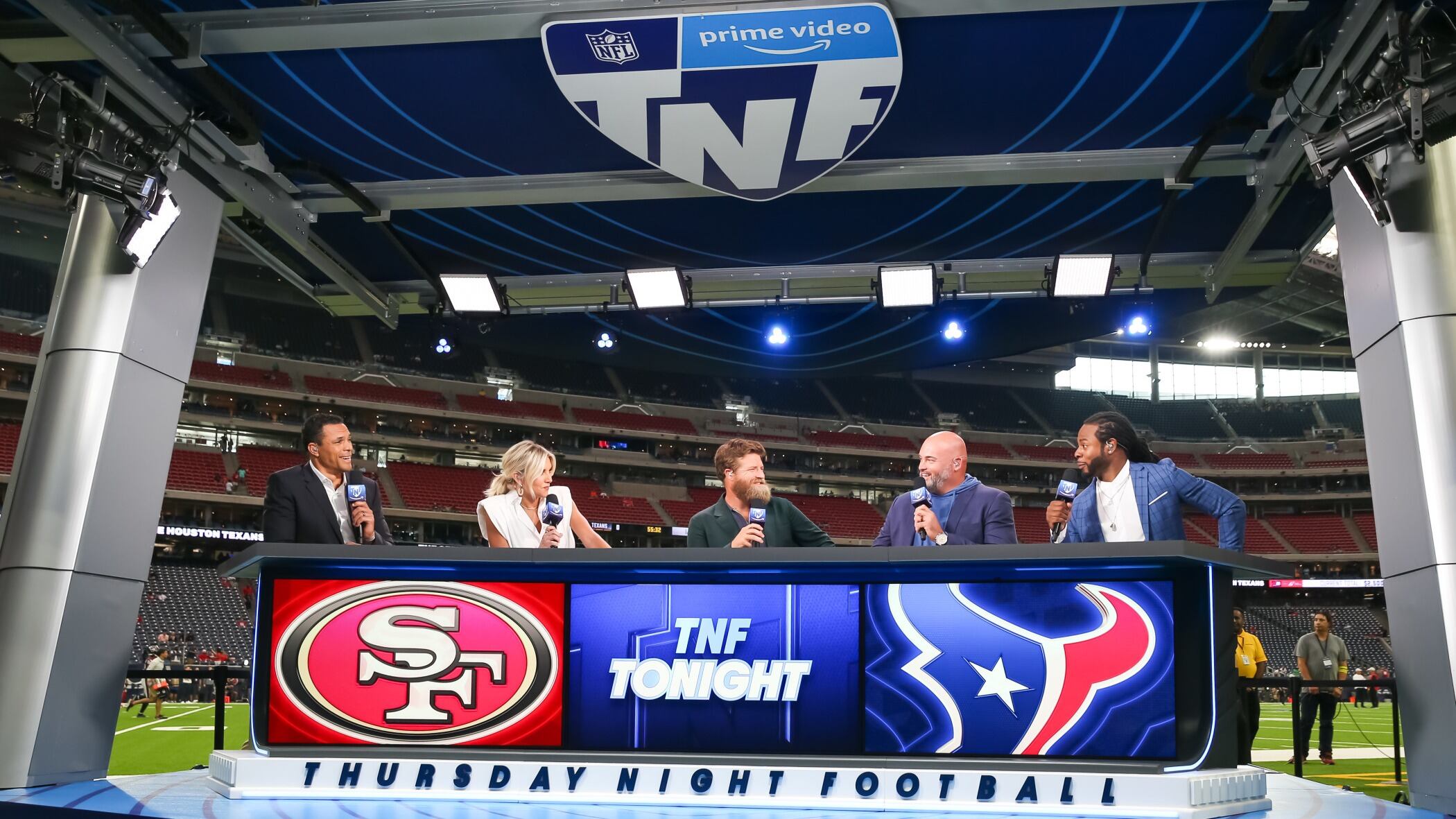
Amazon saw 24% growth in their Thursday Night Football audience in 2023. Subscribers will be rewarded with even more sports, but not without enduring more ads — unless they pay extra, of course.
Low unemployment + 350 thousand new jobs in January = ...more layoffs? A bunch of tech and retail companies have laid and are laying off employees after a nationwide hiring surge during the pandemic.
The most magical place on Earth wants a protective order to keep Gov. Ron DeSantis' appointees from knowing how the magic happens. A federal judge dismissed a separate Disney lawsuit last week.
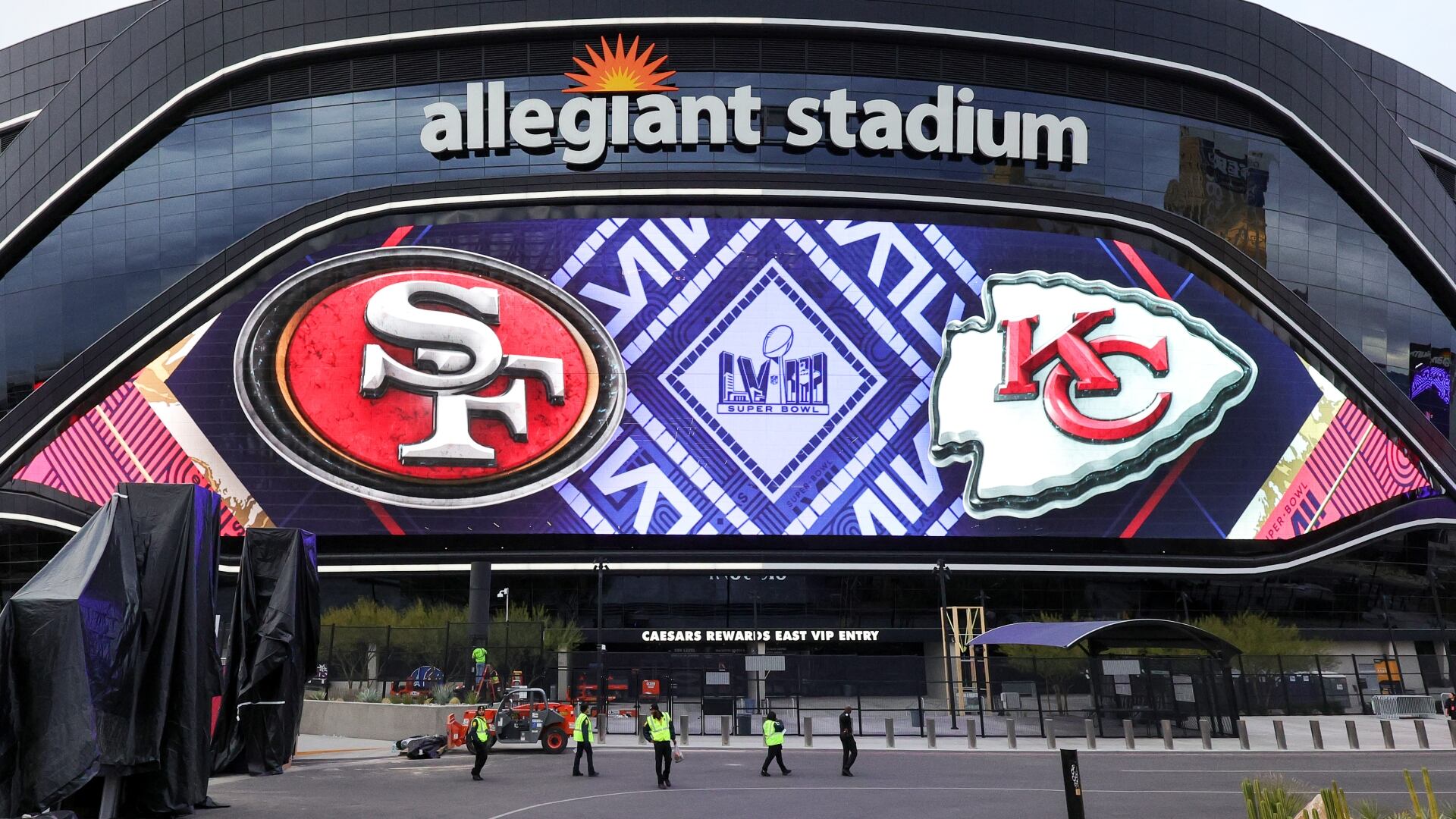
Just days before the 49ers and Chiefs play in Las Vegas, Joe Pompliano, Investor at Pomp Investments and author of the Huddle Up Newsletter, discusses why he thinks this could be the most-watched Super Bowl in history.
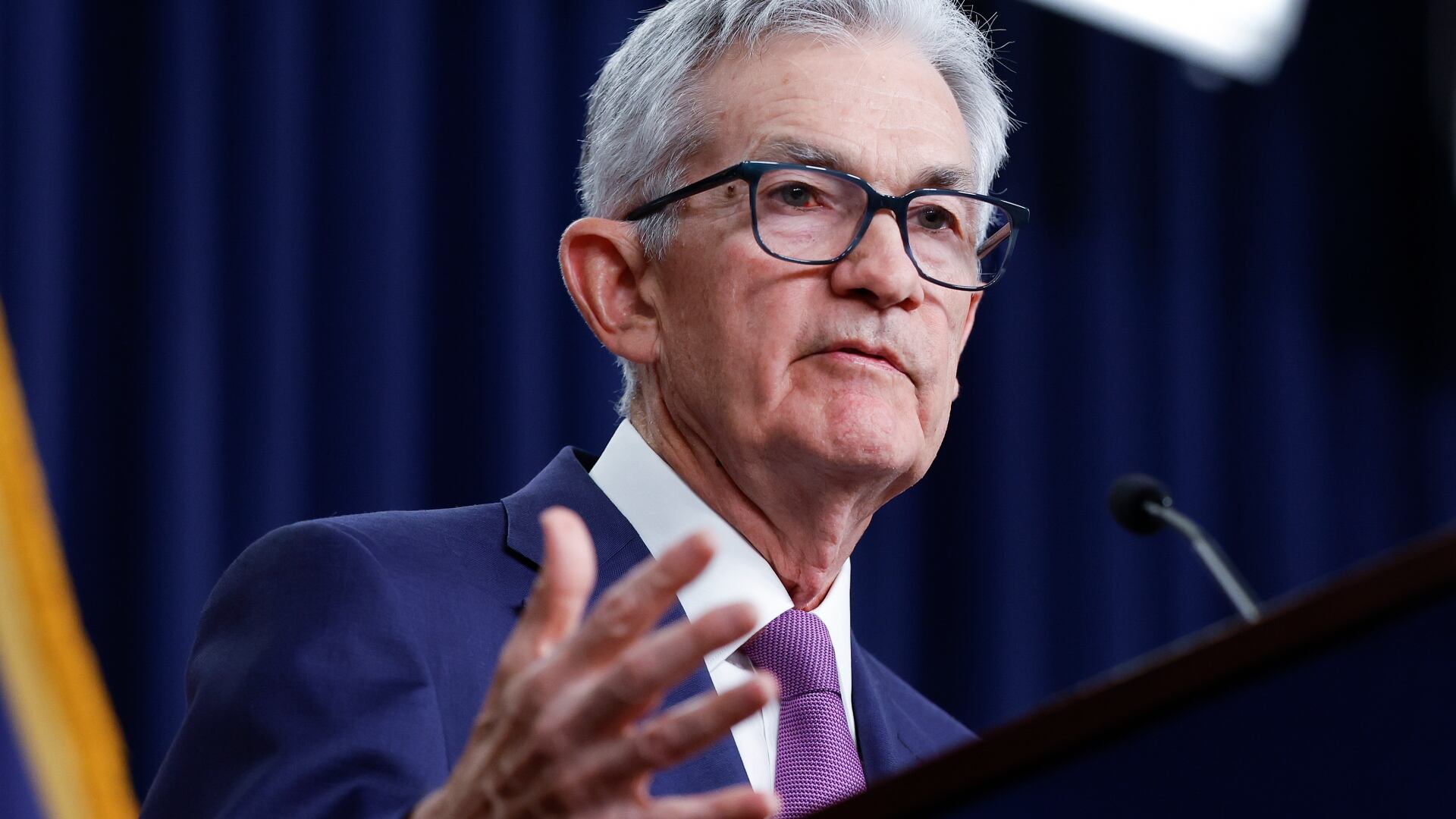
Chris Versace of Tematica Research LLC shares his thoughts on Jerome Powell's latest comments, the timing of those crucial rate cuts, and what semiconductor stocks he's watching closely.
We battle an onslaught of advertising every time we scroll through social media. Deinfluencers propose a less pricey, more honest approach to how we shop online. Could they convince us to spend less?