U.S. employers posted fewer jobs in June, a sign that the red-hot demand for workers that has been a key feature of the post-pandemic economy is cooling a bit.
Job openings dropped to 9.6 million in June, the Labor Department said Tuesday, down slightly from the previous month but much lower than the 10.3 million in April and the fewest in more than two years. The government’s report also showed that the number of people who quit their jobs in June fell sharply to 3.8 million, from 4.1 million, another sign the job market is slowing.
The Federal Reserve is seeking to cool hiring because if companies are less desperate to add workers, and fewer people are quitting to seek higher-paying positions elsewhere, then businesses will be under less pressure to raise pay to find and keep workers. Smaller pay hikes could help lower inflation, since businesses won't have to lift their prices to offset higher labor costs.
Tuesday's report means there are 1.6 jobs for every unemployed worker, down from a peak of 1.9 earlier this year. But that is still much higher than before the pandemic. Since the economy first emerged from the pandemic, job openings have soared — reaching a record 12 million in March 2022. Before the pandemic, they had never topped 7.6 million.
Overall, Tuesday's report, known as the Job Openings and Labor Turnover Survey, or JOLTs, still paints a picture of a healthy economy, with employers seeking to hire more people. The number of workers quitting is still slightly above pre-pandemic levels, suggesting that many Americans continue to find better-paying opportunities at new jobs.
At the same time, the data suggests that the labor market is slowly normalizing from the post-pandemic extremes.
“There are fewer signs that there is true desperation among employers,” said Nick Bunker, research director at Indeed Hiring Lab, a online jobs site. “Wage growth is coming down.”
Fewer employers are offering signing bonuses in their job postings, Bunker said, though such bonuses ares still much more likely than before COVID struck.
On Friday, the government is set to release the July jobs report, which will show how many positions were added in July and whether the unemployment rate fell below its current level of 3.6%, which is near the lowest in a half-century. Economists forecast the report will show a gain of 200,000 jobs, with the unemployment rate unchanged, according to a survey by data provider FactSet.
Average paychecks rose by 4.6% in the April-June quarter compared to a year earlier, above the pre-pandemic pace of about 3%. While that’s great for workers, the Fed worries that unless companies become more productive, such increases are too high to get inflation to its 2% target.
The Fed last week lifted its key short-term rate for the 11th time in 17 months as part of its ongoing efforts to curb inflation, which is currently at 3%. Excluding the volatile food and energy categories, however, according to the Fed’s preferred measure, it rose 4.1% compared with a year ago.
Most economists would have expected such a sharp increase in interest rates to force widespread layoffs and higher unemployment. Instead, the unemployment rate has barely changed since the Fed began pushing up borrowing costs last year.
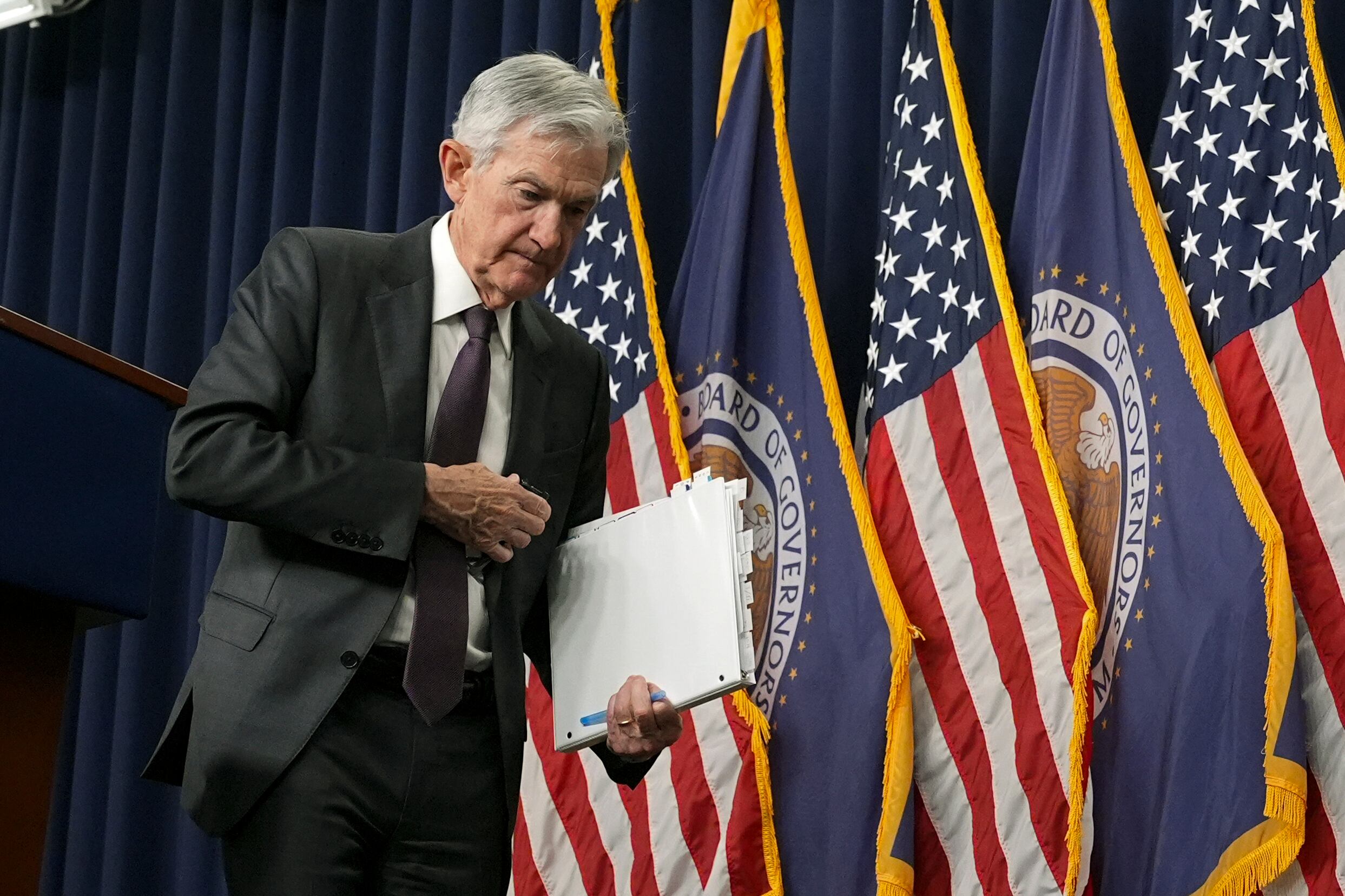
Fed Chair Jerome Powell has long held out hope that the higher rates, instead of leading to more layoffs, would simply cause employers to post fewer openings.
At a press conference last week, Powell said that the job market has “softened,” which should help bring down inflation, “through job openings coming down part of the way back to more normal levels.”
Typically, when job openings decline, companies also start to lay off workers and push up the unemployment rate. But so far, that’s not happening. Tuesday’s report, known as the Job Openings and Labor Turnover Survey, showed that layoffs actually declined in June, to 1.53 million, down from 1.57 million in May. That is below pre-pandemic trends and suggests companies generally want to hold onto their staffs.