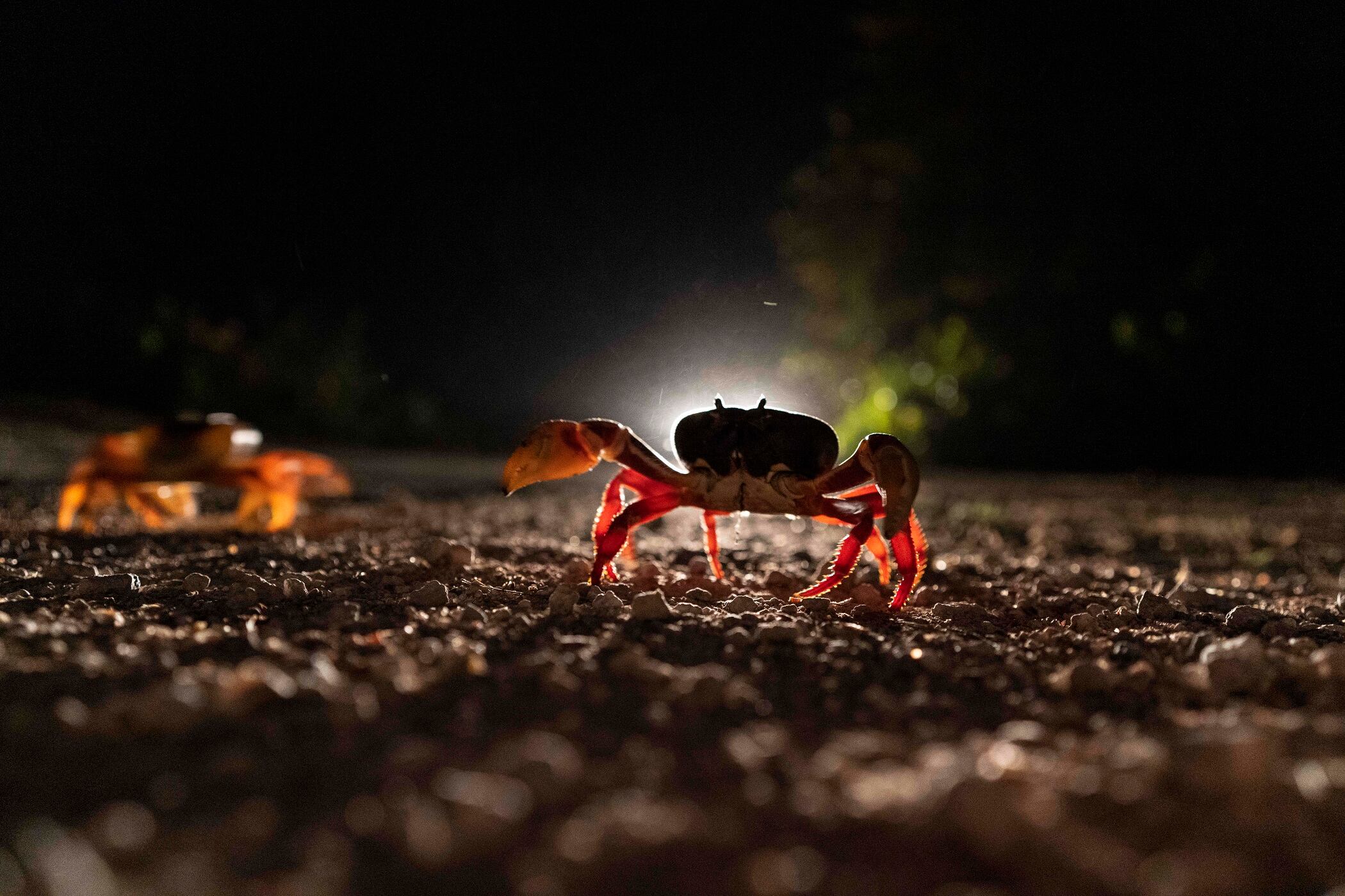
Crabs cross a road in Giron, Cuba, Sunday, April 10, 2022. Millions of crabs emerge at the beginning of the spring rains and start a journey to the waters of the Bay of Pigs to spawn in a yearly migration. (AP Photo/Ramon Espinosa)
Every year in Cuba, millions of crabs emerge from the forest at the beginning of the spring rains and head for the waters of the Bay of Pigs, crossing streets and highways on a perilous journey to mate and reproduce.
Now underway, the migration causes concern to drivers who try to swerve in an often futile attempt not to kill the crustaceans. The crabs are a nuisance to residents but the sight of their road-crossing is a wonder for tourists and other first-time onlookers.
“They got here before us,” said Amaury Urra, a 50-year-old hiking guide who spent his entire life in this part of the Ciénega de Zapata, the largest wetland in the Caribbean, particularly picturesque for the backdrop of turquoise sea waters and the coastal cliffs. ″We’re used to this.″
“Where I live, which is in the center of the town of Girón, the crabs don’t get there as much,″ though there are plenty on the outskirts, he said.
Located about 180 kilometers (110 miles) southeast of Havana, the area was the scene of a 1961 failed invasion by Cuban exiles who signed up for a covertly CIA-funded operation to overthrow Fidel Castro.
This year, the crabs started their journey early. At the end of March, the municipal authorities issued a warning to drivers to avoid traveling in the morning and evening hours - the favorite crossing times for the crabs. Environmentalists usually demand the closure of the main road, especially at key migration times.
The passage of the red crustaceans — the species is called gecarcinus ruricola — could last until July. The largest amount of traffic occurs between April and May. Residents have to be careful: When the crabs feel threatened, they can puncture car tires with their pincers.
Official figures estimate that some 3.5 million crabs die each season on the road, many crushed by passing vehicles. They take a minute and a half to cross.
This type of crab lives and migrates in the Bahamas, Nicaragua, Jamaica and Dominica. But only here, and perhaps in another sector of the coast towards the neighboring province of Cienfuegos, does its path collide so dramatically with human traffic.
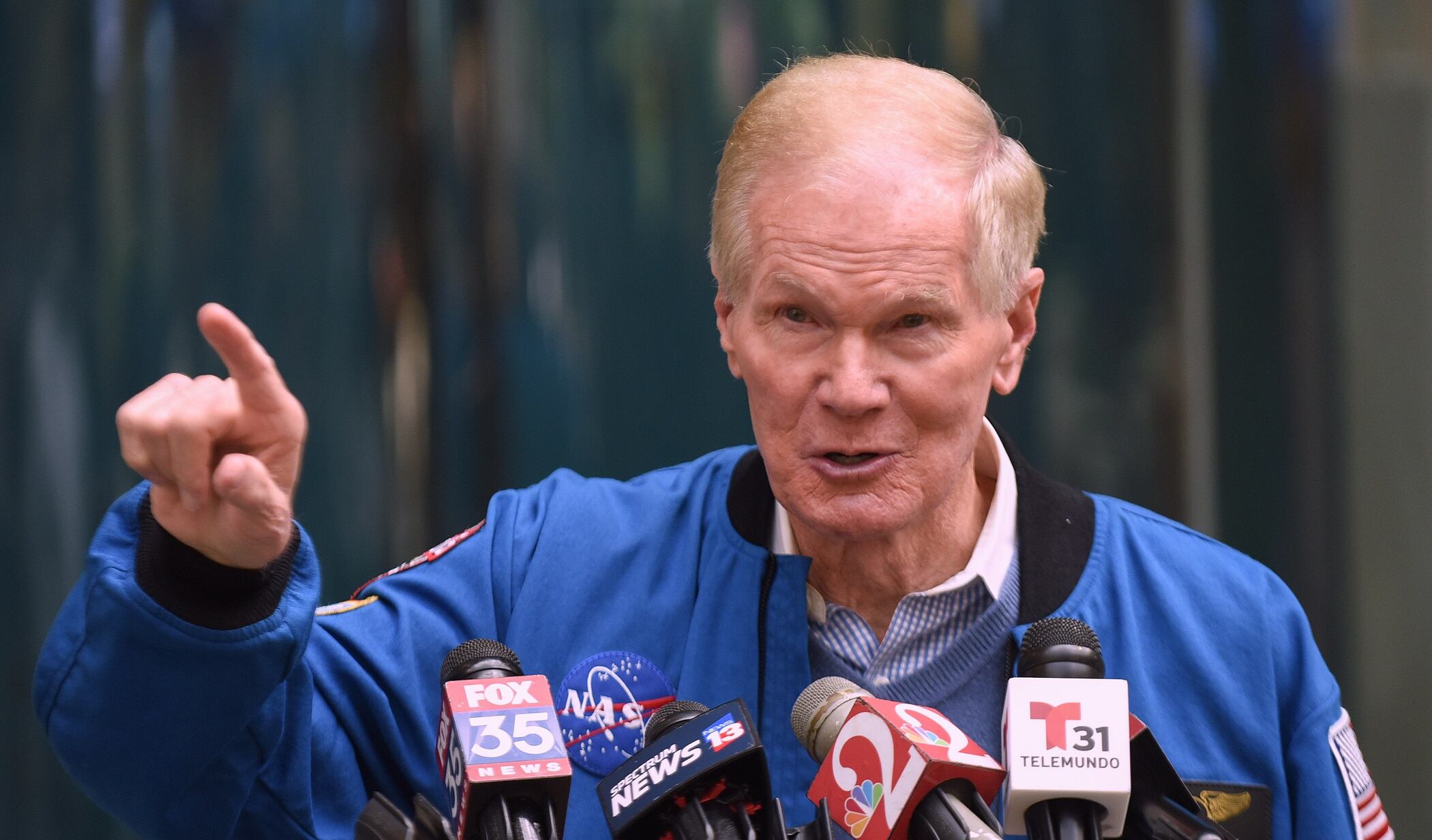
Cheddar's J.D. Durkin caught up with the head of NASA Bill Nelson, a former senator, who feels one thing that seems less rancorous on Capitol Hill these days is the work of the space agency.
Catching you up on what you need to know on April 22, 2022, with updates on a new Ukraine aid package, a new missile test by Russia, DOJ announcement of $150 Million in COVID-related fraud, the Florida senate supports Gov. DeSantis in stripping Disney of its special tax district, and more.
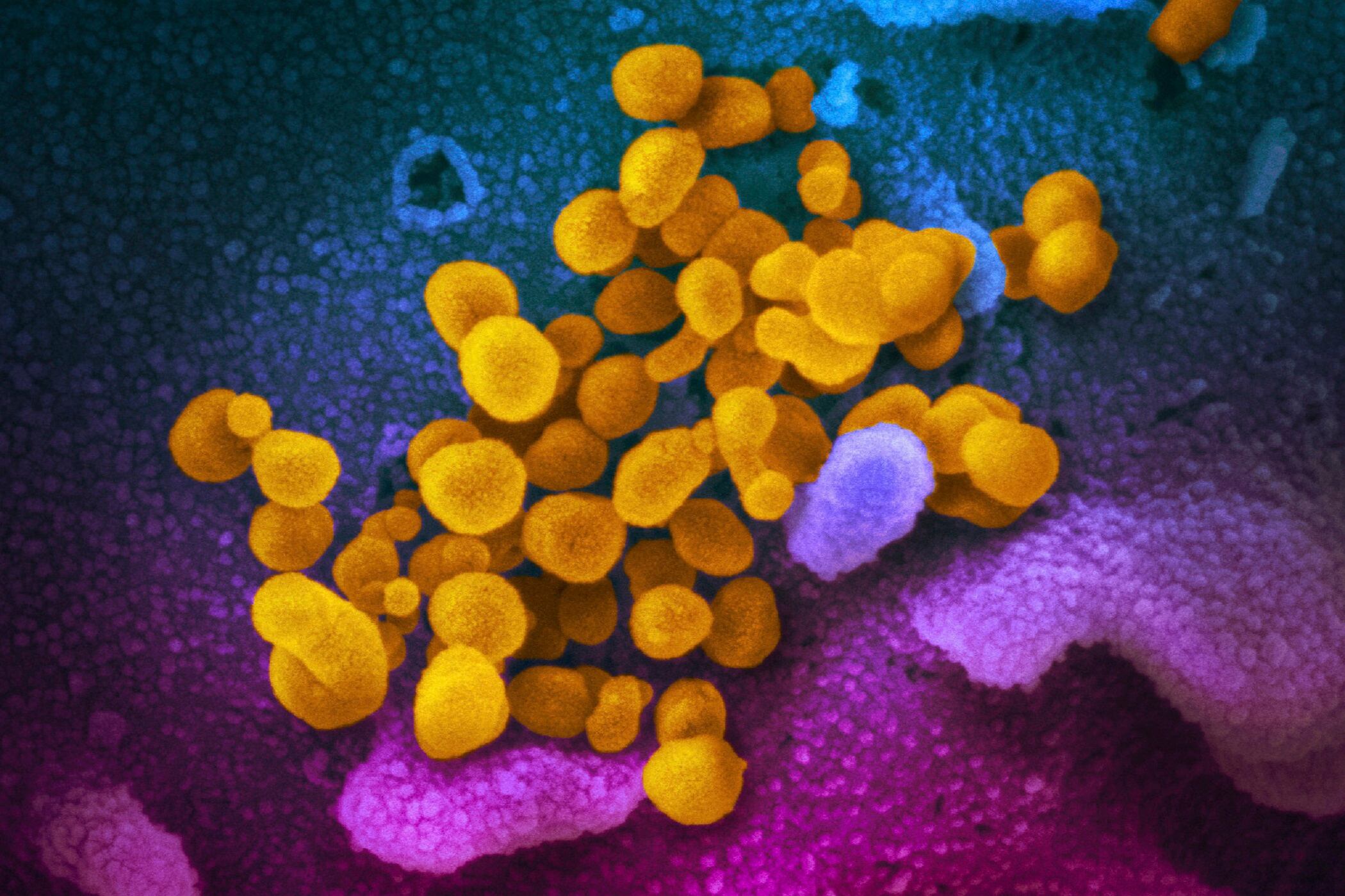
Scientists say a U.K. patient with a severely weakened immune system had COVID-19 for almost a year and a half. The case underscores the importance of protecting vulnerable people from the coronavirus.
Cheddar's Lawrence Banton speaks with entrepreneurs leading the way on textile and clothing recycling in an effort to help stem waste in fashion amid the climate crisis.
The FDA just approved a first-of-its-kind treatment for individuals with blood cancer that has proven results of 5-year survival rates. Christi Shaw, CEO of Kite, a Gilead company, joins Cheddar Innovates to discuss how this treatment works and compares to others currently on the market.
Dr. Neta Lavon, CTO and VP of R&D at Aleph Farms, joins Cheddar Innovates to discuss how the team sent cow cells to space to further research the production of meat in space, and why developing cultivated meat is so critical to the future of space travel.
Catching you up on what you need to know on April 21, 2022, with President Biden set to announce more security assistance funding to Ukraine, polls showing a majority of Americans in favor of transit mask mandates, rapper A$AP Rocky's arrest, and more.
Epidemiologist Dr. Eric Feigl-Ding joined Closing Bell to explain why ending the travel mask mandates could put the U.S. in a bad position in the coming months as new COVID-19 variants threaten to cause another spike in cases.
Laurence Tribe, a professor of constitutional law at Harvard University, joined Cheddar News to talk about the legal underpinnings of the ruling to lift the federal travel mask mandate. "Judge Mizelle decided that she would issue a nationwide injunction, which she and other conservatives have criticized in the past," he said. "That didn't stop her from doing it this time. She did it by just wiping away the CDC's rule, and she did it, have to say, in an opinion that was, well, I'll be honest, really stupid."