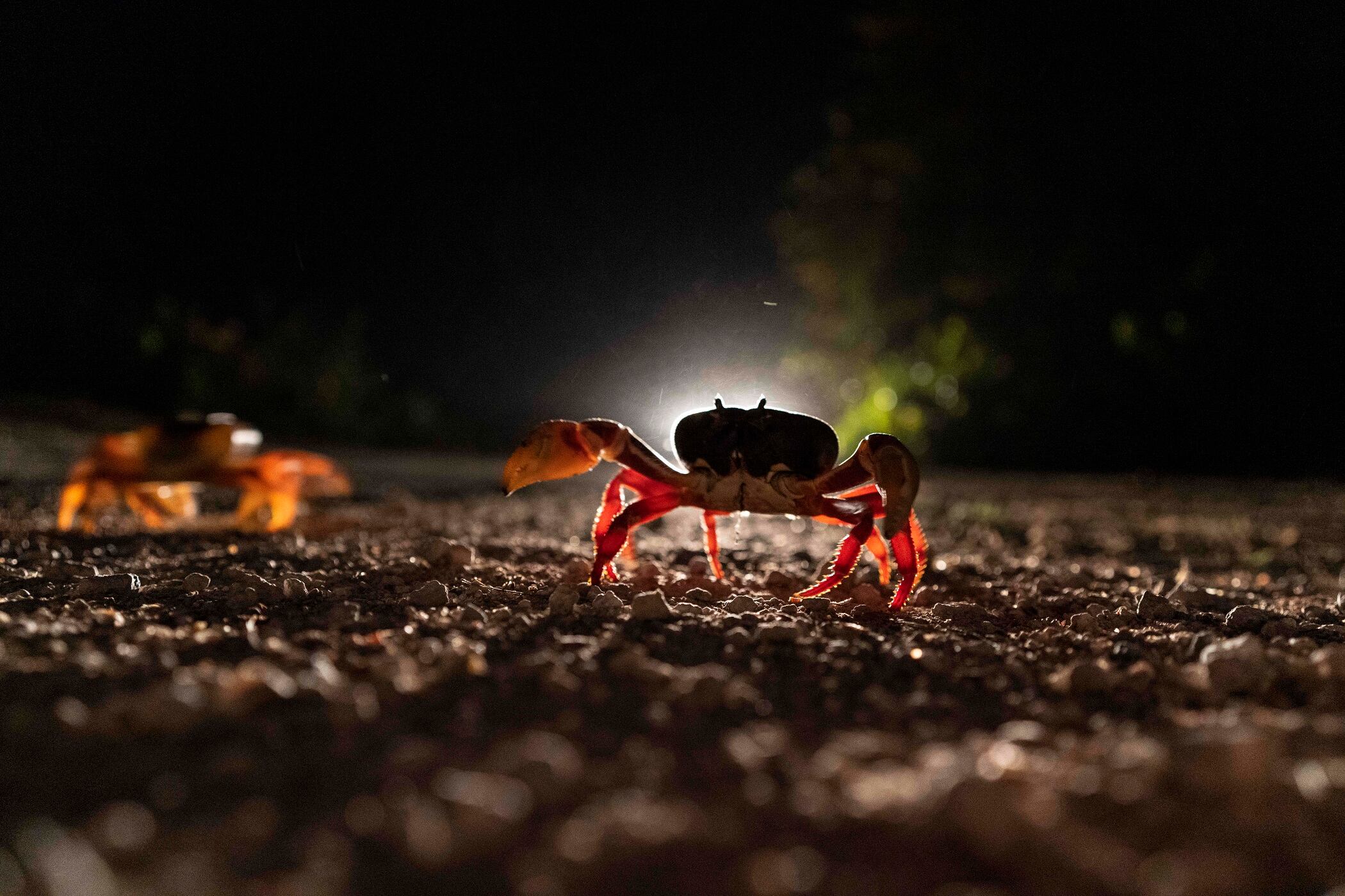
Crabs cross a road in Giron, Cuba, Sunday, April 10, 2022. Millions of crabs emerge at the beginning of the spring rains and start a journey to the waters of the Bay of Pigs to spawn in a yearly migration. (AP Photo/Ramon Espinosa)
Every year in Cuba, millions of crabs emerge from the forest at the beginning of the spring rains and head for the waters of the Bay of Pigs, crossing streets and highways on a perilous journey to mate and reproduce.
Now underway, the migration causes concern to drivers who try to swerve in an often futile attempt not to kill the crustaceans. The crabs are a nuisance to residents but the sight of their road-crossing is a wonder for tourists and other first-time onlookers.
“They got here before us,” said Amaury Urra, a 50-year-old hiking guide who spent his entire life in this part of the Ciénega de Zapata, the largest wetland in the Caribbean, particularly picturesque for the backdrop of turquoise sea waters and the coastal cliffs. ″We’re used to this.″
“Where I live, which is in the center of the town of Girón, the crabs don’t get there as much,″ though there are plenty on the outskirts, he said.
Located about 180 kilometers (110 miles) southeast of Havana, the area was the scene of a 1961 failed invasion by Cuban exiles who signed up for a covertly CIA-funded operation to overthrow Fidel Castro.
This year, the crabs started their journey early. At the end of March, the municipal authorities issued a warning to drivers to avoid traveling in the morning and evening hours - the favorite crossing times for the crabs. Environmentalists usually demand the closure of the main road, especially at key migration times.
The passage of the red crustaceans — the species is called gecarcinus ruricola — could last until July. The largest amount of traffic occurs between April and May. Residents have to be careful: When the crabs feel threatened, they can puncture car tires with their pincers.
Official figures estimate that some 3.5 million crabs die each season on the road, many crushed by passing vehicles. They take a minute and a half to cross.
This type of crab lives and migrates in the Bahamas, Nicaragua, Jamaica and Dominica. But only here, and perhaps in another sector of the coast towards the neighboring province of Cienfuegos, does its path collide so dramatically with human traffic.
The 2022 County Health Rankings largely found that the pandemic worsened the burdens faced by women, people of color, and in low income brackets. Cheddar News speaks with Sheri Johnson, co-director of County Health Rankings and Roadmaps who breaks down the details.
With National Infertility Awareness Week underway, the fertility and family-building benefits provider for employers, Kindbody, is looking to make a full suite of treatments and care accessible — including for LGBTQ+ patients. Founder and chairwoman Gina Bartasi joined Cheddar's Opening Bell to talk about the importance of infertility awareness, what role employers play in offering benefits, and how to remove the stigma around the fertility conversation. "We have to talk about the patient holistically, not just fertility services, but what can we do from a mental health standpoint to support patients," she said. "Most patients talk about fertility being more stressful than divorce, infertility being more prevalent than cancer or diabetes. So it is our mission, remains our mission, to elevate awareness around infertility, not just [during] National Infertility Awareness Week."
New York City’s geography makes it particularly at risk to the impacts of climate change - like rising seas and subsequent flooding. The city has already experienced the effects of increasingly severe weather. In response, the city is building a plan to protect itself, from flood walls, to levees, to redesigning its coast.
With mask mandates lifted across various parts of the country, healthy indoor air quality in public spaces is more crucial than ever before. According to the CDC, proper ventilation, in addition to other preventative measures, is instrumental to preventing the rapid spread of covid-19 indoors. As the push for higher air quality ramps up, AtmosAir is providing a high-tech solution for cleaner, greener air indoors. Steve Levine, CEO, AtmosAir, joined Cheddar’s Opening Bell to discuss.
Catching you up on what you need to know on April 27, 2022, with Tesla stocks absorbing an initial hit following Elon Musk's purchase of Twitter, Russia pausing its natural gas supplies to Poland and Bulgaria, NASA's SpaceX Crew-4 mission taking off, and more.
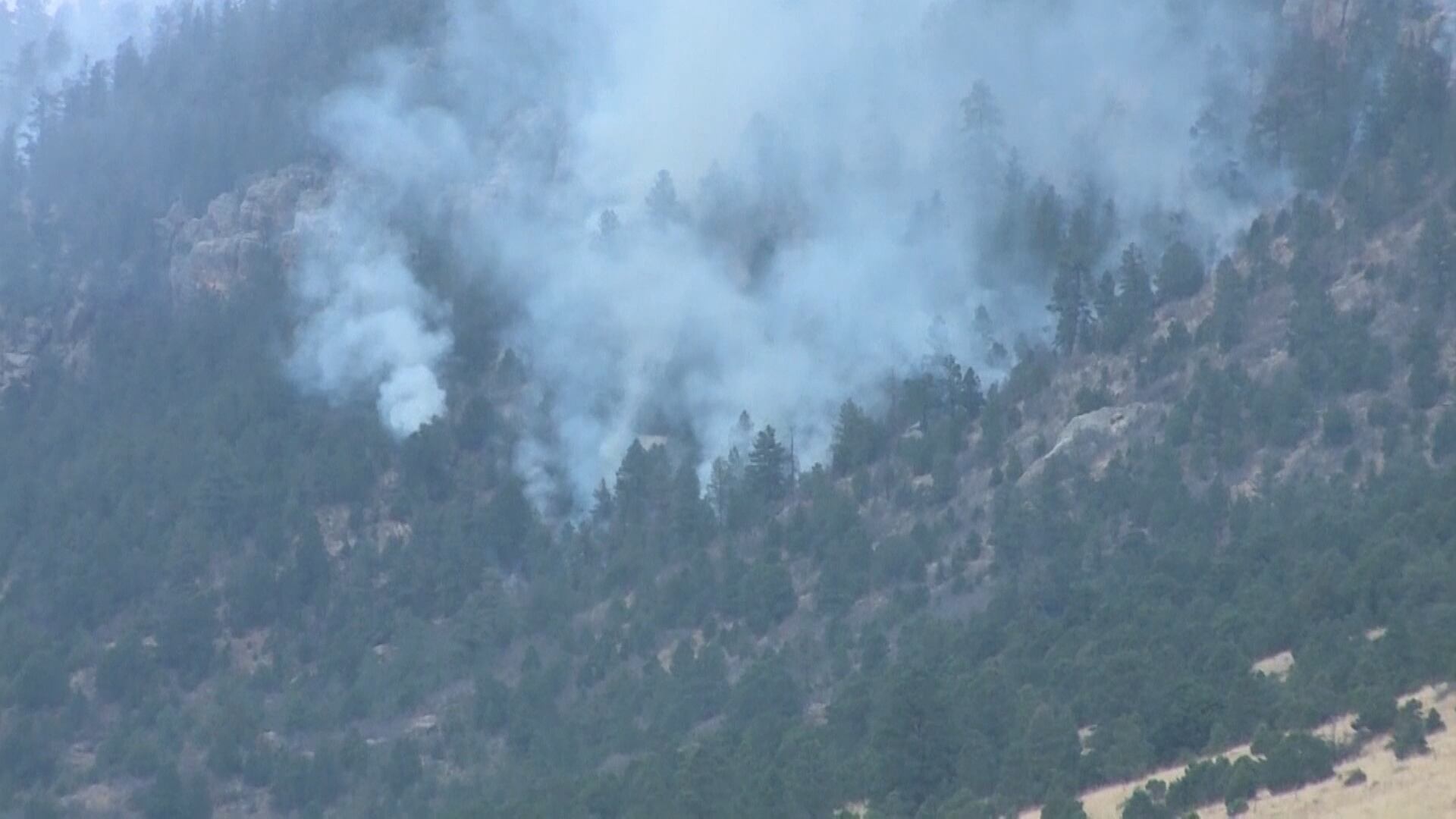
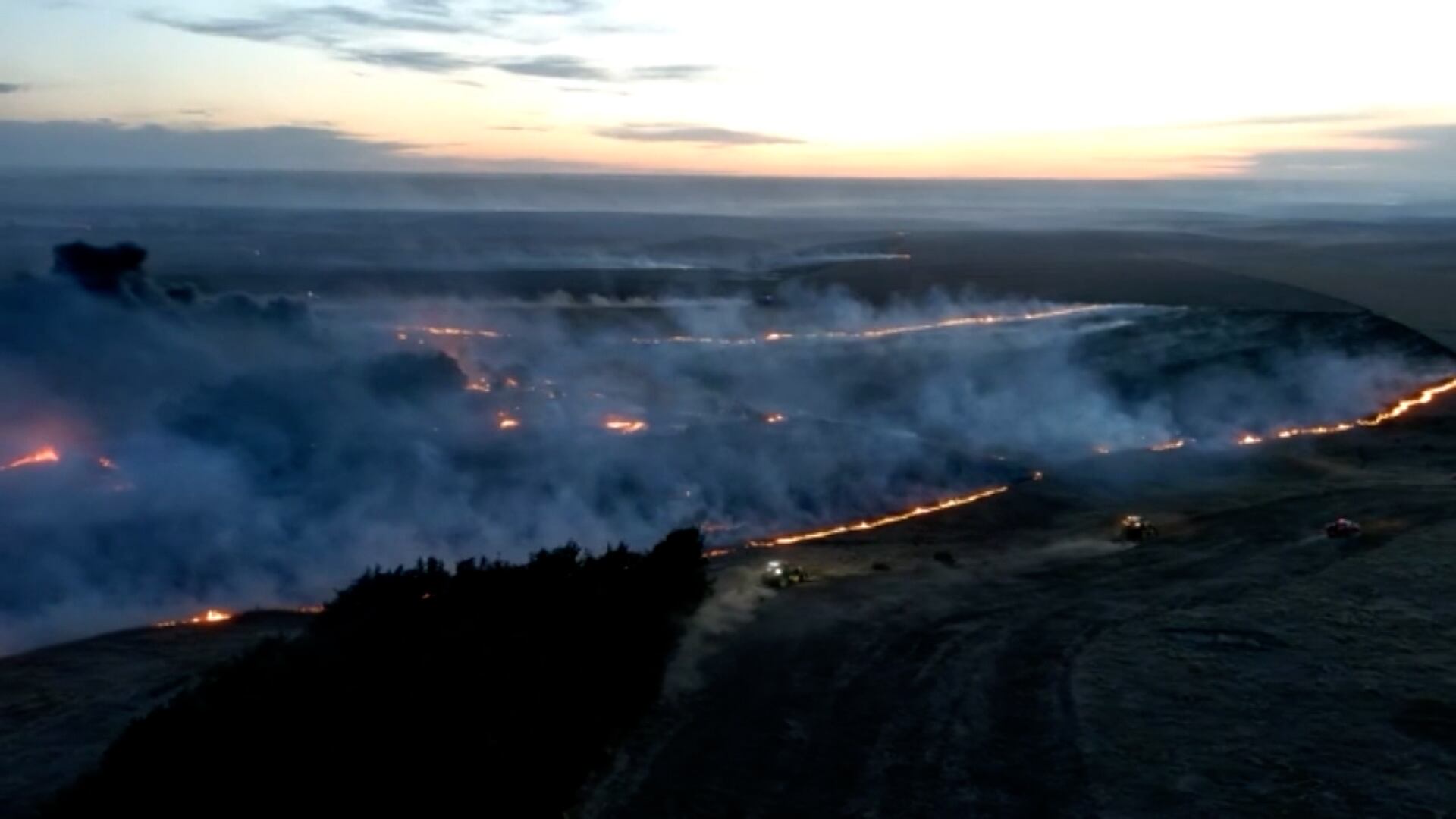
New Mexico is under a state of emergency after flames scorched across 84 square miles. Strong winds fueled 20 wildfires, destroying hundreds of buildings in the state this weekend. New Mexico is just one of several states across the southwest facing severe wildfires. James McMullen, retired California state fire marshal and forensic fire expert, joins Cheddar News to discuss.
SpoonTEK is an eating utensil that uses new technology to enhance flavors. Co-founders Ken and Cameron Davidov join Cheddar News to explain how the high-tech silverware can not only boost taste but also the health of its user.
Tim Brown, research professor at Desert Research Institute and director at the Western Regional Climate Center, joins Cheddar News to discuss the environmental impact of recent wildfires.
Vice President Kamala Harris tested positive for COVID-19 on Tuesday, the White House announced. That's underscoring the persistence of the highly contagious virus even as the U.S. eases restrictions in a bid to revert to pre-pandemic normalcy.