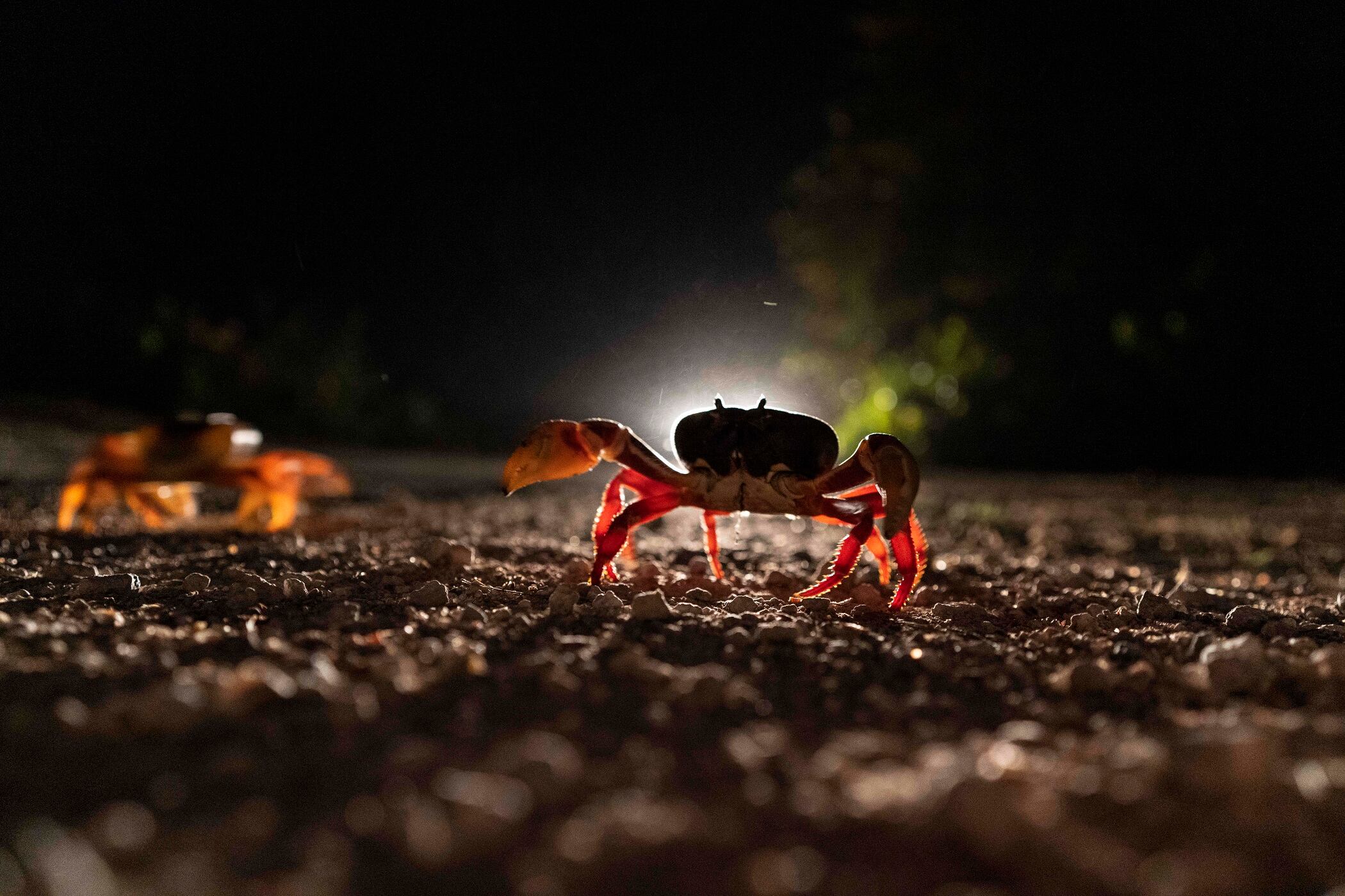
Crabs cross a road in Giron, Cuba, Sunday, April 10, 2022. Millions of crabs emerge at the beginning of the spring rains and start a journey to the waters of the Bay of Pigs to spawn in a yearly migration. (AP Photo/Ramon Espinosa)
Every year in Cuba, millions of crabs emerge from the forest at the beginning of the spring rains and head for the waters of the Bay of Pigs, crossing streets and highways on a perilous journey to mate and reproduce.
Now underway, the migration causes concern to drivers who try to swerve in an often futile attempt not to kill the crustaceans. The crabs are a nuisance to residents but the sight of their road-crossing is a wonder for tourists and other first-time onlookers.
“They got here before us,” said Amaury Urra, a 50-year-old hiking guide who spent his entire life in this part of the Ciénega de Zapata, the largest wetland in the Caribbean, particularly picturesque for the backdrop of turquoise sea waters and the coastal cliffs. ″We’re used to this.″
“Where I live, which is in the center of the town of Girón, the crabs don’t get there as much,″ though there are plenty on the outskirts, he said.
Located about 180 kilometers (110 miles) southeast of Havana, the area was the scene of a 1961 failed invasion by Cuban exiles who signed up for a covertly CIA-funded operation to overthrow Fidel Castro.
This year, the crabs started their journey early. At the end of March, the municipal authorities issued a warning to drivers to avoid traveling in the morning and evening hours - the favorite crossing times for the crabs. Environmentalists usually demand the closure of the main road, especially at key migration times.
The passage of the red crustaceans — the species is called gecarcinus ruricola — could last until July. The largest amount of traffic occurs between April and May. Residents have to be careful: When the crabs feel threatened, they can puncture car tires with their pincers.
Official figures estimate that some 3.5 million crabs die each season on the road, many crushed by passing vehicles. They take a minute and a half to cross.
This type of crab lives and migrates in the Bahamas, Nicaragua, Jamaica and Dominica. But only here, and perhaps in another sector of the coast towards the neighboring province of Cienfuegos, does its path collide so dramatically with human traffic.
Bill Nye the Science Guy is back but on an even smaller screen. America’s favorite science teacher has racked up more than eight million followers on TikTok, and he joined Cheddar News to talk about his success on the platform, having fun but also being serious about scientific topics like tackling climate change, and his newest hosting project "The End is Nye," a streaming show on Peacock that examines disasters — both natural and manmade. "There are six episodes. We have big disasters. Things go terribly wrong, and then we show you how things could have gone right," he explained.
You probably have your summer music playlist ready to to go, but you're probably not aware how an in-store shopping soundtrack may impact your experience. Spotify Advertising took a look at how audio affects small business shopping. Rochelle Sanchirico, Global Director of Scaled Business and Marketing at Spotify Advertising, joins Cheddar News to discuss.
Summer travel season is just around the corner, as the U.S. is entering a fifth COVID-19 wave. Cheddar News speaks with Dr. Jen Caudle, Family Physician and Associate Professor at Rowan University on how to evaluate your vacation plans.
Catching you up on what you need to know on Wednesday, June 1, 2022, House lawmakers hold an emergency hearing on gun control measures in the wake of the Uvalde shooting, the Supreme Court temporarily blocks Texas' law stopping social media moderation, and the James Webb Space Telescope gets a new mission.
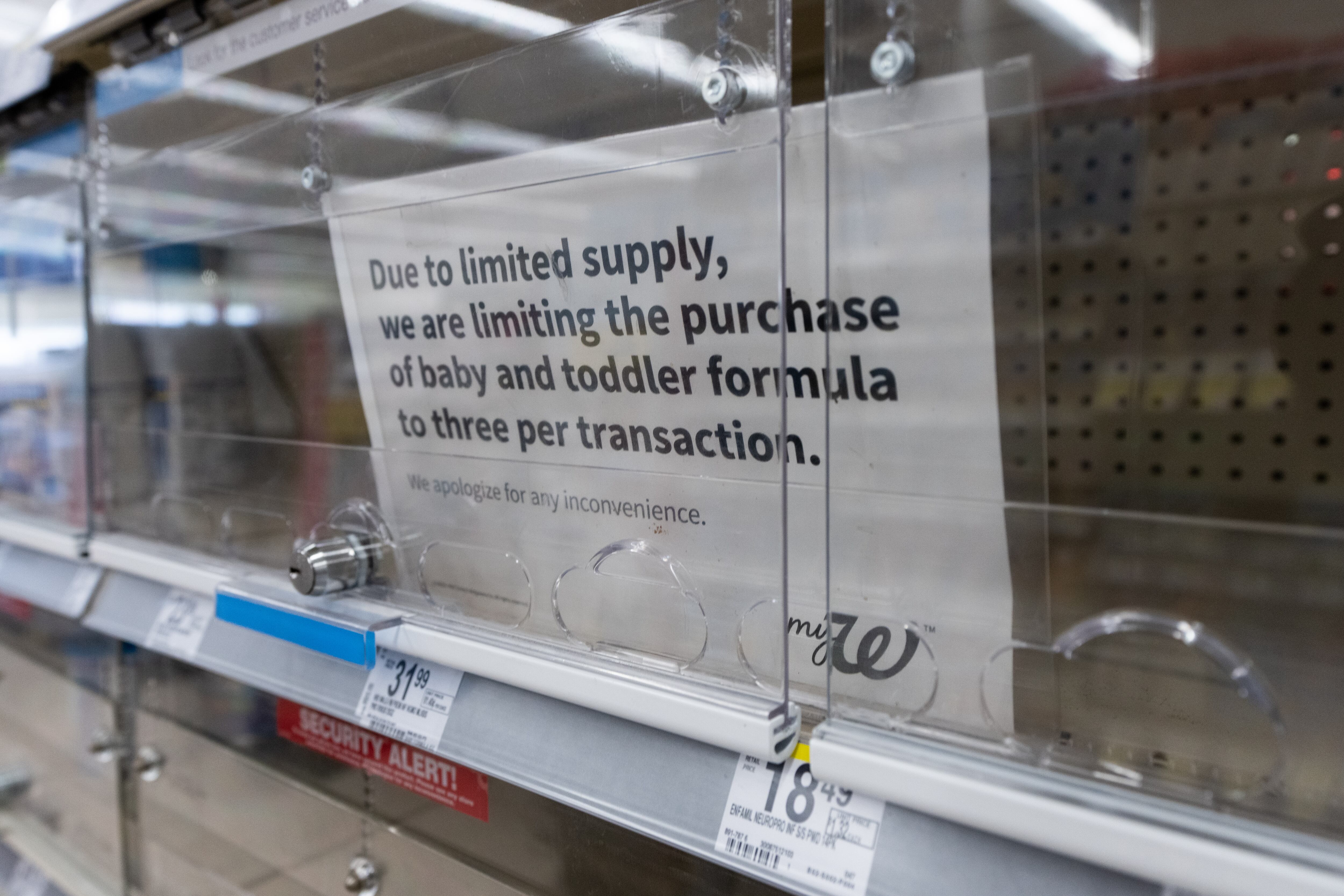
With the baby formula in the United States surging to an out-of-stock rate of 70 percent, the FDA has given Abbott permission to reopen its Michigan plant amid the crisis and authorized foreign imports. Professor Peter Pitts, a former FDA associate commissioner and current president of the Center for Medicine in the Public Interest, joined Cheddar News to discuss the ongoing shortage and its wide impact. “As difficult as things is in urban areas, they’re even worse in small communities and tribal areas where parents can't just go to the next store on the corner," he said. Pitts also noted that the Abbott factory was a "disaster" prior to its shutdown and that it would have been "regulatory malpractice" to have left it open.
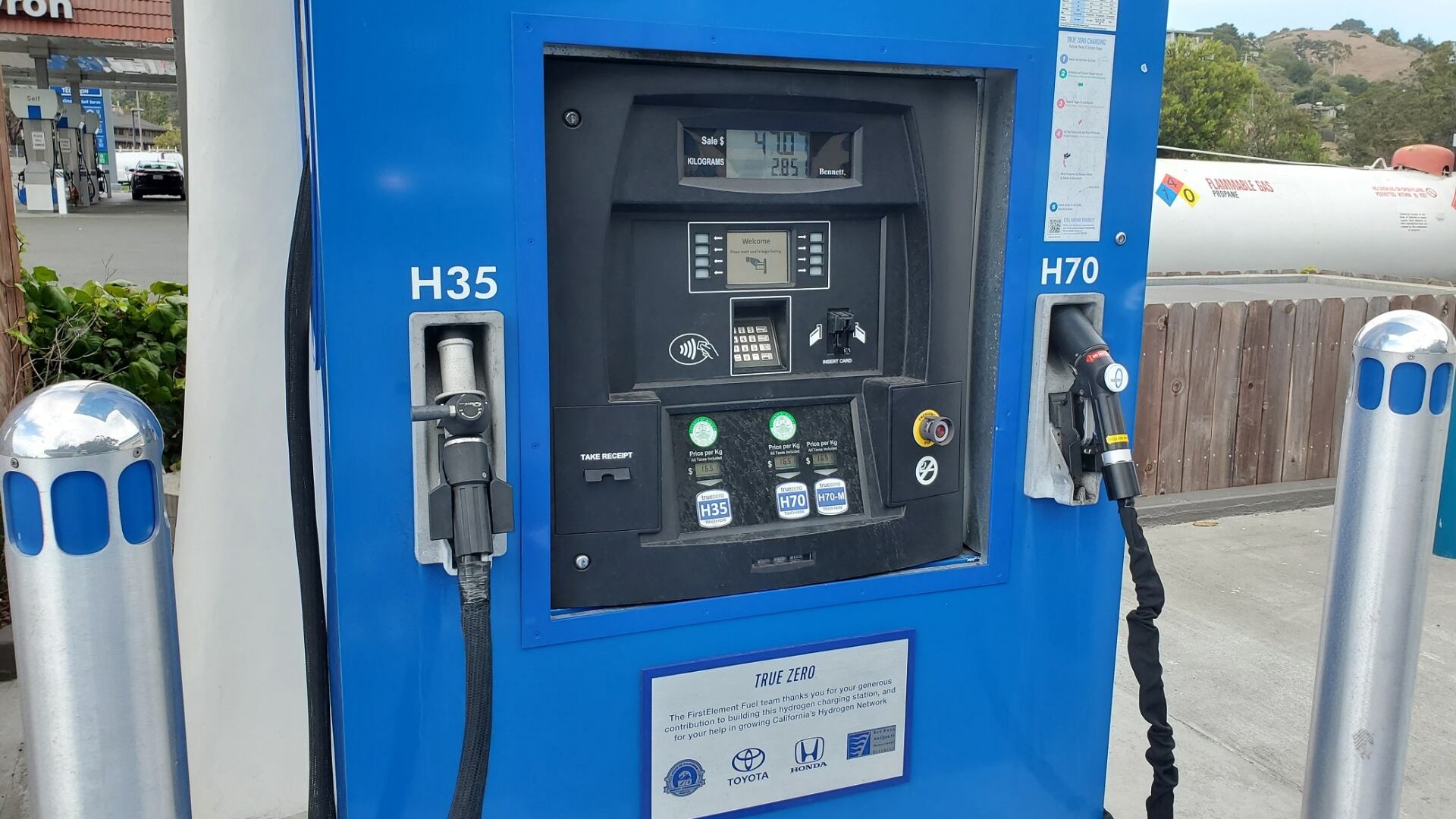
Scientists are hoping that the simplest element in the universe — hydrogen — can be the solution to slowing down climate change. However, it does not come without cost. The process of making hydrogen could potentially add more CO2.
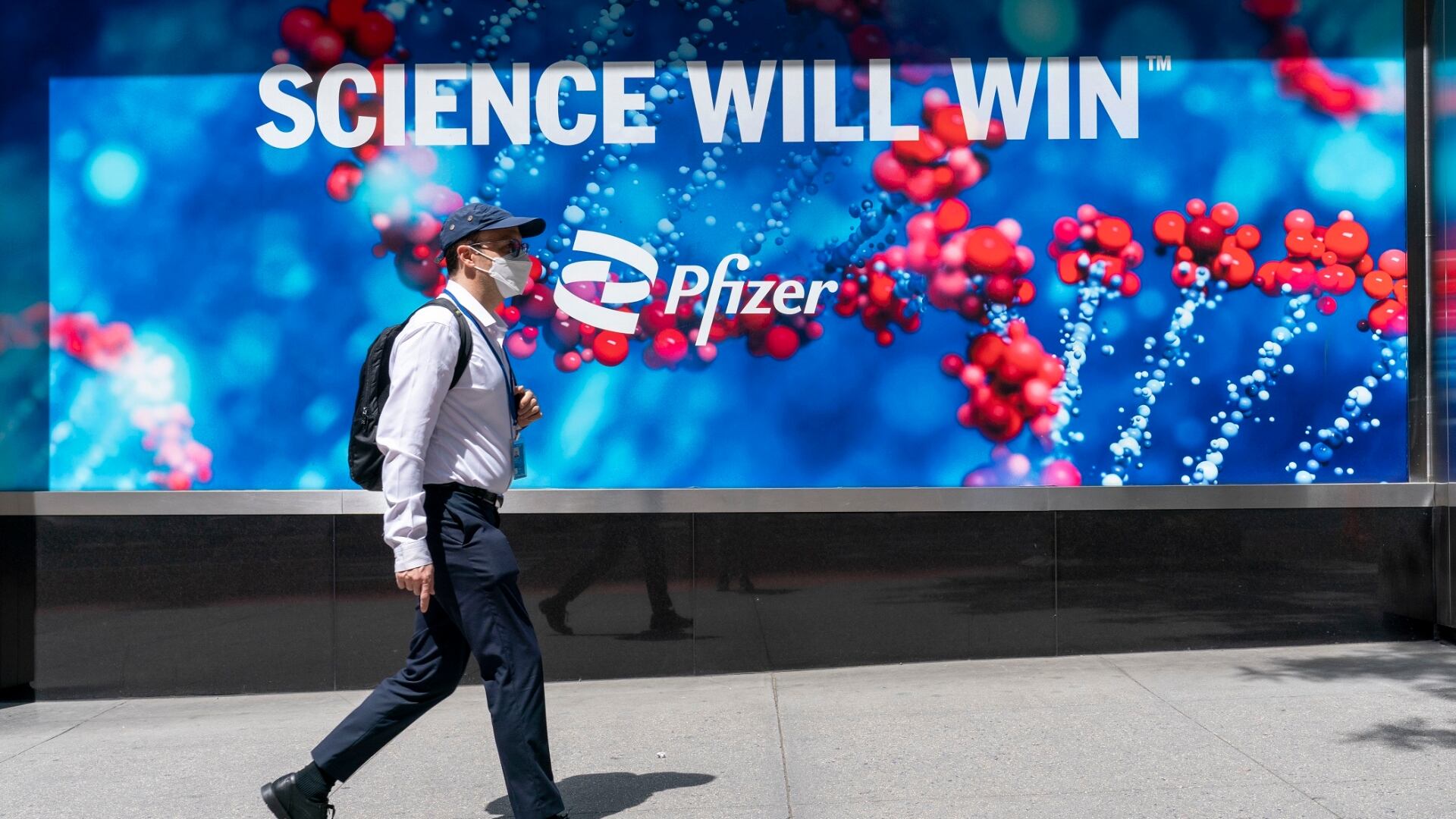
Pfizer said it will be shipping its vaccines at not-for-profit prices to 45 low-income countries. The pharmaceutical giant will be exporting 23 drugs, including those that treat cancer, heart conditions, autoimmune diseases, as well as COVID-19.
It's not a scene from a movie: an asteroid the size of Mount Everest is headed toward earth. It's bigger than 99% of the asteroids in our solar system. But Cheddar anchor Shannon Lanier says fear not. The giant rock will miss us by more than 2 million miles.