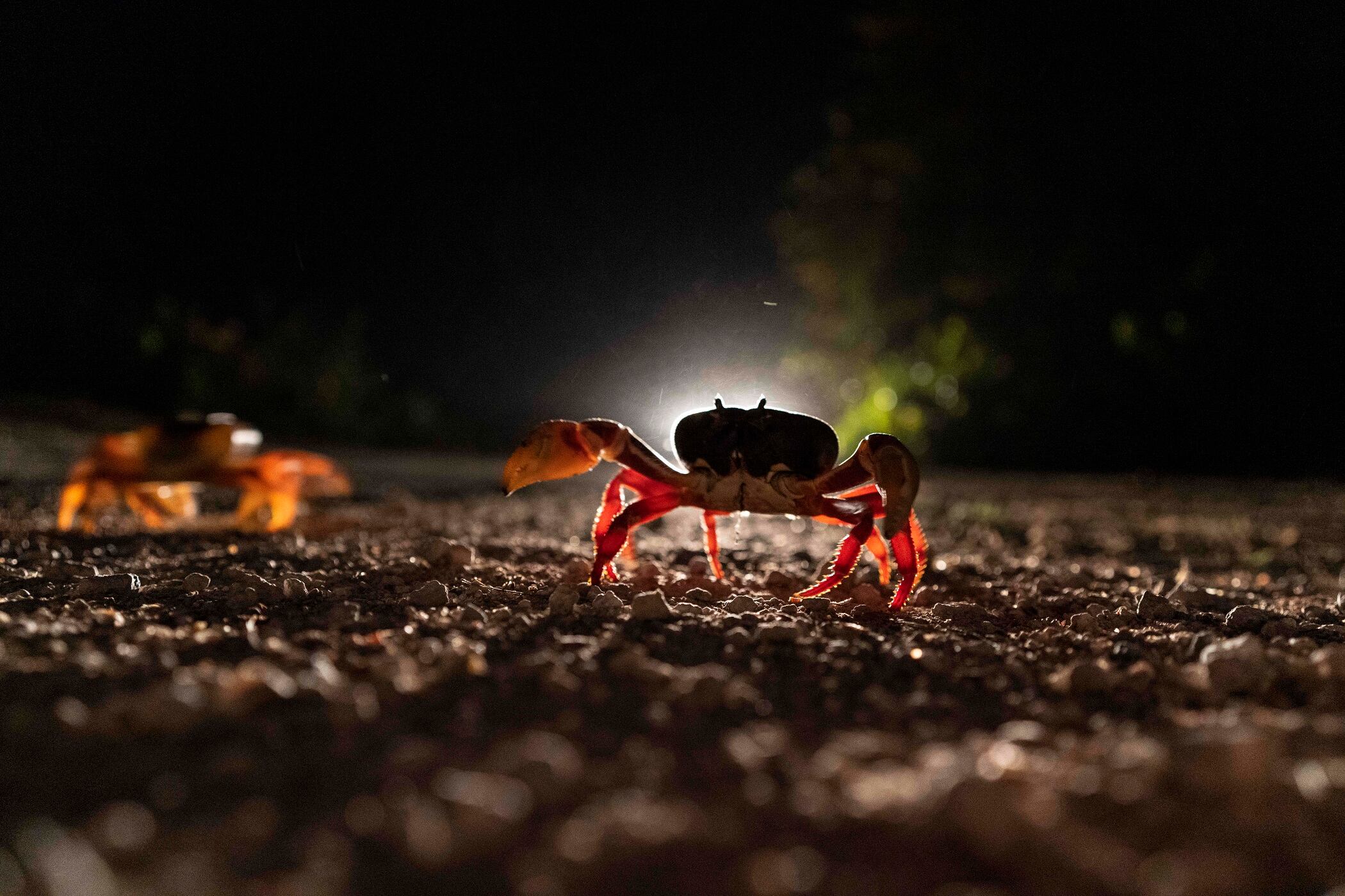
Crabs cross a road in Giron, Cuba, Sunday, April 10, 2022. Millions of crabs emerge at the beginning of the spring rains and start a journey to the waters of the Bay of Pigs to spawn in a yearly migration. (AP Photo/Ramon Espinosa)
Every year in Cuba, millions of crabs emerge from the forest at the beginning of the spring rains and head for the waters of the Bay of Pigs, crossing streets and highways on a perilous journey to mate and reproduce.
Now underway, the migration causes concern to drivers who try to swerve in an often futile attempt not to kill the crustaceans. The crabs are a nuisance to residents but the sight of their road-crossing is a wonder for tourists and other first-time onlookers.
“They got here before us,” said Amaury Urra, a 50-year-old hiking guide who spent his entire life in this part of the Ciénega de Zapata, the largest wetland in the Caribbean, particularly picturesque for the backdrop of turquoise sea waters and the coastal cliffs. ″We’re used to this.″
“Where I live, which is in the center of the town of Girón, the crabs don’t get there as much,″ though there are plenty on the outskirts, he said.
Located about 180 kilometers (110 miles) southeast of Havana, the area was the scene of a 1961 failed invasion by Cuban exiles who signed up for a covertly CIA-funded operation to overthrow Fidel Castro.
This year, the crabs started their journey early. At the end of March, the municipal authorities issued a warning to drivers to avoid traveling in the morning and evening hours - the favorite crossing times for the crabs. Environmentalists usually demand the closure of the main road, especially at key migration times.
The passage of the red crustaceans — the species is called gecarcinus ruricola — could last until July. The largest amount of traffic occurs between April and May. Residents have to be careful: When the crabs feel threatened, they can puncture car tires with their pincers.
Official figures estimate that some 3.5 million crabs die each season on the road, many crushed by passing vehicles. They take a minute and a half to cross.
This type of crab lives and migrates in the Bahamas, Nicaragua, Jamaica and Dominica. But only here, and perhaps in another sector of the coast towards the neighboring province of Cienfuegos, does its path collide so dramatically with human traffic.
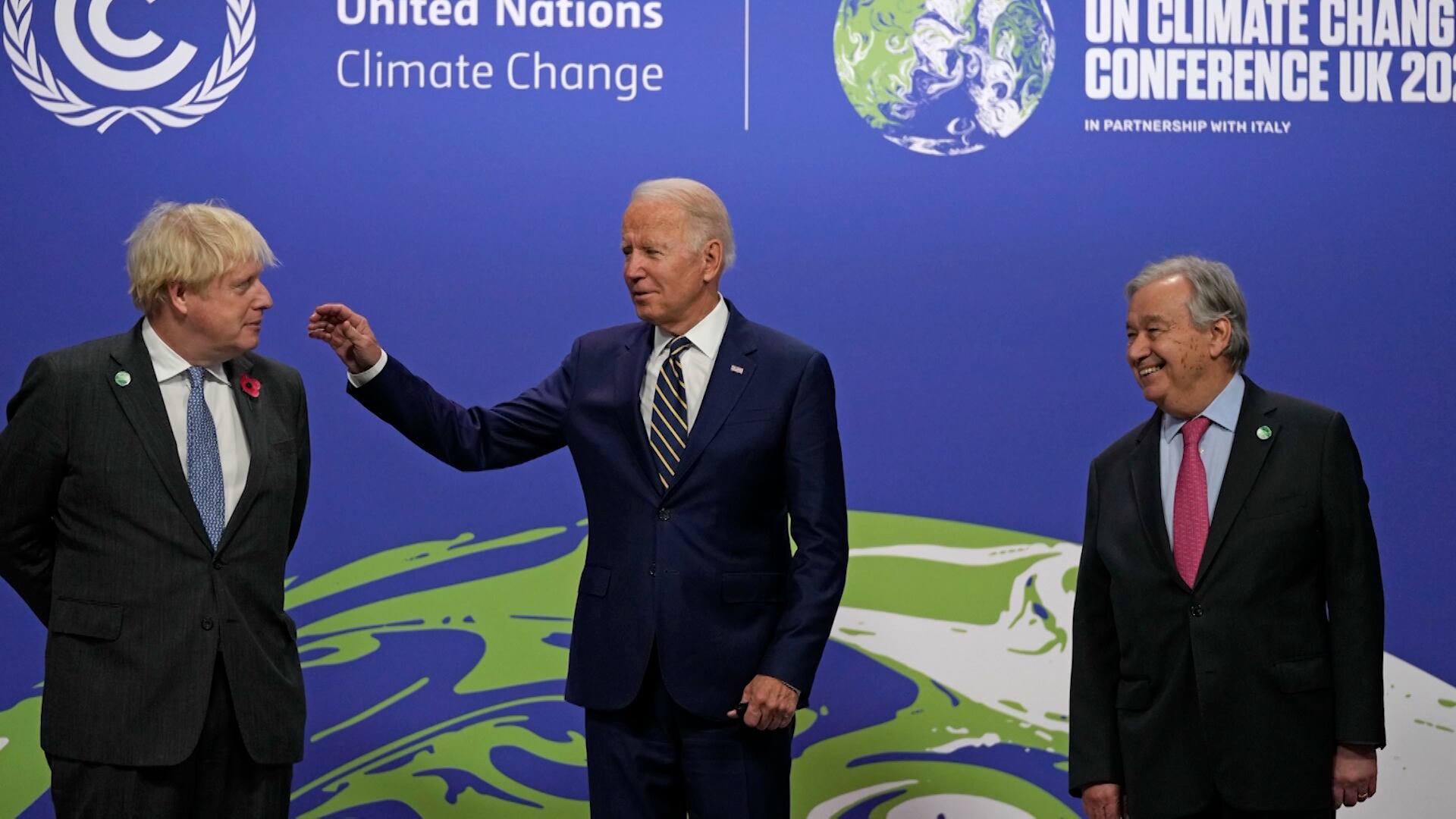
The two-week COP26 climate conference has now ended with leaders reaching a deal, but so far the deal is getting mixed reviews from climate experts across the globe. Chloe Demrovsky, president and CEO of Disaster Recovery Institute International, explains that while the agreement is a step forward in some ways, the world still has much more to work on in order to keep warming to below 2 degrees Celsius.
Jill and Carlo cover the latest with the infrastructure bill, the growing state rebellion over boosters, Trump's dereliction of duty on the pandemic, Taylor Swift's reign of cultural domination and more.
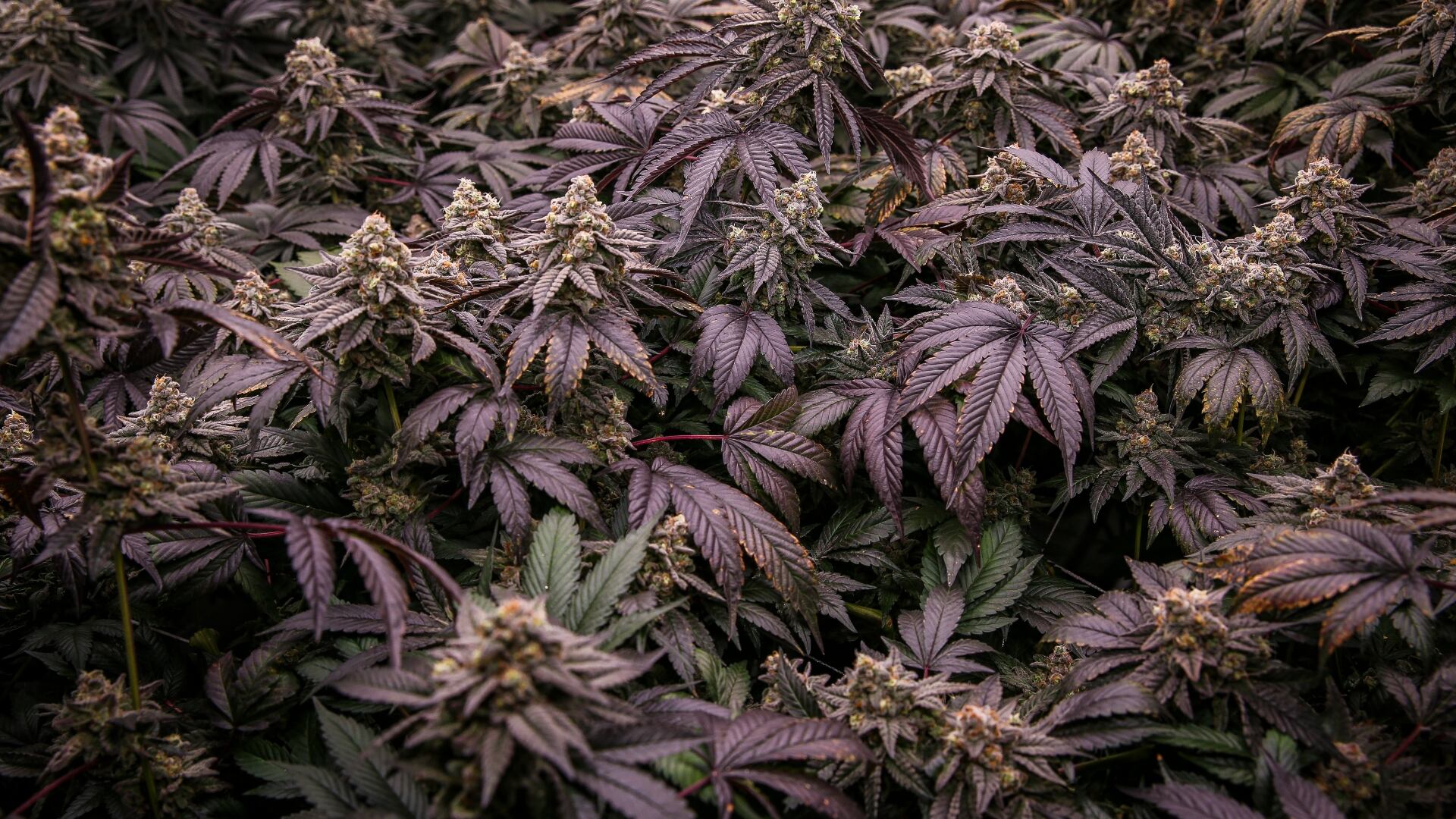
Aurora Cannabis CEO Miguel Martin joins Cheddar News' Closing Bell to discuss the company's latest earnings results, how it will achieve positive EBITDA by 2023, and the state of the cannabis industry amid potential U.S. federal legalization.
Moderna is defending its COVID-19 vaccine after a study found an increase in reports of myocarditis, which is an inflammation of the heart, in males ages 12 to 29 — about 13.3 cases in every 100,000 subjects. The pharmaceutical giant said the benefits of the vaccine outweigh the risk of the possible negative side effect.
The parent company of North Face, Vans and Supreme, VF Corp, released its fourth annual "Made for Change" sustainability and responsibility report. It details the company's ongoing efforts to tackle social and climate related issues. This comes as climate experts continue to warn about the dangers of fast fashion and its impact on global CO2 emissions. Sean Cady, Vice President of Global Sustainability, Responsibility and Trade at VF Corporation, joins Cheddar News to discuss.
A jam-packed Freitag pod with Carlo and Baker: new Covid hotspots, Kyle Rittenhouse trial, Belarus making trouble for Europe, red-hot housing market, and how to manage a PR crisis the right way.
As the UN climate conference is set to wrap this week, we take a look at pledges that world leaders have signed onto so far and the most important developments to come out of COP26. Sandeep Pai, Senior Research Lead at the Just Transition Initiative, joins Cheddar Climate to discuss the most important global initiatives and biggest pledges made by global leaders, and whether or not they can truly make an impact if two of the world's biggest economies, China and Russia, did not attend and are not fully committed to major climate initiatives.
A group of health experts from around the world is issuing a dire warning about the climate crisis, saying that climate change is the greatest global health threat facing the world this century and is set to become the 'defining narrative of human health.' The Lancet medical journal stated that warning in its annual report, along with a policy brief for the United States detailing actions the country can take to stop millions of unnecessary deaths. Director of Climate for Health at EcoAmerica Rebecca Rehr joined Cheddar Climate to discuss.
The COP26 summit in Scotland is in its final days, and the U.N. has just released a draft of an agreement for more than 200 world leaders to sign on Friday. The draft urges nations to set more aggressive goals in cutting emissions, while also calling for coal to be phased out. Chloe Demrovsky, President and CEO of Disaster Recovery Institute International, joins Cheddar News to discuss this agreement.
SpaceX and NASA have collaborated on another successful launch sending four astronauts to the international space station. The international crew will stay in orbit aboard the ISS for six months.