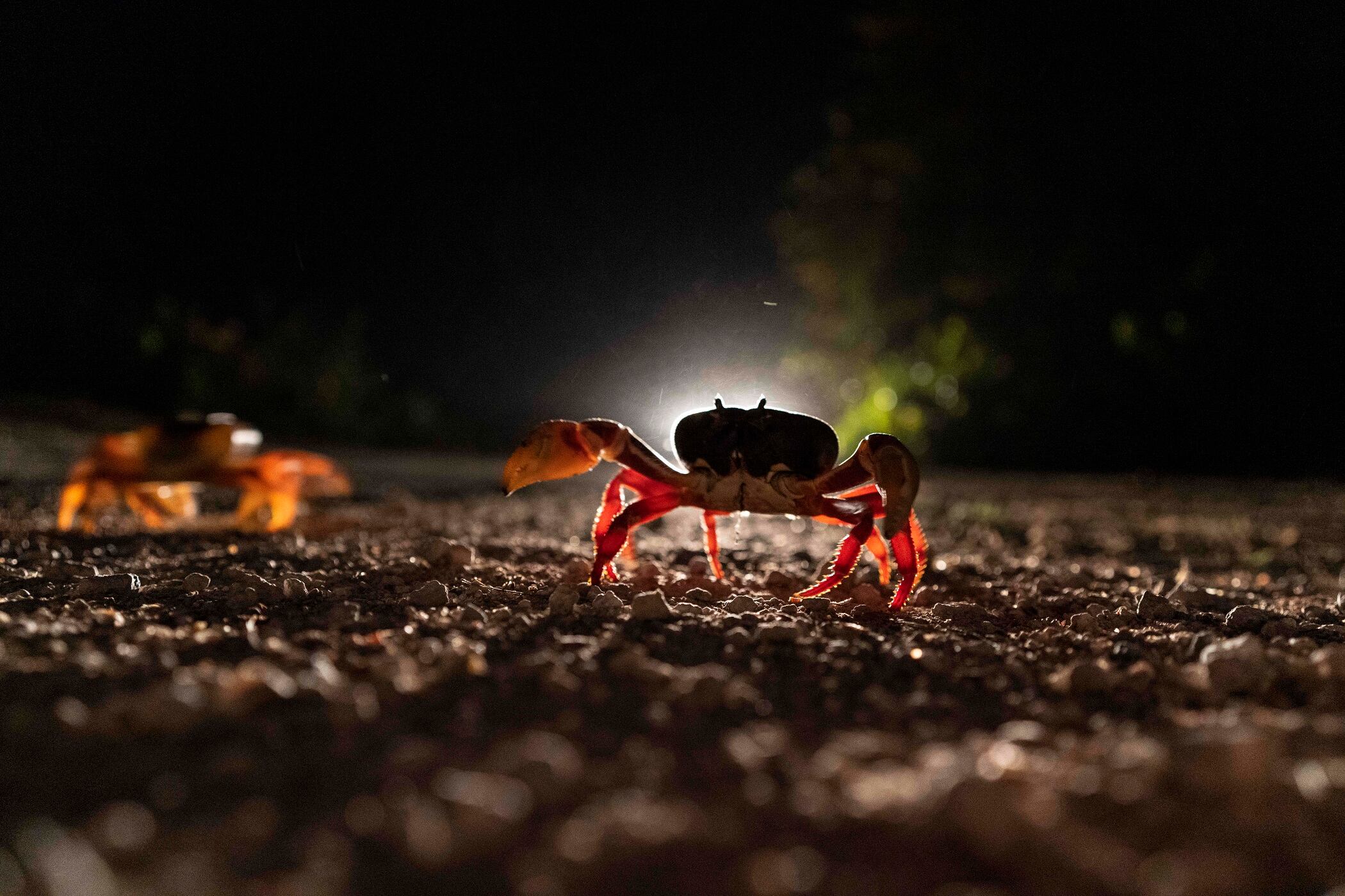
Crabs cross a road in Giron, Cuba, Sunday, April 10, 2022. Millions of crabs emerge at the beginning of the spring rains and start a journey to the waters of the Bay of Pigs to spawn in a yearly migration. (AP Photo/Ramon Espinosa)
Every year in Cuba, millions of crabs emerge from the forest at the beginning of the spring rains and head for the waters of the Bay of Pigs, crossing streets and highways on a perilous journey to mate and reproduce.
Now underway, the migration causes concern to drivers who try to swerve in an often futile attempt not to kill the crustaceans. The crabs are a nuisance to residents but the sight of their road-crossing is a wonder for tourists and other first-time onlookers.
“They got here before us,” said Amaury Urra, a 50-year-old hiking guide who spent his entire life in this part of the Ciénega de Zapata, the largest wetland in the Caribbean, particularly picturesque for the backdrop of turquoise sea waters and the coastal cliffs. ″We’re used to this.″
“Where I live, which is in the center of the town of Girón, the crabs don’t get there as much,″ though there are plenty on the outskirts, he said.
Located about 180 kilometers (110 miles) southeast of Havana, the area was the scene of a 1961 failed invasion by Cuban exiles who signed up for a covertly CIA-funded operation to overthrow Fidel Castro.
This year, the crabs started their journey early. At the end of March, the municipal authorities issued a warning to drivers to avoid traveling in the morning and evening hours - the favorite crossing times for the crabs. Environmentalists usually demand the closure of the main road, especially at key migration times.
The passage of the red crustaceans — the species is called gecarcinus ruricola — could last until July. The largest amount of traffic occurs between April and May. Residents have to be careful: When the crabs feel threatened, they can puncture car tires with their pincers.
Official figures estimate that some 3.5 million crabs die each season on the road, many crushed by passing vehicles. They take a minute and a half to cross.
This type of crab lives and migrates in the Bahamas, Nicaragua, Jamaica and Dominica. But only here, and perhaps in another sector of the coast towards the neighboring province of Cienfuegos, does its path collide so dramatically with human traffic.
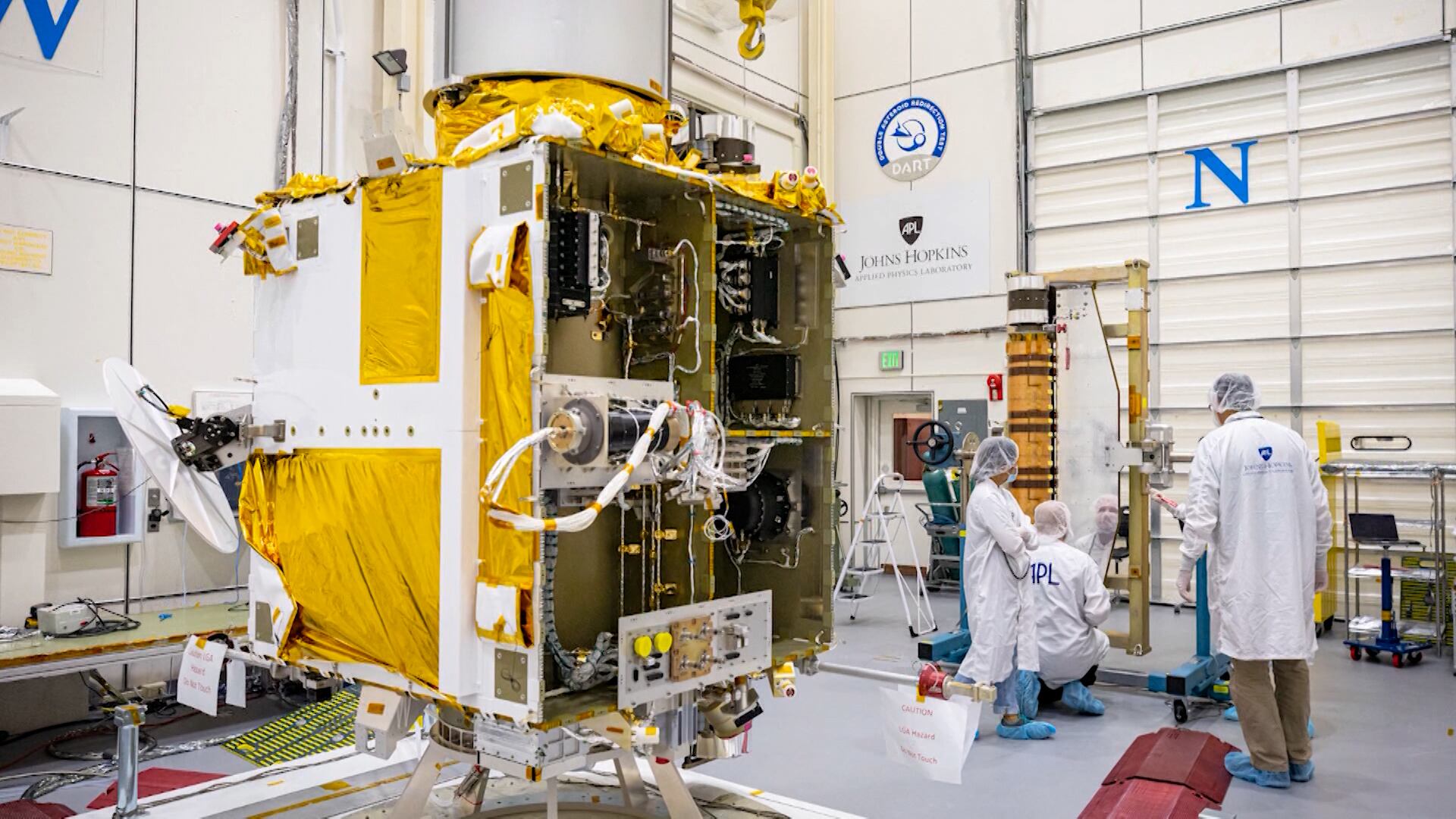
NASA is gearing up this week for a mission to launch a SpaceX Falcon 9 rocket into a near-Earth asteroid in an attempt to move it slightly off its projected course. Thomas Zurbuchen, an associate administrator for the NASA Science Mission Directorate, joined Cheddar's "Opening Bell" to provide some additional details about the Double Asteroid Redirection Test (DART) and explained why it is necessary as a means to protect Earth.
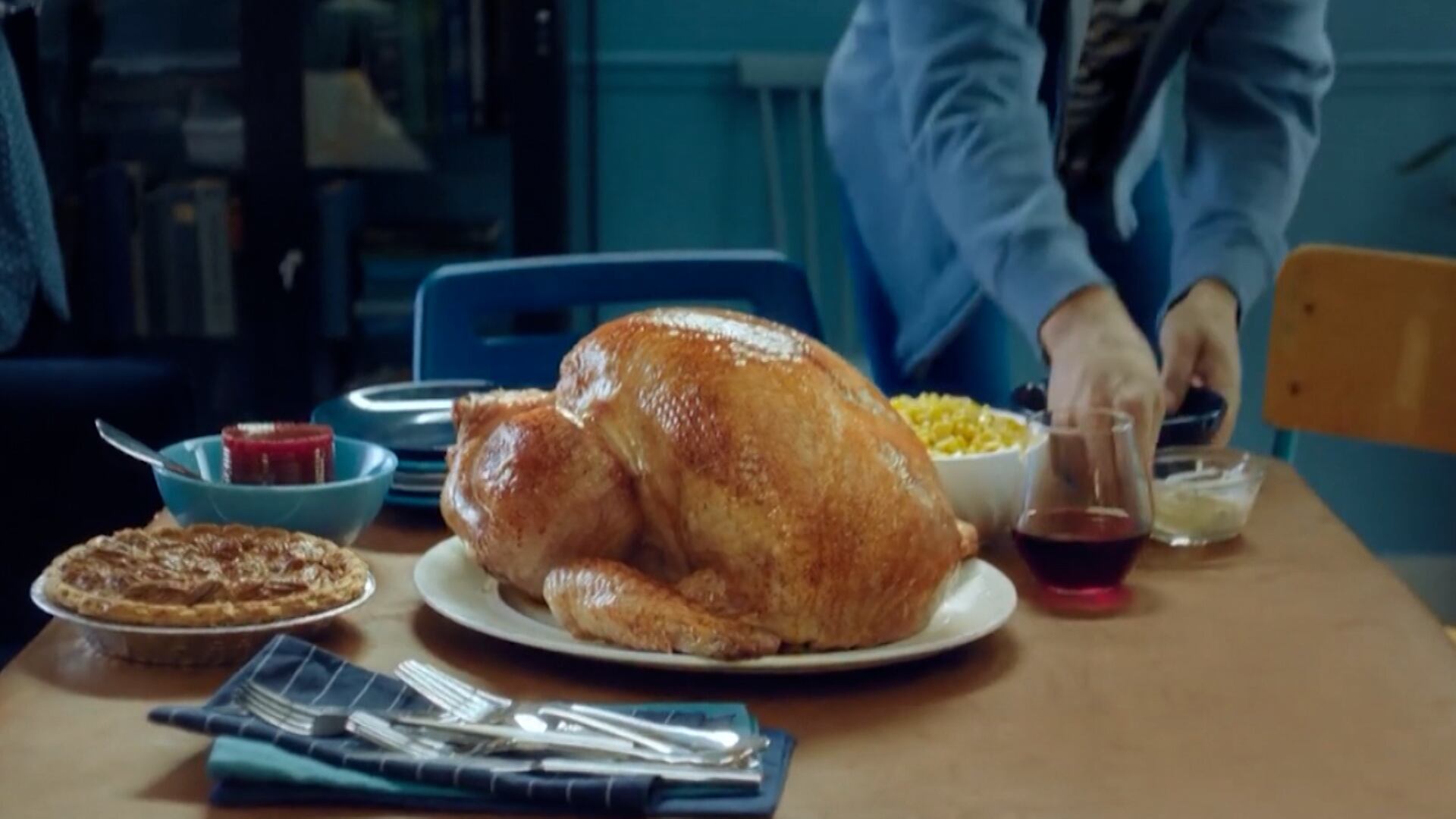
With Thanksgiving two days away, the USDA is reminding hosts of the importance of food safety. Karen Hunter, Food Safety Expert, USDA, joined Cheddar's Opening Bell to discuss the best food handling and leftover tips ahead of the holiday.
Jill and Carlo are a bit delayed today on account of Carlo's internet not working. Better late than never, they discuss what we know about the suspect in the Christmas parade crash, closing arguments in the Arbery killing trial, and more.
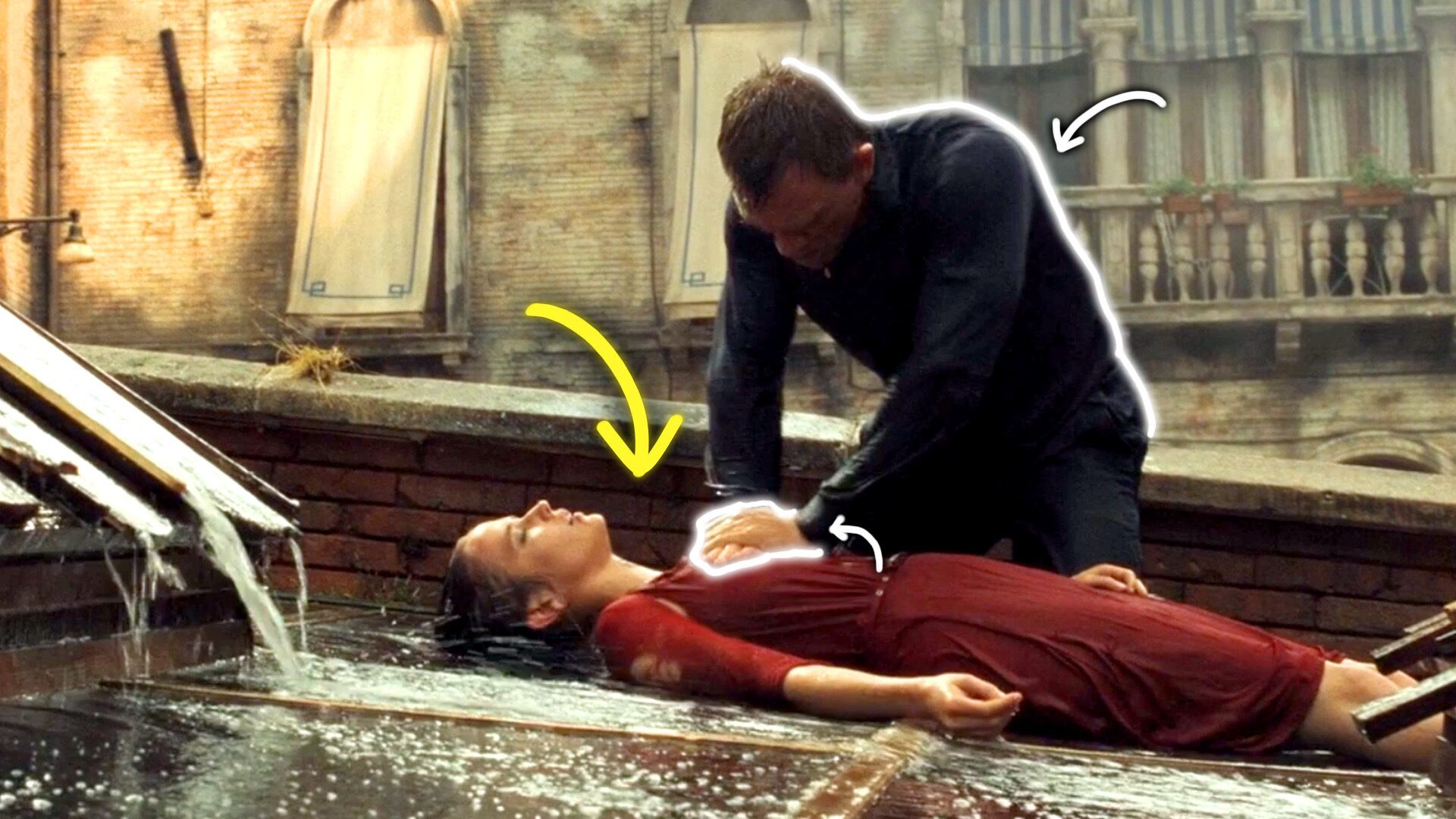
If you’ve ever watched a show or movie where a character is unconscious for some reason - drowning, electrocution, stabbed in a knife fight - you probably know what to expect next. Some hero will come perform what looks like cardiopulmonary resuscitation (CPR) for a minute or two, perhaps in slow motion, and definitely with a dramatic musical score. And bing, bang, boom, the unconscious character miraculously comes back to life.
If you’ve ever suspected that this is a gross exaggeration of the efficacy of CPR, well, you’re right. But exactly how wrong Hollywood gets CPR is hilarious at best and downright dangerous at worst.
Countries around the world continue to grapple with rising COVID cases, with Germany confirming case numbers at their highest at any point during the pandemic. German officials say that 48,000 new cases are being reported everyday.
Jill and Carlo cover the developing story out of suburban Milwaukee, where a speeding SUV careened through a Christmas parade. Looters get more brazen in San Francisco, the missing Chinese tennis star resurfaces, and more.
A CDC panel has unanimously endorsed boosters of the Pfizer and Moderna COVID-19 vaccines for all adults. Internal medicine physician Dr. Vivek Cherian joined Cheddar News to weigh in.
Neuroscientist Dr. Bankole Johnson joined Cheddar News to talk about the expectation of boosters for all U.S. adults and what the move would mean in the fight against the pandemic.
Deborah Sass, CO-CEO and Founding Partner of Space Hero, joins ChedHER to discuss how she's creating a global competition to send someone on a 10-day trip to space, her experience in the space industry without a background in STEM, and how she hopes to inspire younger generations of women.