By Samuel Petrequin
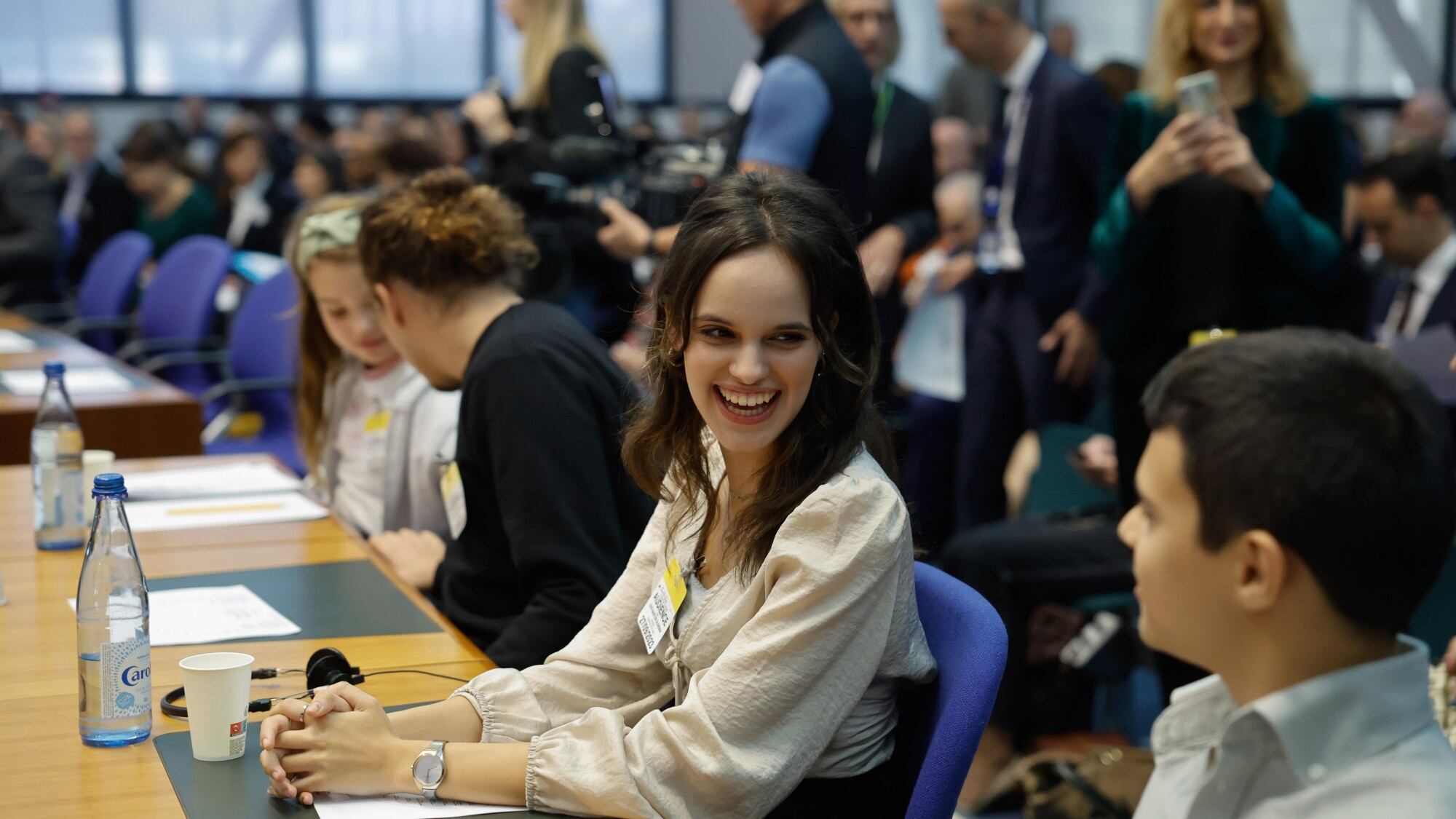
Six young adults and children argued that governments across Europe aren’t doing enough to protect people from climate change at the European Court of Human Rights on Wednesday in the latest and largest instance of activists taking governments to court to force climate action.
Legal teams for the 32 nations — which includes the 27 EU member countries, the United Kingdom, Switzerland, Norway, Russia and Turkey — questioned the admissibility of the case as well as the claim that the plaintiffs are victims of climate change harm.
But lawyers representing the group from Portugal said the nations they're suing have failed to adequately address human-caused warming and therefore violated some of the group's fundamental rights. They insisted on the need for further and rapid action to meet climate targets that have been set for the end of the decade.
“Today’s case is about the young. It is about the price that they are paying for the failure of states to tackle the climate emergency. It is about the harm that they will suffer during their lifetimes unless states step up to their responsibilities,” said Alison Macdonald, pleading on behalf of the young people.
Barrister Sudhanshu Swaroop, a counsel for United Kingdom, said national governments understand the threat of climate change and its challenges and are determined to tackle it through international cooperation.
He said the plaintiffs should have gone through national courts first, and stressed that since they are not nationals of the countries they are attacking, other than Portugal, the European Court of Human Rights cannot have jurisdiction.
But Macdonald told the judges about the urgency to tackle the “biggest crisis that Europe and the world" have perhaps faced, and that countries should play a bigger role in helping control planet-warming emissions.
“It cannot be within a state’s discretion whether or not to act to prevent catastrophic climate destruction," she said.
Although there have been successful climate cases at national and regional levels — young environmentalists recently won a similar case in Montana — the activists’ legal team said that because national jurisdictions did not go far enough to protect their rights, the group felt compelled to take the matter to the Strasbourg-based court.
Arguing that their rights to life, to privacy and family life, and to be free from discrimination are being violated, the plaintiffs hope a favorable ruling will force governments to accelerate their climate efforts.
“We’ve put forward evidence to show that it’s within the power of states to do vastly more to adjust their emissions, and they are choosing not do it,” lawyer Gerry Liston told The Associated Press at the beginning of the day-long hearing.
The court’s rulings are legally binding on member countries, and failure to comply makes authorities liable for hefty fines decided by the court.
Liston said a ruling in favor of the group would also help future climate cases taken at the domestic level by providing guidance to national courts.
But the plaintiffs — who are between 11 and 24 years of age and are not seeking financial compensation — will need to convince judges that they have been sufficiently affected to be considered as victims and prove that governments have a legal duty to make sure global warming is held to 1.5 degrees Celsius (2.7 degrees Fahrenheit) since pre-industrial times in line with the goals of the 2015 Paris climate agreement.
“We have put forward evidence before the court that all of the respondents’ state climate policies are aligned to 3 degrees (Celsius) of warming within the lifetime of the applicants, or in the case of some states, worse than that," Liston said. "No state has put forward evidence to counter that position."
But the director of the European Commission legal service, speaking on behalf of the EU’s executive arm as a third-party intervener in the case, defended the bloc’s climate action.
“The EU is going beyond the obligations of the Paris agreement,” said Daniel Calleja Crespo, citing the EU’s target of reducing net greenhouse gas emissions by at least 55% by 2030, and the goal of reaching climate neutrality by 2050, where most emissions are slashed and those remaining are canceled out.
The world is way off track on limiting warming to 1.5 C, scientists say, with global average temperatures projected to rise by 2 to 4 degrees C (2.6 to 7.2 F) by 2100 on current trajectories of warming and emissions reduction plans.
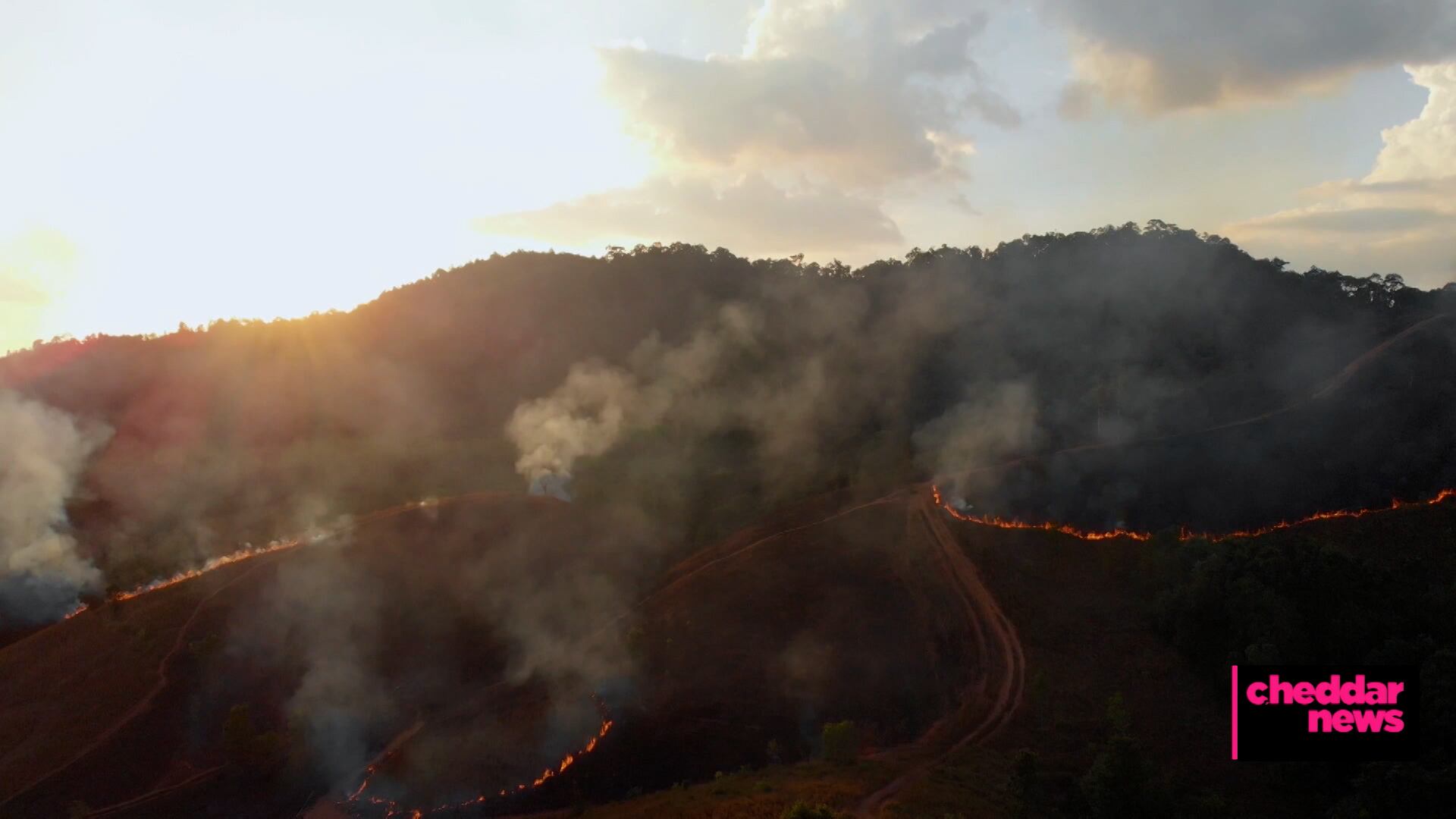
The activists said climate change affects their daily lives and their studies, and damages both their physical and psychological well-being. They started judicial action in the wake of a series of deadly wildfires in central Portugal in 2017, where four of them live.
“It’s 43 degrees (109 F) one day, and the next it’s hail, and that’s dangerous because we can’t predict what’s going to happen,” said 15-year-old André Oliveira, adding that the heat wave that hit Portugal in May hindered his schoolwork.
One of the judges asked the applicants to provide more details about how their quality of life has been affected. Macdonald mentioned their fatigue, their difficulty in sleeping, the impact on their mental abilities and the increasing difficulty for them to enjoy time outside of their homes.
Representing Portugal, Ricardo Matos questioned the “victim status” of the applicants, arguing that they have not established a direct link between states’ emissions and the harm suffered because of the wildfires in their country. Matos insisted that because climate change has an impact on everyone, no one should be allowed victim status.
It's the first climate case to be filed with the court. Two other climate cases — one by an association of Swiss senior women against Switzerland, the other by a French lawmaker against France — have been brought before the court since.
Members of the Swiss association traveled to Strasbourg in support of the young Portuguese. They stood in front of the courthouse before the hearing, alongside a few dozen of other supporters.
“I wish them a future, because they are very young,” said Anne Mahrer, the group's co-president. “We probably won't be there to see it, but if we win, everybody wins.”
A decision is not expected for several months. It's still unclear whether the court will deliver its ruling on all three climate cases at the same time.
Associated Press climate and environmental coverage receives support from several private foundations. See more about AP’s climate initiative here. The AP is solely responsible for all content.