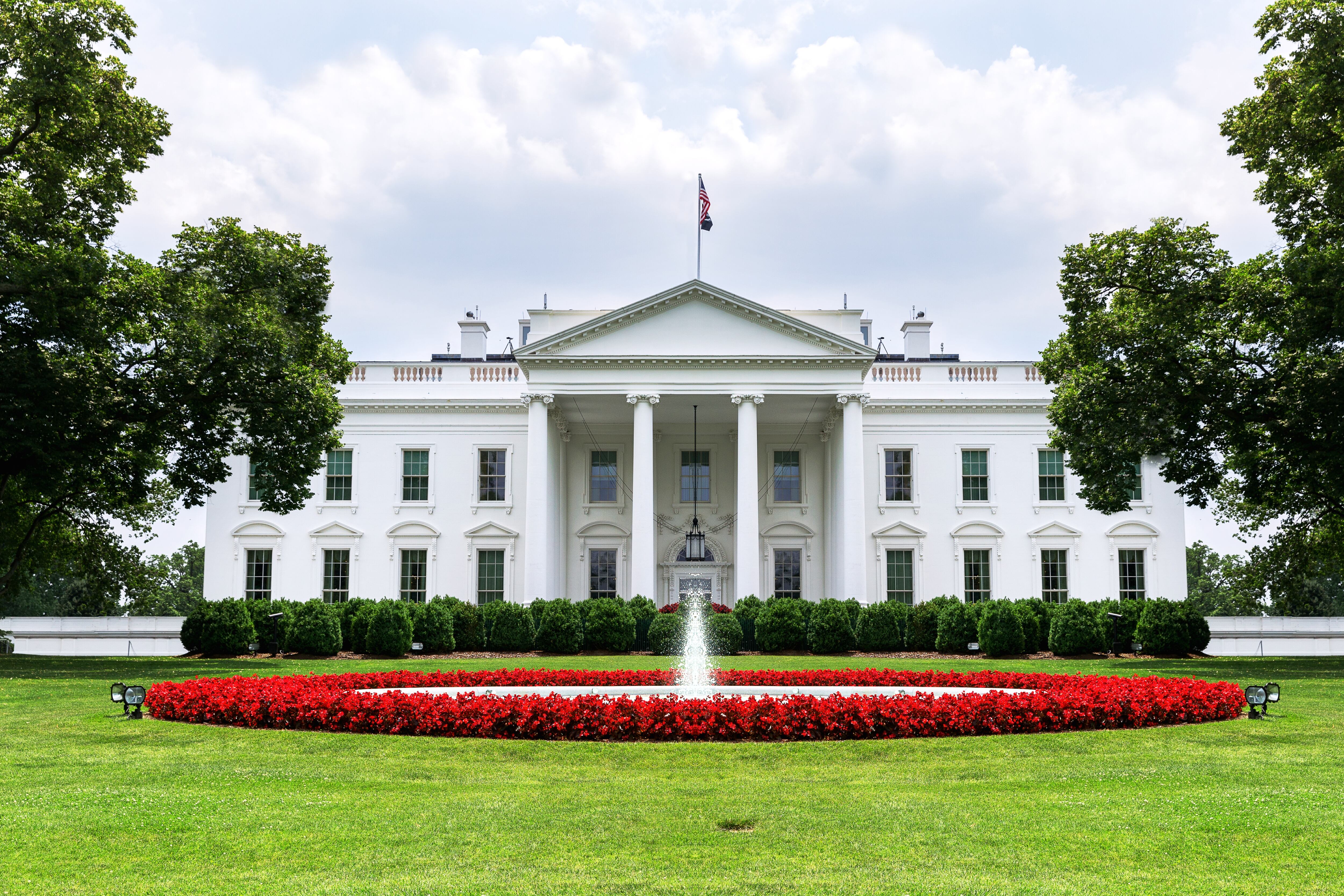
President Trump is not the only president whose conduct is on trial today. While the sitting president faces charges of abuse of power and obstruction of Congress, his two predecessors are also facing a reckoning in the Guantánamo Bay military tribunal. President Trump’s Senate impeachment trial and the Guantánamo Bay tribunal both hinge in large part on the same unresolved issue: how much information can the executive withhold in the name of national security?
The Guantánamo proceedings raise questions about the extent to which presidents may invoke national security to deflect challenges to their decision-making. U.S. presidents have the power to claim executive privilege, which is the ability to maintain confidential communications or resist subpoenas by the other branches of government if it relates to issues of national security or would impair the executive’s ability to govern. Although that power is not enumerated by the U.S. Constitution, the Supreme Court has ruled that although Congress has the responsibility to exercise oversight over the executive branch, the executive has the power to withhold certain information. This right is not unfettered but its limits are also not clearly defined. Congress and the president have battled on the issue of executive privilege since 1792 when George Washington and Congress tussled over documents related to a military defeat against Native American tribes in present-day Ohio.
In the past few decades, presidents have come under scrutiny for using questionable claims of national security to block access to information requested by Congress. Presidents George W. Bush and Barack Obama both raised objections to subpoenas regarding the secretive activities at the Guantánamo detention camp on the basis of executive privilege but were ordered to turn over most of the requested material by the Supreme Court. The only Supreme Court decision that has ever explicitly ruled on executive privilege in presidential communications was U.S. vs Nixon and the justices sided in favor of Congress, ultimately leading to the resignation of President Richard Nixon.
Now, executive privilege in the name of national security has once again become a central issue in the ongoing impeachment trial. On the second day of President Donald Trump’s defense, his attorney Ken Starr invoked the question of privilege and said Congress has to recognize the president’s “profound interest in confidentiality.” President Trump repeatedly exercised executive privilege during the House of Representatives impeachment hearings to instruct members of the executive branch to not respond to congressional subpoenas. His resistance to the investigation ultimately formed the basis of one of the impeachment charges levied against him: obstruction of Congress.
But in a twist of fate, as the sitting president faces questions about his use of executive privilege in dealing with Ukraine, his two predecessors are facing similar questions about invoking it to withhold information about Guantánamo.
Executive Privilege and State Secrets on Trial in Guantánamo Military Tribunal
While Democratic lawmakers continue to fight Trump and Republican supporters over the need to declassify documents and allow individuals to testify about his dealings with Ukraine, a two-week pre-trial hearing in a military courtroom got underway as defense attorneys seek to disqualify confessions of alleged 9/11 mastermind Khalid Sheikh Mohammad and four accused co-conspirators.
Central to both trials is the use of classified information in the name of national security, though the application is different from the impeachment trial.
The U.S. government has claimed some information regarding Guantanamo is classified, a claim that University of Alabama School of Law professor Ronald Krotoszynski called “specific and particularized and self-evidently have some merit.” He explained that national security can be used as a means to withhold certain information from a court (a criminal court in the Guantánamo case and the Senate chamber in the Trump impeachment trial) but only for very specific reasons. Information that previous administrations had withheld, like locations of black sites, “is very likely to involve military or national security secrets,” Kroyoszynskyi said.
At Guantánamo, prosecutors had used classification rules as a means of keeping testimony private that pertained to “black sites.” Even an entire prison, called Camp 7, remains classified. However, one of the lawyers for Khalid Sheikh Mohammad said prosecutors were using “classification and security privilege to control the narrative.”
Historically, the way these struggles play out is that Congress demands information, an executive resists, and then the executive branch and Congress “negotiate and compromise,” Krotoszynski said. In the president’s impeachment trial, Congress has attempted this dance with the president.
But in criminal cases, the “interest of the defendants in meeting charges against them is pretty compelling,” Krotoszynski said. So the Supreme Court has generally ruled there needs to be a “balance” between the “need for secrecy against the need of the defendants to have access to this information.”
Karen Greenberg, who runs the Center on National Security at Fordham Law, told Cheddar there’s a difference between “national security for the reason of not exposing behavior” as opposed to national security to avoid risk.
“What they really wanted to do was make sure details about the torture did not get out,” and national security allows an excuse to not bring information to the forefront for fear of compromising how that information was obtained, she continued.
Trump Impeachment in Washington, DC
Throughout the impeachment inquiry into the president’s conduct, Trump has barred officials from testifying and the administration has refused to turn over documents, citing executive privilege. Of the four witnesses called who still work at the State Department, only Ambassador Gordon Sondland ended up testifying after initially being blocked by the Trump administration.
The maneuvering recently hit a fevered pitch after former National Security Adviser John Bolton said, after initially refusing to testify, that he will now comply with a subpoena if the Senate should issue one. Although the president said he will invoke privilege to block Bolton, the public found out about an interesting twist over the weekend, as the New York Times reported Bolton is writing a manuscript in which he claims the president told him that he was withholding aid to Ukraine until it agreed to investigate political rivals, including former Vice President Joe Biden.
House managers presented the case against the president to the Senate but remain at odds with Republicans over the release of certain pieces of information, witnesses,and documents, which the president said on the basis of his executive privilege.
Trump’s lawyers have cited the president’s need to be able to speak candidly with advisers and therefore the need to shield that information from the Congress. Deputy White House Counsel Patrik Philbin issued a memo that addressed executive privilege and said the Supreme Court has recognized that the ability of the president to keep conversations confidential is, as the Court called it, “fundamental to the operation of government.”
Jay Sekulow, another of Trump’s attorneys, said executive privilege is an “important legal right” needed for the “proper functioning of the executive branch.”
However, executive privilege doesn’t allow for all aides to the president to be barred from testifying as blanket reasoning, experts told Cheddar.
“That’s not how executive privilege works in the courts,” Krotoszynski said. “For the president to invoke [executive privilege], the president’s lawyers need to offer specific and particularized reasons for why information should be deemed privileged under executive privilege.”
“Simply saying they can’t be compelled to testify is bogus,” because witnesses can and should only withhold specific information for reasons of national security once they’re on the witness stand, said Krotoszynski.
Congress has the right to enforce a subpoena, but, in particular, recent Congresses have struggled with how to do that. It could revive its authority to arrest those who refuse subpoenas or fine or jail officials on “inherent contempt,” an idea House Judiciary chairman Jerry Nadler (D-N.Y. 10th District) reportedly flirted with during the House inquiry.
Congress relies on the Department of Justice to enforce its subpoenas, but Attorney General Bill Barr has been a staunch supporter of the president throughout the impeachment. His name has also come up at various time in connection to the president’s dealings in Ukraine, including the infamous July 25, 2019 phone call between Trump and Ukraine President Volodymyr Zelensky.
“There is no functional independence between the Department of Justice and the White House,” Krotoszynski said of the current administration.
In the Senate, the body has the power to run the trial as it sees fit, although Krotoszynski said it would be a “good housekeeping attempt to follow the Supreme Court rulings on executive privilege.
“If the Senate wants to recognize an absolute executive privilege, the Senate can do that,” he said. “I think that would be a horrifically bad precedent but, ultimately, the conduct of the Senate trial is in the hands of a majority of senators.”
“[Republicans and Democrats] are cognizant of the fact that national security is sort of a term that is dispositive. If it’s national security, we have to do it,” said Greenberg. She alleged the president’s defenders are inappropriately using national security as a “way of not having to let us know things that are important to know about the culpability of government actors.” There can be an overlap between classification to cover up facts and classification “truly in the national security interest,” Greenberg said, but noted the ability to classify documents has grown “exponentially,” starting with the presidency of George W. Bush.
From a national security standpoint, she said everyone should testify. “They can always say ‘I can’t talk about something because it’s classified.'”
National Security in Criminal and Civil Trials
The application of the principle of executive privilege is not simple. Most times, the privilege is invoked to prevent information from being released in a civil setting where that information might poste a national security risk.
The Guantánamo case is a criminal one, and the Supreme Court precedent sides in favor of the accused having access to information presented against them. However, the impeachment trial is a civil trial, and the Senate holds the sole power to impeach, giving it the freedom to set the rules and, potentially, enforce subpoenas.
Greenberg argues national security as a rationale, in these cases, is being “neutralized.”
“We have these two trials, both of which are incredibly difficult areas,” Greenberg said. In two different periods, both cases utilize “what we did in the name of national security.”