By Rebecca Blackwell and Terry Spencer
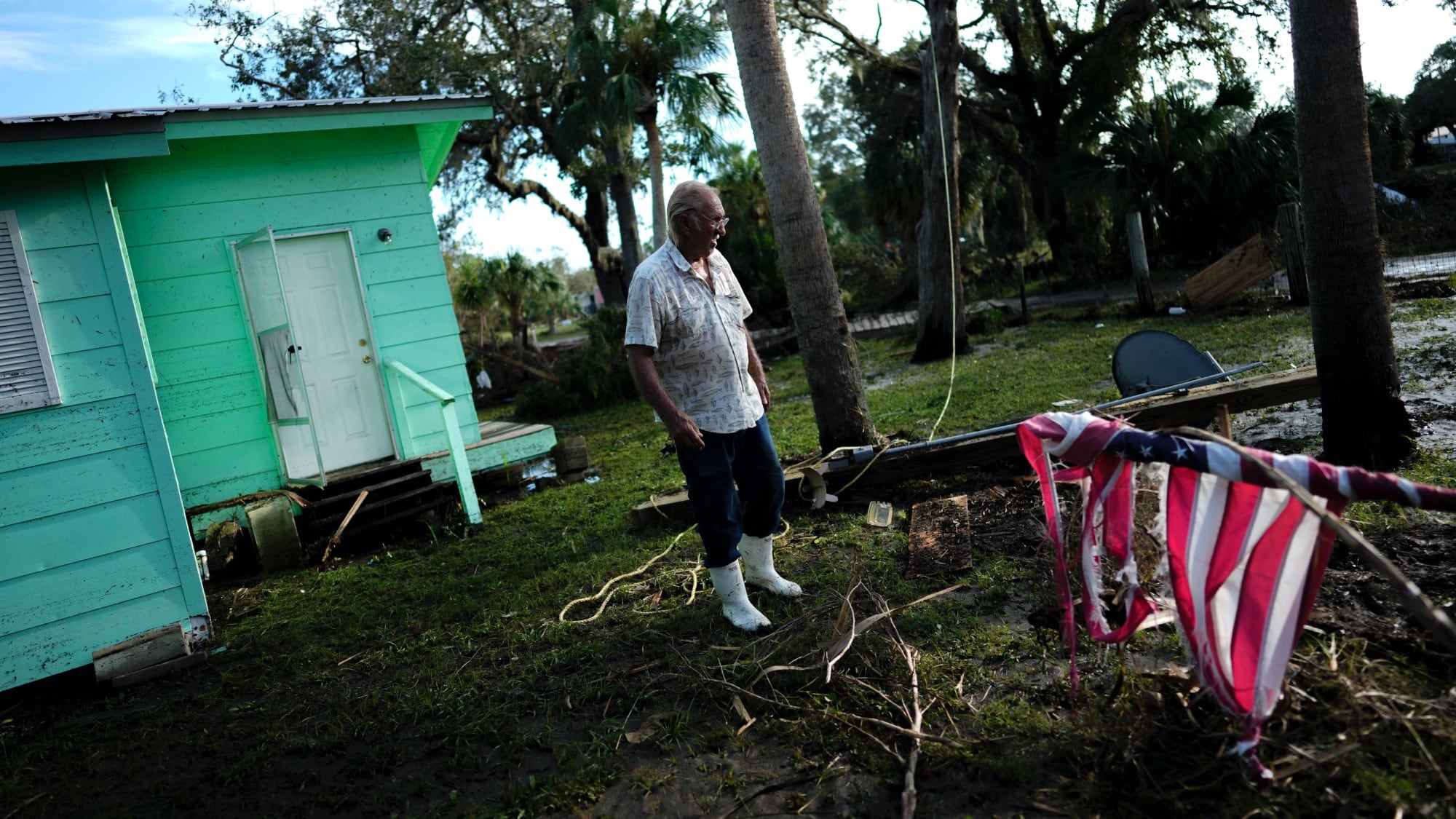
Florida and Georgia residents living along Hurricane Idalia's path of destruction on Thursday picked through piles of rubble where homes once stood, threw tarps over ripped-apart roofs and gingerly navigated streets left underwater or clogged with fallen trees and dangerous electric wires.
“My plan today is to go around and find anything that’s in the debris that is salvageable and clean out my storage shed," said Aimee Firestine of Cedar Key, an island located in the remote Big Bend area where Idalia roared ashore with 125 mph (201 kph) winds Wednesday.
Firestine rode out Idalia about 40 minutes inland. When she drove back onto the island hours after the storm passed, her heart sank. The gas station was gone. Trees were toppled. Power lines were on the ground. An entire building belonging to the 12-unit Faraway Inn her family owns had been wiped away. Another building lost a wall.
“It was a little heart-wrenching and depressing,” Firestine said.
At Horseshoe Beach in central Big Bend, James Nobles returned to find his home had survived the storm, though many his neighbors weren’t as lucky.
“The town, I mean, it’s devastated,” Nobles said. “It’s probably 50 or 60 homes here, totally destroyed. I’m a lucky one, a few limbs on my house. But we’re going to build back. We’re going to be strong."
Residents of the tiny town, most of whom evacuated inland during the storm, helped each other clear debris or collect belongings — high school trophies, photos, records, china. They frequently stopped to hug amid tears. Six-foot-high watermarks stained walls still standing, marking the extent of the storm surge.
Florida officials said there was one hurricane-related death in the Gainesville area, but didn’t release any details. The state’s highway patrol reported earlier that two people were killed in separate weather-related crashes just hours before Idalia made landfall.
A man in Valdosta, Georgia, died when a tree fell on him as he tried to clear another tree out of the road, Lowndes County Sheriff Ashley Paulk said.
As many as a half-million customers were without power at one point in Florida and Georgia as the storm ripped down utility poles.
The storm had 90 mph (145 kph) winds when it made a direct hit on Valdosta on Wednesday, Georgia Gov. Brian Kemp said.
“We’re fortunate this storm was a narrow one, and it was fast moving and didn’t sit on us,” Kemp told a news conference Thursday in Atlanta. “But if you were in the path, it was devastating. And we’re responding that way.”
Desmond Roberson of Valdosta was shocked when he took a drive through the city of 55,000 with a friend to check out the damage. On one street, he said, a tree had fallen on nearly every house. Roads remained blocked by tree trunks and downed powerlines and traffic lights were still blacked out at major intersections.
“It’s a maze. ... I had to turn around three times, just because roads were blocked off,” Roberson said.
Chris Exum, a farmer in the south Georgia town of Quitman, estimates that he lost half or more of his pecan crop from Idalia, which he said left “a wall of green” with downed trees and limbs.
Some of the trees are 40 to 50 years old, he noted. “It takes a long time to get back to that point.”
Rescue and repair efforts were in full force Thursday in Florida’s Big Bend area, where Idalia shredded homes, ripped off roofs, snapped tall trees, and turned streets into rivers.
Florida Gov. Ron DeSantis toured the area with his wife, Casey, and federal emergency officials.
"I’ve seen a lot of really heartbreaking damage,” he said, noting a church that had been swamped by more than 4 feet (1.2 meters) of water. “When you have your whole life’s work into, say, a business that ends up under 5 feet (of water) – that’s a lot of work that you’ve got to do going forward.”
Tammy Bryan, a member of the severely damaged First Baptist Church, said Horseshoe Beach residents consider themselves a family, one largely anchored by the church.
“It’s a breath of fresh air here,” Bryan said. “It’s beautiful sunsets, beautiful sunrises. We have all of old Florida right here. And today we feel like it’s been taken away.”
Marina worker Kerry Ford said he was glad so many people in Horseshoe Beach ultimately decided to evacuate. He said he had to convince several people to go.
“I have seen these storms and I told them, look, this is not one you want to stay for because I knew it was going to be catastrophic,” Ford said. “It wasn’t going to be much left. And if you stayed, your first thing, I ask them, can you all tread water for a couple of hours? Because that’s pretty much what it’s going to be.”
Despite the widespread destruction in the Big Bend, where Florida's Panhandle curves into the peninsula, it provided only glancing blows to Tampa Bay and other more populated areas, DeSantis noted. In contrast, Hurricane Ian last year hit the heavily populated Fort Myers area, leaving 149 dead in the state.
President Joe Biden spoke to DeSantis and promised whatever federal aid is available. Biden also announced that he will go to Florida on Saturday to see the damage himself.
The president used a news conference at the Federal Emergency Management Agency's headquarters to send a message to Congress, especially those lawmakers who are balking at his request for $12 billion in emergency funding to respond to natural disasters.
“We need this disaster relief request met and we need it in September” after Congress returns from recess, said Biden, who had pizza delivered to FEMA employees who have been working around the clock on Idalia and the devastating wildfires on Maui, Hawaii.
Before heading out into the Atlantic Thursday, Idalia swung east, flooding many of South Carolina’s beaches and leaving some in the state and North Carolina without power. Forecasters said the weakened storm should continue heading away from the U.S. for several days, although officials in Bermuda warned that Idaliacould hit the island early next week as a tropical storm.
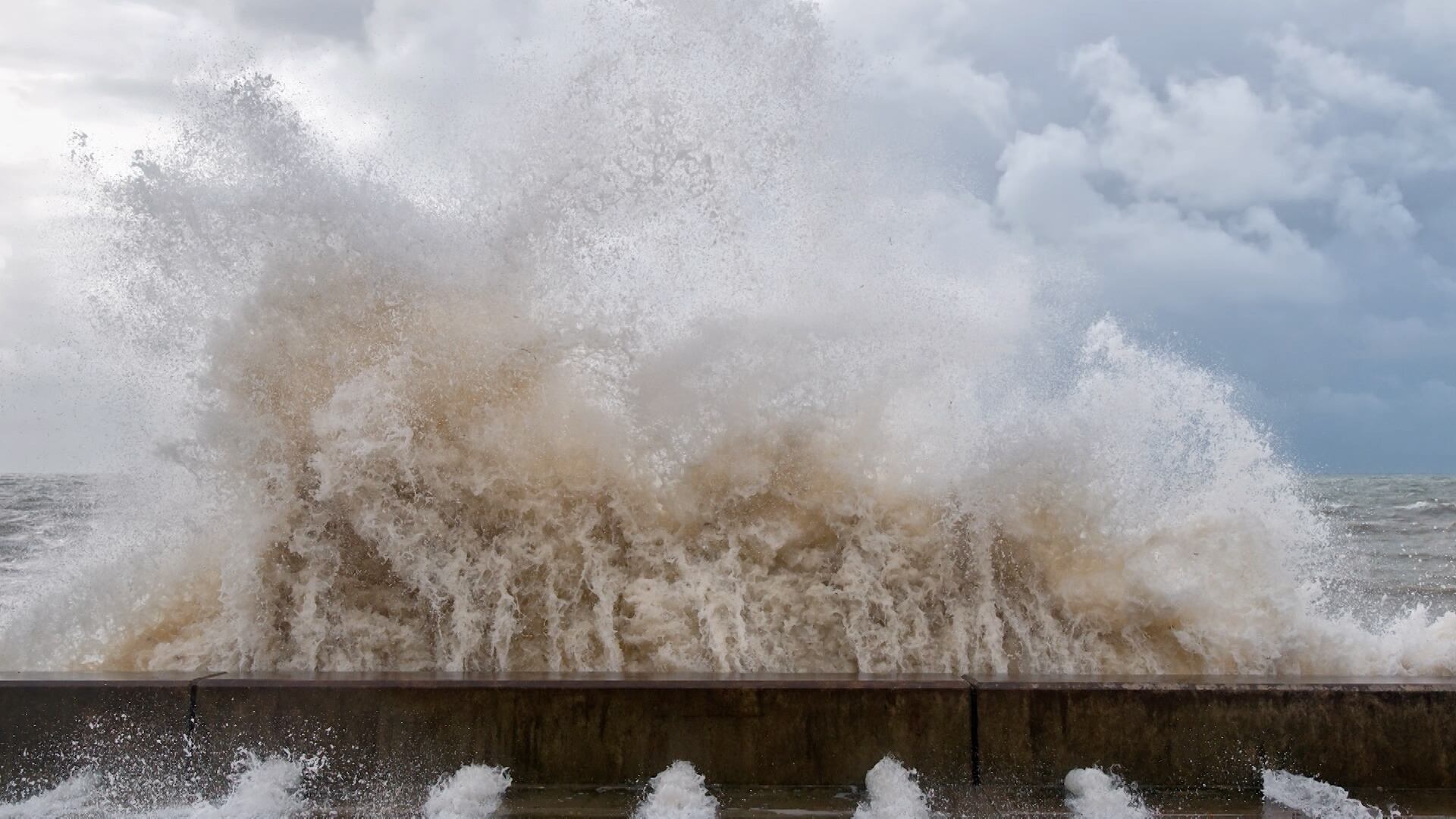
In South Carolina, the storm coupled with already really high tides to send seawater flowing over sand dunes in nearly every beach town. In Charleston, Idalia's surge topped part of the seawall that protects the downtown, sending ocean water into the streets and neighborhoods where horse-drawn carriages pass million-dollar homes and the famous open-air market.
Preliminary data showed the Wednesday evening high tide reached just over 9.2 feet (2.8 meters), more than 3 feet (0.9 meters) above normal and the fifth-highest reading in Charleston Harbor since records were first kept in 1899.
Bands from Idalia also brought short-lived tornadoes. One flipped a car in suburban Goose Creek, South Carolina, causing minor injuries, authorities said. No major damage was reported.
In southeastern North Carolina, more than 9 inches (23 centimeters) of rain fell in Whiteville, flooding downtown buildings. The downpour swelled creeks and rivers and forecasters warned places downstream on the Pee Dee and Lumber rivers could flood, although it will be well below the historic crests that devastated entire towns after Hurricanes Florence and Matthew.
Associated Press writers Daniel Kozin in Horseshoe Beach; Russ Bynum in Savannah, Georgia; Jeff Amy in Atlanta; Jeffrey Collins in Columbia, South Carolina; Lisa J. Adams Wagner in Evans, Georgia; and Kathy McCormack in Concord, New Hampshire, contributed to this report.
Updated at 3:50 a.m.. ET Sept. 1 with details throughout.