CHRISTOPHER RUGABER / AP Economics Writer
WASHINGTON — About a year ago, Federal Reserve officials were nervous. Markets were cratering. Fear about a trade war was rising. The officials needed to know if the turmoil was chilling consumer spending. Problem was, a partial shutdown of the government had halted the release of most economic data.
So Fed officials did something they couldn't have done during previous shutdowns. They turned to a backup: Consumer spending figures from First Data, a card payment company that processes about $2 trillion in transactions each year. First Data's figures showed that most consumers were shrugging off the upheaval. Weeks later, when the government's data was finally released, it closely tracked First Data's figures.
"It was a big deal for the Fed in terms of having information about the economy when the retail sales data did not come out," said Claudia Sahm, a former Fed staffer who helped compile the First Data figures. Fed policymakers were “extremely interested in what those readings were.”
The experience seems to have whetted the Fed's appetite for private sources of data that can help assess the economy's health. An institution that often calls its interest-rate stance “data-dependent,” the Fed is increasingly recognizing that some privately produced data is nearly as accurate as — and often timelier than — the government reports that it has long depended upon.
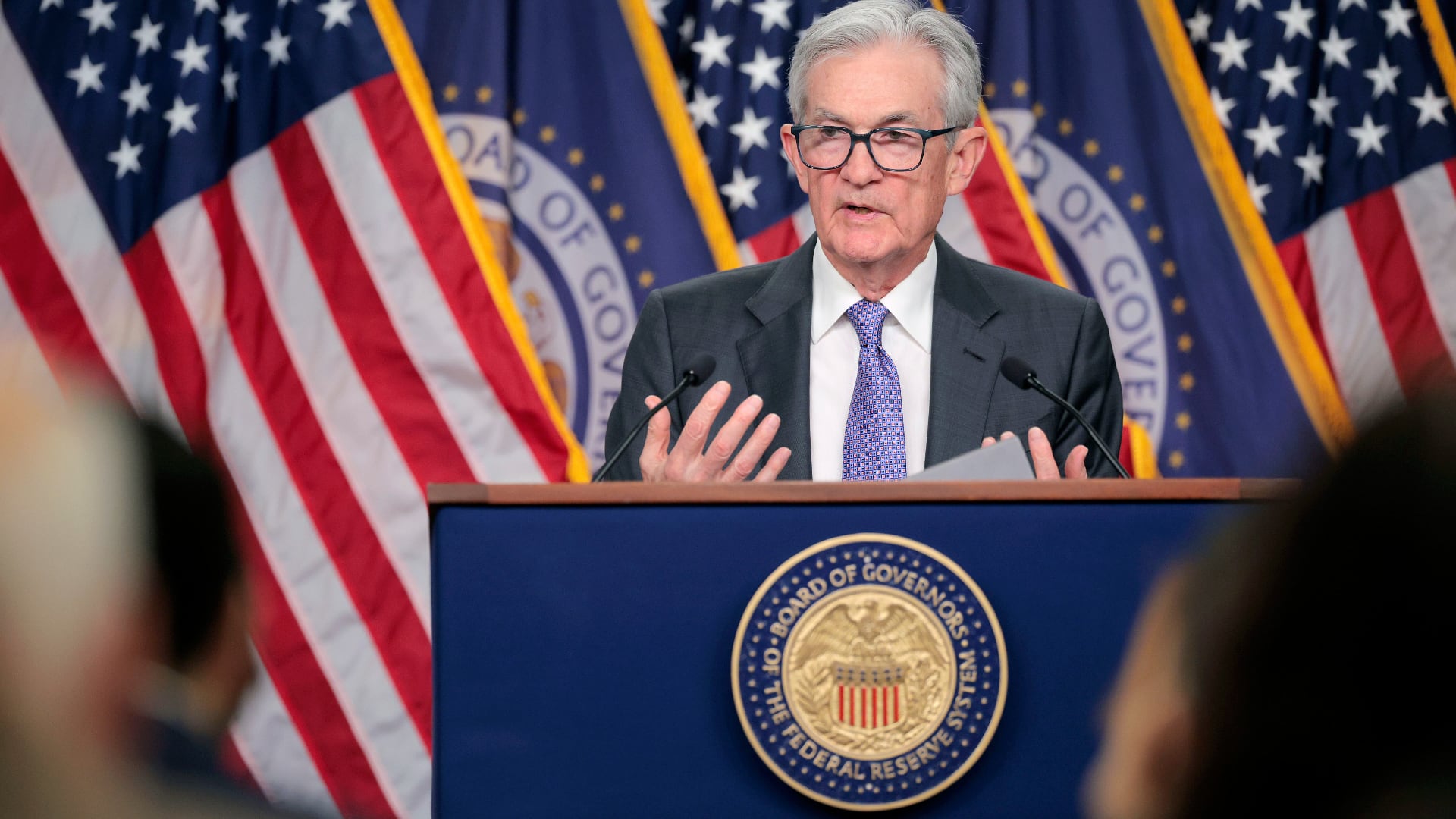
“We have been working with big data ... with the purpose of better understanding the current position of the economy,” Chairman Jerome Powell said last summer. “It’s an area of real interest for us.”
Thanks to an array of technological breakthroughs, the potential opportunities have expanded. Millions of financial transactions, digitized and compiled by private firms, could help the Fed and other government agencies track changes in company sales, prices, and wages. Computer processing power and data storage have become cheaper. Advanced software can make it easy to manipulate huge troves of raw data.
The biggest question is the potential payoff: Could the Fed's use of privately produced economic data help it detect — and fight — recessions more quickly? If so, government officials could, in theory, minimize job losses and the social and psychological upheavals that economic crises cause.
"These data are becoming of increasing practical importance for figuring out the state of the economy for policy making," Matthew Shapiro, an economist at the University of Michigan who specializes in the practical use of economic data, said at a conference last fall. “The quality of official statistics is going to deteriorate without help from big data.”
That's because most government reports rely on surveys, which are costly and have been marred by declining response rates from businesses and households. Fewer homes have landline phones or respond to calls. And the surveys require detailed responses that households and companies are less inclined to provide.
By contrast, privately produced “big data” is automatically generated as people go about their daily lives. It is typically available faster than government reports. And it can show pinpoint information about neighborhoods and regions. First Data's figures, for example, can reveal spending patterns down to the city level. By contrast, the government's equivalent — a monthly retail sales report from the Commerce Department — captures only national trends.
Fed economists have discovered that data from the payroll processor ADP might have more quickly illustrated the severity of the 2008-09 Great Recession than the government's own data did. In early 2008, the government's initial reports on monthly employment had shown relatively few job losses. Months later, though, those figures were revised sharply higher to reveal much more severe job losses.
Tomaz Cajner, a Fed economist, and four colleagues used raw ADP data to construct a separate measure of employment. (ADP compiles payroll records for companies that employ about one-fifth of the workforce.) That measure found that in the first eight months of 2008, roughly 1 million jobs had been lost — more than the government's initial measure of 750,000 and nearer the final revised total of 1.4 million losses.
"Our new measure, had it been available in 2008, would have been much closer to the revised data, alerting us that the job situation might be considerably worse than the official data suggested," Powell said in a speech last fall.
The First Data figures, too, could have provided the Fed with an early warning, Sahm noted. As late as May 2007, Ben Bernanke, then the Fed chairman, had suggested that the impact of the housing bust, which ultimately ignited the Great Recession, would "likely be limited" and probably wouldn't significantly damage the economy.
Subsequent research showed that spending began to fall earlier in states where home prices had risen the most and then collapsed, such as Florida and Nevada. The Fed's First Data figures, had they been available then, could have shown that spending decline in real time. Fed economists might have known earlier than they did that the housing bust was depressing consumer spending and endangering the economy.
"We would have known it was coming," said Sahm, who is now a policy director at the Washington Center for Equitable Growth, a liberal think tank. "We would have been able to see that this wasn't just a local thing, it's spreading."
Economists have long urged government statistical agencies to take greater advantage of the increasing digitalization of the economy to more accurately track things like retail sales and price changes. Many large retailers can track daily sales figures. So why couldn't the government adopt a similarly nimble approach and issue its economic reports much more quickly?
"Consumers shop online, summon cars for hire with an app, watch 'TV' without television stations or TVs, and 'bank' without cash or checks," Shapiro and four colleagues wrote in a paper last spring. "Data could, in principle, be available with a very short lag."
Those trends have enabled many companies to stockpile data and mine it for economic insights. Edward Glaeser, a Harvard economist, has found that the consumer review site Yelp can help gauge the economic health of neighborhoods by tracking the growth or decline of new businesses. The Yelp data is available much earlier than the equivalent Census figures, which lag by more than two years. And in larger, wealthier cities, the Yelp data tends to be more comprehensive. Yelp lists more restaurants in New York City than the Census Bureau does, Glaeser's research found.
Other government agencies have been investigating alternative data sources for years but are still in the early stages of using it. The Bureau of Labor Statistics, which compiles the government's primary inflation gauge, in May began publishing experimental price data on new cars using transactions reported by J.D. Power. The bureau is considering using this method to replace its current system of painstakingly sending data collectors to individual dealerships to ask about sales prices.
And last winter the Census Bureau said it would incorporate retail sales data compiled by the NPD Group from stores into its monthly retail sales reports.
At the same time, the use of privately-collected data poses challenges of its own. The government's surveys are designed to track specific economic trends. By contrast, private data doesn't always cover the same ground as a government survey. For example, the Labor Department collects a lot of data on unemployed workers — how long they've been out of work, their demographic backgrounds — that ADP doesn't cover.
And while the government strives to ensure that its reports cover a representative sample of the U.S. population, that usually isn't so for companies. Yelp's coverage, for example is much sparser in rural areas and smaller towns, according to Glaeser's research.
There are more fundamental problems, too: Private companies have no obligation to share their data. The Fed pays for the First Data figures, and its access lapsed at the end of last year, though it is seeking to renew it. In theory, a company could make its data prohibitively expensive even if a federal agency were to become dependent on it.
Still, Sahm says that data sets like First Data's spending figures could help address a wide range of economic conundrums. How, for example, did a plunge in oil prices in 2015 affect consumer spending in areas with heavy concentrations of oil drilling jobs? How did the tariffs China imposed last year on U.S. agriculture products, as part of the U.S.-China trade war, affect the spending patterns of farmers?
“It opens up a lot of opportunities to bring data to bear,” Sahm said.