High-water rescue crews pulled people from flooded homes and vehicles Wednesday in Kentucky, where waves of thunderstorms prompted flash flood warnings and watches. A search continued for two children swept away after torrential rains in the northeastern United States.
The National Weather Service issued flash flood watches and warnings, estimating that as much as 10 inches (25 centimeters) of rain could fall in the area where Kentucky, Illinois and Missouri meet at the convergence of the Mississippi and Ohio rivers. The weather system will then move Thursday and Friday over New England, where the ground remains saturated after recent floods.
Atmospheric scientists say the global warming responsible for unrelenting heat in the Southwest also is making this kind of extreme rainfall a more frequent reality, because clouds hold more moisture as the temperature rises, resulting in more destructive storms.
With so much rain falling so quickly, it was a “life-threatening situation” in the Mayfield and Wingo areas early Wednesday, according to Keith Cooley, a senior forecaster with the weather service in Paducah, Kentucky.
In Mayfield, a city of 10,000 that was especially hard hit by storms that produced deadly tornadoes in December 2021, the flooding appeared concentrated in older neighborhoods, where the overflowing Red Duck Creek usually meanders toward Mayfield Creek, which feeds the Mississippi.
“I know we’re weary of this, but also so hopeful for the future,” Mayfield Mayor Kathy O’Nan said. “I don’t think this is going to set us back any, but we all feel that enough is enough.”
In Connecticut, a woman died after being swept down a swollen river Tuesday with her 5-year-old daughter. State Fire officials say the pair were swimming in the Shetucket River in Sprague when they were swept away by currents that have been running high because of the recent heavy rains in New England. They were found unconscious downstream and taken to a local hospital, where the mother, a woman in her 30s, died. Fire officials say the daughter was stabilized at a local hospital and is expected to survive.
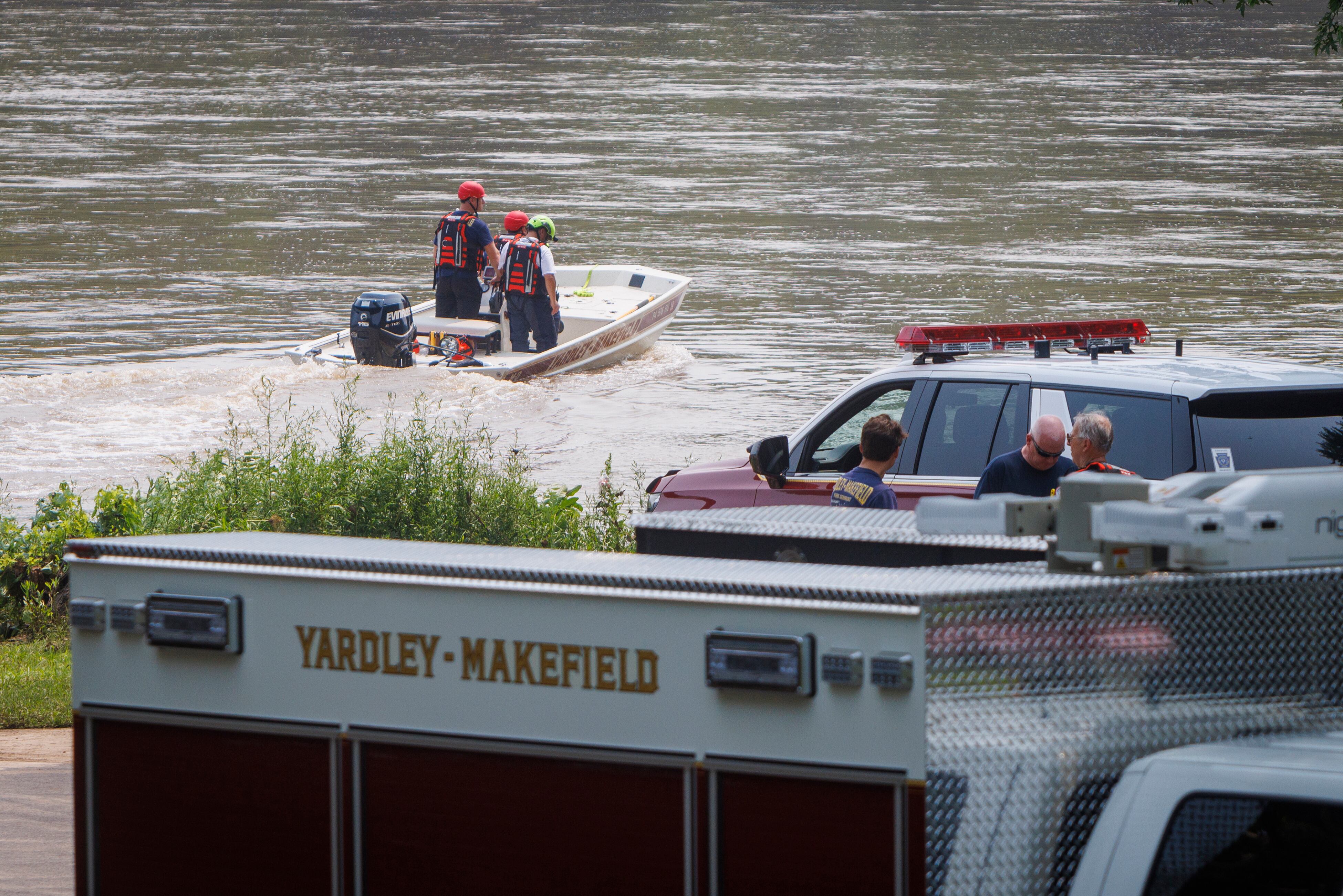
And in Pennsylvania, searchers are still trying to find two children visiting from South Carolina who were swept away in what one fire chief called “a wall of water” that hit their family and killed their mother Saturday. Four other people also died in those flash floods.
Emergency officials described the flash flooding as a catastrophic threat in Kentucky’s Graves County, where Mayfield is the county seat. With major flooding already occuring and more rain on the way, Sheriff Jon Hayden urged drivers Wednesday to stay off the roads.
“Many roads have been washed out, many cars have driven into water and drowned out,” Hayden posted on social media. He said His House Ministries opened their church for anyone needing shelter.
Mayfield police urged people to closely watch for updates since many roads were becoming impassable and the area was expecting another 3 to 6 inches of rain. A short time later they began restricting travel due to flooding, with numerous roads under water.
Crews have had to rescue people from homes, but there haven’t been any reports of injuries or deaths, said Trooper Sarah Burgess, a spokesperson for Kentucky State Police Post 1, which covers 11 western Kentucky counties. Graves County appears to be hardest hit so far, she said.
O’Nan said she had no reports of injuries or deaths from the flooding after about six inches had fallen since midnight. Emergency officials and police officers were going door to door and finding that most residents had self-evacuated.
“There have been no injuries reported, which is just a blessing,” O’Nan said. She added that power briefly went out in the southern part of the city, which is still recovering from the 2021 tornados that toppled the county courthouse and killed dozens of people.