By Ralph D. Russo
Georgia coach Kirby Smart remembers having his head shaved when he was a freshman football player at his alma mater back in the mid-1990s and busing tables after team meals.
Older players putting the newbies in their place by hazing remains ingrained in team sports at all levels in the United States. That is not the way Smart wants to run the Bulldogs, who have won two straight national championships.
“Now, those freshmen, the guys we sign, they have to play,” Smart said this week at Southeastern Conference media days. “So when you create this separation of, they have to do this and they have to do that, they’re not ready to play. They’re like a different team.”
While major college sports programs have become multimillion-dollar, high-stakes businesses run more like professional teams, ritualistic hazing remains a problematic tradition within them. School rules forbidding hazing, more than 40 state laws against it and horror story after horror story have not stopped it.
“I think it’s happening more often than people realize and we see it making the headlines around what’s happening in high school locker rooms,” said Elizabeth Allan, a professor at the University of Maine who has studied hazing on campus. “And so students are coming to college often having experienced hazing in their high school athletics programs.”
Northwestern fired longtime football coach Pat Fitzgerald after a university investigation found allegations of hazing by 11 current or former players, including “forced participation, nudity and sexualized acts of a degrading nature.” Fitzgerald, who was reportedly making more than $5 million per year, was let go after he was initially given a two-week suspension.
The school is now facing at least two lawsuits by former players and more are possible. Players said hazing was so rampant in the football program it had become normalized.
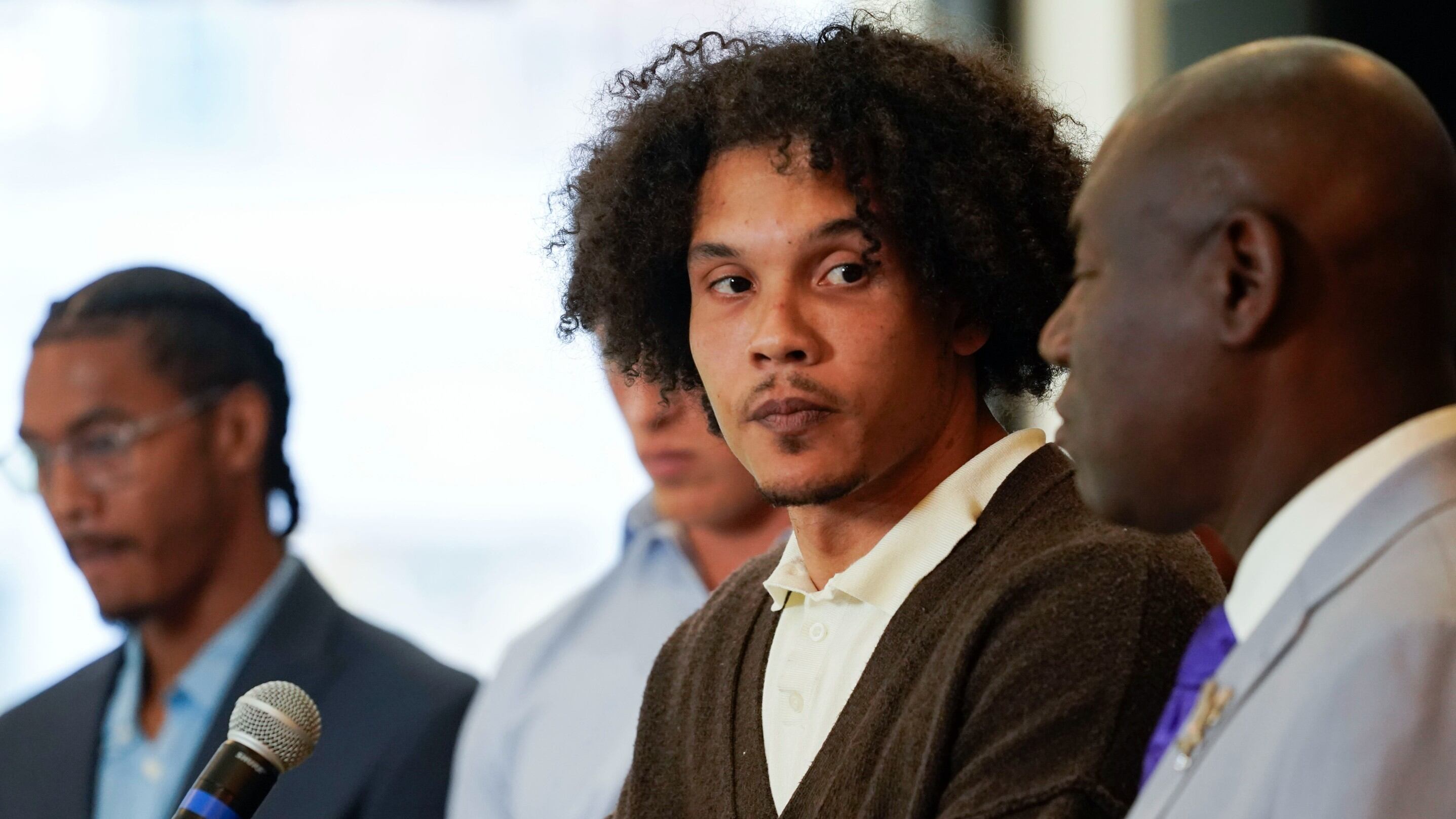
"You’re overpowered, you’re dominated by the culture," said Lloyd Yates, a member of the Northwestern football team from 2015-17.
Allan said studies have shown about half of all students report experiencing some type of hazing in high school. She said hazing can be found wherever a large group is trying to establish a hierarchy.
“If you understand hazing as a form of an abuse of power, then you can see how in those environments or group situations where people are jockeying for power or trying to enforce some kind of hierarchies, hazing is an easy way to kind of make clear who’s got the power,” she said.
She added that often those who have been hazed are conditioned to perpetuate the bad behavior.
“It was done to me, so ... this is what we do here,” Allan said.
Forty-four states, including Illinois, have laws against hazing; some treat it as a felony.
The NCAA, the largest governing body for college sports in the United States that includes more than 1,100 member schools and more than 400,000 athletes, does not have rules regarding hazing. Instead, the association defers to state laws and school policies.
Particularly egregious and violent acts of hazing routinely draw headlines. Fraternities and other school-based groups have often been involved despite the efforts of organizations like the Anti-Hazing Coalition.
Members of the Florida A&M marching band were convicted of manslaughter and felony hazing for the 2011 beating death of a bandmate, Robert Champion, and were given multiyear prison sentences. A Minnesota high school football team suspended its season and fired its coach in 2021 after a hazing incident; a former student and football player was given probation for assaulting the victim with a toilet plunger.
Susan Lipkins, a psychologist and researcher who studies hazing, said she believes incidents have increased in “frequency and severity, and in sexuality.”
“So the reason it has become more sexualized is that it is the quickest way to humiliate someone and to make them powerless,” Lipkins said.
Experts say even seemingly harmless acts of hazing that still occur in the professional ranks — younger players being forced to carry equipment, wear silly costumes in public or clean up after team events — should be discouraged by coaches.
Allan said a study involving NCAA Division III college athletes back up what was suspected.
“In general, hazing goes from mild to severe,” Lipkins said.
Vanderbilt linebacker Ethan Barr said head coach Clark Lea sent a group text to the team with a link to a news story about the Northwestern hazing scandal.
“I don’t know all too much about it, but it was definitely a little stunning to see that kind of behavior not stop when people knew about it,” Barr said.
Lea said he doesn't directly address hazing with his players, but the goal is to create an environment where they have a positive experience — and for them to be comfortable coming forward if something is preventing that.
Gerry DiNardo was the head coach at Vanderbilt, LSU and Indiana from 1991-2004. He said he never experienced hazing as a player at Notre Dame in the early 1970s and never wanted it in his programs.
DiNardo, now an analyst for the Big Ten Network, said he went so far as to tell his players that they could not join fraternities that hazed their pledges. These days, DiNardo can't imagine high-level recruits putting up with hazing and choosing to play for programs where it is a tradition.
“Everyone says we got a great culture. But what is a culture?” DiNardo said. “It’s the way we do things. And if you have people doing things like we’ve heard described, you know, that's toxic culture.”
AP Sports Writer Teresa M. Walker contributed.