Four months into her new job leading the marketing efforts for General Motors, Deborah Wahl told Cheddar from the floor of CES that the feeling inside the storied automaker was akin to a "war effort," with different parts of the company all marching together toward the same electric, autonomous future.
"The auto industry is probably going to change more in this next decade than we have since the turn of the last century," Wahl said. "Our teams are feeling that purpose."
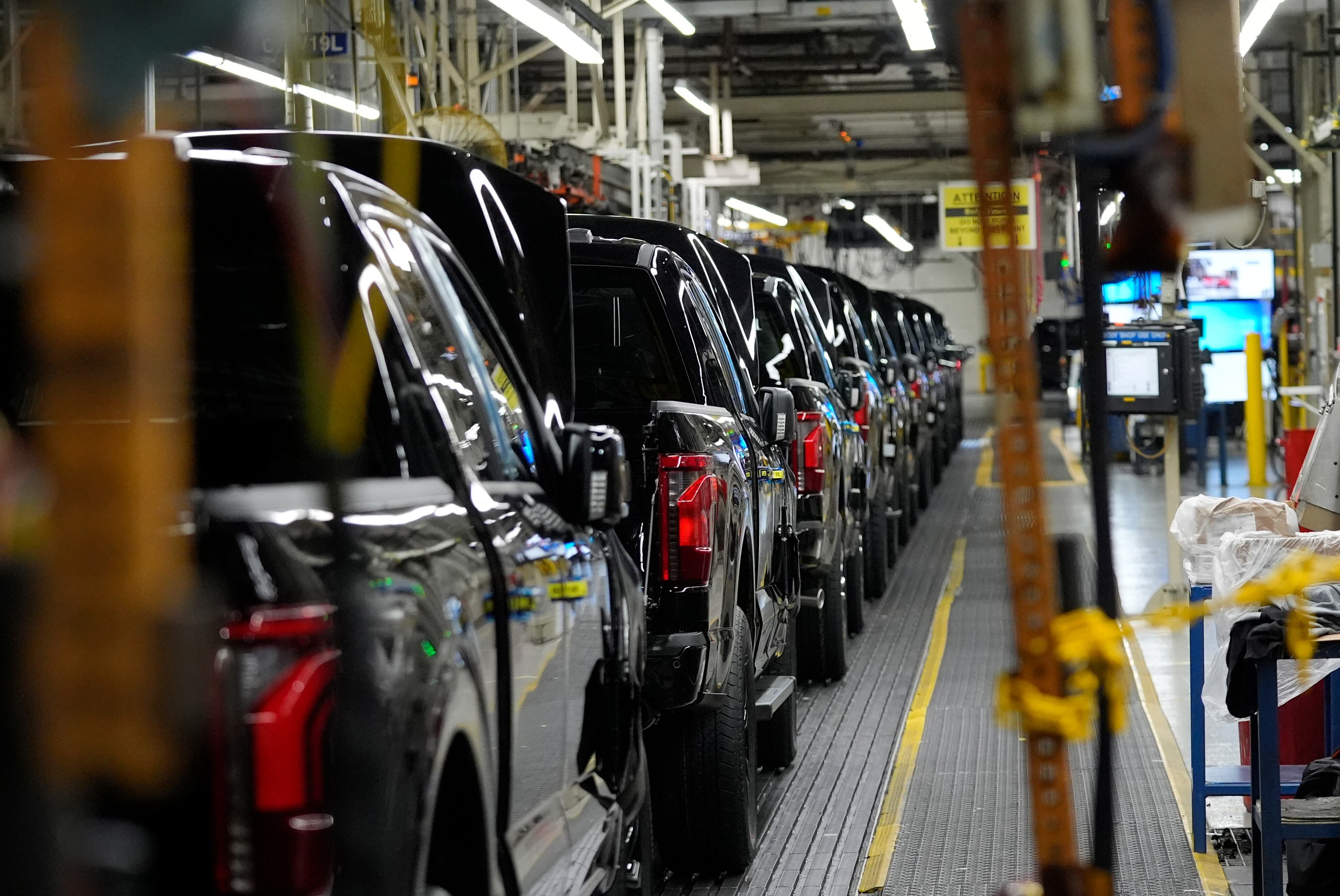
GM, which, like its Detroit brethren, has performed poorly relative to the broader market, is banking on the eventual electrification of its fleet paired with onboard tech advances, such as over-the-air software upgrade, to juice sales and help offset rising costs related to new emissions standards around the globe. GM and others have benefited from strong sales of SUVs and trucks, but it is losing the messaging war to rivals like Tesla, which now vastly eclipses both GM and Ford combined in terms of market value. Wahl says the increased competition is going to lead to a "creative explosion" as the carmaker works to differentiate its vehicles not only on the outside but with plenty of new features.
As for Wahl, who is GM's first chief marketing officer since 2012, her task is to tell a fresh story about a company that dates back more than 100 years.
The two pillars of GM's strategy, according to Wahl, are to highlight the transformation of the core business of selling cars, while at the same time focusing on the challenge delivered by CEO Mary Barra, to work toward a world without car crashes, congestion, or emissions. That challenge is both "motivating and galvanizing," Wahl said.
The first part of that strategy is showing that GM is not really a legacy automaker anymore. Wahl noted that the company now hires one STEM position every 26 minutes and said she predicts that the distinction between legacy companies and disruptive startups will soon vanish now that pretty much every business is trying to innovate. One of the ways she said GM is doing that is by creating intuitive "pre-sponse" technology for the driving experience. Imagine a situation when you get into your Cadillac in the morning, the radio starts playing the latest episode of your favorite podcast, and the onboard computer puts in your Starbucks order on the way to work. That's coming soon, she said.
The lines between the auto and tech industries have been blurring for years ー see CES, which has begun to look more like the Detroit Auto Show than a gadget trade show ー but the change is only just getting underway, she said.
"It's about to be an incredibly fruitful time for the customer."