By Laura Bargfeld
Florida residents loaded up on sandbags and evacuated from homes in low-lying areas along the Gulf Coast as Tropical Storm Idalia intensified Monday and forecasters predicted it would hit in days as a major hurricane with potentially life-threatening storm surges.
As the state prepared, Idalia thrashed Cuba with heavy rain, especially in the westernmost part of the island, where the tobacco-producing province of Pinar del Rio is still recovering from the devastation of Hurricane Ian almost a year ago.
Authorities in the province issued a state of alert, and residents were evacuated to friends’ and relatives’ homes as authorities monitored the Cuyaguateje river for possible flooding. As much as 10 centimeters (4 inches) of rain fell in Cuba on Sunday, meteorological stations reported.
Idalia is expected to start affecting Florida with hurricane-force winds as soon as late Tuesday and arrive on the coast by Wednesday. It is the first storm to hit Florida this hurricane season and a potentially big blow to the state, which is also dealing with lingering damage from Ian.
“Just got to prepare for these things, hope for the best, and prepare for the worst and, you know, hunker down, as they say,” said Derek Hughes as he waited to load up his car with sandbags at a city park in Tampa. “Worst case is flooding right now. Hopefully not too much wind damage."
Florida Gov. Ron DeSantis declared a state of emergency in 46 counties, a broad swath that stretches across the northern half of the state from the Gulf Coast to the Atlantic Coast. The state has mobilized 1,100 National Guard members, who have 2,400 high-water vehicles and 12 aircraft at their disposal for rescue and recovery efforts.
Tampa International Airport and St.Pete-Clearwater International Airport said they would close on Tuesday.
DeSantis warned of a “major impact” to the state, noting that what was originally forecast to be nothing stronger than a tropical storm was now predicted to become a Category 3 hurricane.
“The property — we can rebuild someone’s home,” DeSantis said during a news conference Monday. “You can’t unring the bell, though, if somebody stays in harm’s way and does battle with Mother Nature. This is not something that you want to do battle with.”
Large parts of the western coast of Florida are at risk of storm surges and floods anytime a storm of this magnitude approaches. Pasco and Levy counties, located north of Tampa, both ordered mandatory evacuations for some residents deemed to be at risk. In Levy County, officials said residents of Cedar Key must be off the island by Tuesday evening because storm surges would make bridges impassable.
“Once the storm surge comes in, help may not be available to reach you,” the county said in a public advisory.
The National Hurricane Center in Miami issued a hurricane warning Monday from Longboat Key in the Sarasota area to the Holocene River, up past Tampa Bay.
Many school districts along the Gulf Coast said they would be closed Tuesday and Wednesday. Eckerd College in St. Petersburg told students they needed to leave campus by Monday night.
“They told us that our dorm building, especially, is prone to flooding,” said student Erin Amiss.
Tampa resident Grace Cruz, who has lived in the state for more than 40 years, put away patio furniture, filled her car up with gas and loaded up on sandbags. She worried about the tens of thousands of new residents to Florida who had never before experienced a hurricane, and she had some advice for them.
“If you’re planning to get away, you start ahead of time because of the traffic,” Cruz said. “No kidding. It’s horrible.”
As Gulf Coast residents packed up their cars or hauled out generators in case of power outages, state officials warned about potential fuel contamination at dozens of gas stations. The Florida Department of Agriculture and Consumer Services said gasoline purchased Saturday at some Citgo-supplied stations had a strong likelihood of being contaminated with diesel fuel.
President Joe Biden spoke to DeSantis on Monday morning, telling the Florida governor that he had approved an emergency declaration for the state, the White House said in a news release. The declaration frees up federal funds to help with cleanup and repairs. DeSantis is running for the Republican presidential nomination in 2024.
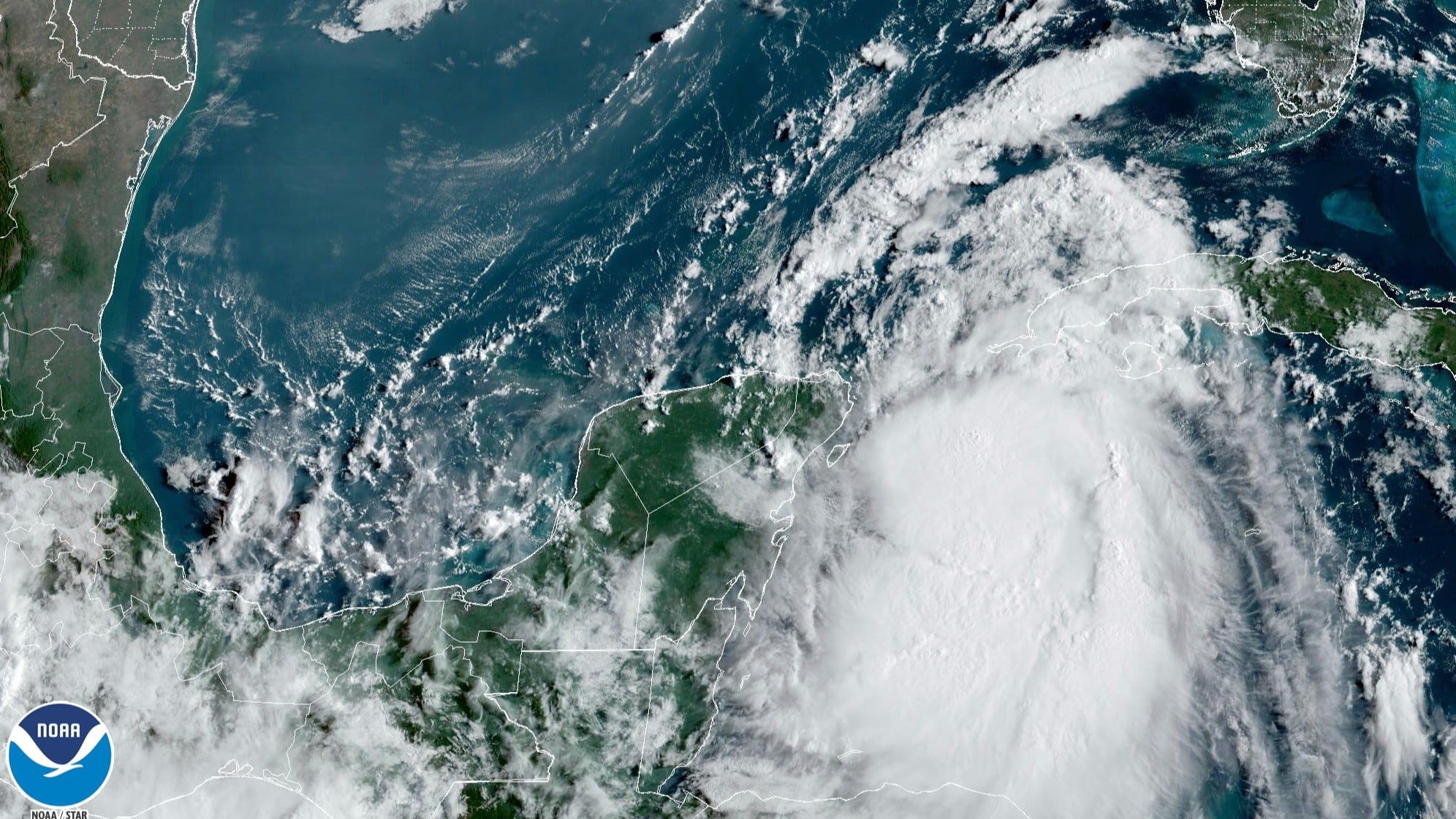
At 2 p.m. EDT Monday, the storm was about 50 miles (80 kilometers) off the western tip of Cuba with maximum sustained winds of 70 mph (110 kph), the hurricane center said. Idalia was moving north at 8 mph (13 kph). On Tuesday, it was expected to turn northeast at a faster pace, reaching Florida’s western coast as a dangerous major hurricane on Wednesday.
After moving across Florida, the forecast had Idalia blowing through Georgia, South Carolina and North Carolina. In Georgia, Gov. Brian Kemp on Monday ordered emergency managers to activate state operations centers.
So far this year, the U.S. East Coast has been spared from cyclones. But in the West, Tropical Storm Hilary caused widespread flooding, mudslides and road closures earlier this month in Mexico, California, Nevada and points to the north.
The National Oceanic and Atmospheric Administration recently said the 2023 hurricane season would be far busier than initially forecast, partly because of extremely warm ocean temperatures. The season runs through Nov. 30, with August and September typically the peak.
Mexico’s National Meteorological Service on Sunday warned of intense to torrential rains showering the Yucatán Peninsula, with winds up to 55 mph (89 kph). It said the storm could cause powerful waves and flooding in southern Mexico, mainly around coastal cities in the states of Yucatán and Quintana Roo, where the resort city of Cancún is located. Local governments were preparing shelters.
Meanwhile, Franklin became the first major hurricane of the season, strengthening into a Category 4 storm on Monday as it charged through open waters off the U.S. East Coast.
A tropical storm watch was issued for Bermuda.
Associated Press writers Sarah Brumfield in Silver Spring, Maryland; Cristiana Mesquita in Havana; and Mike Schneider in St. Louis, Missouri; contributed to this report.