Flattening Yield Curve, Trade Uncertainty Send Dow on 800-Point Plunge
*By Chloe Aiello*
Stocks tumbled on Tuesday in the worst day for the markets since October, fueled by investors' fear that a flattening yield curve signals an approaching economic downturn.
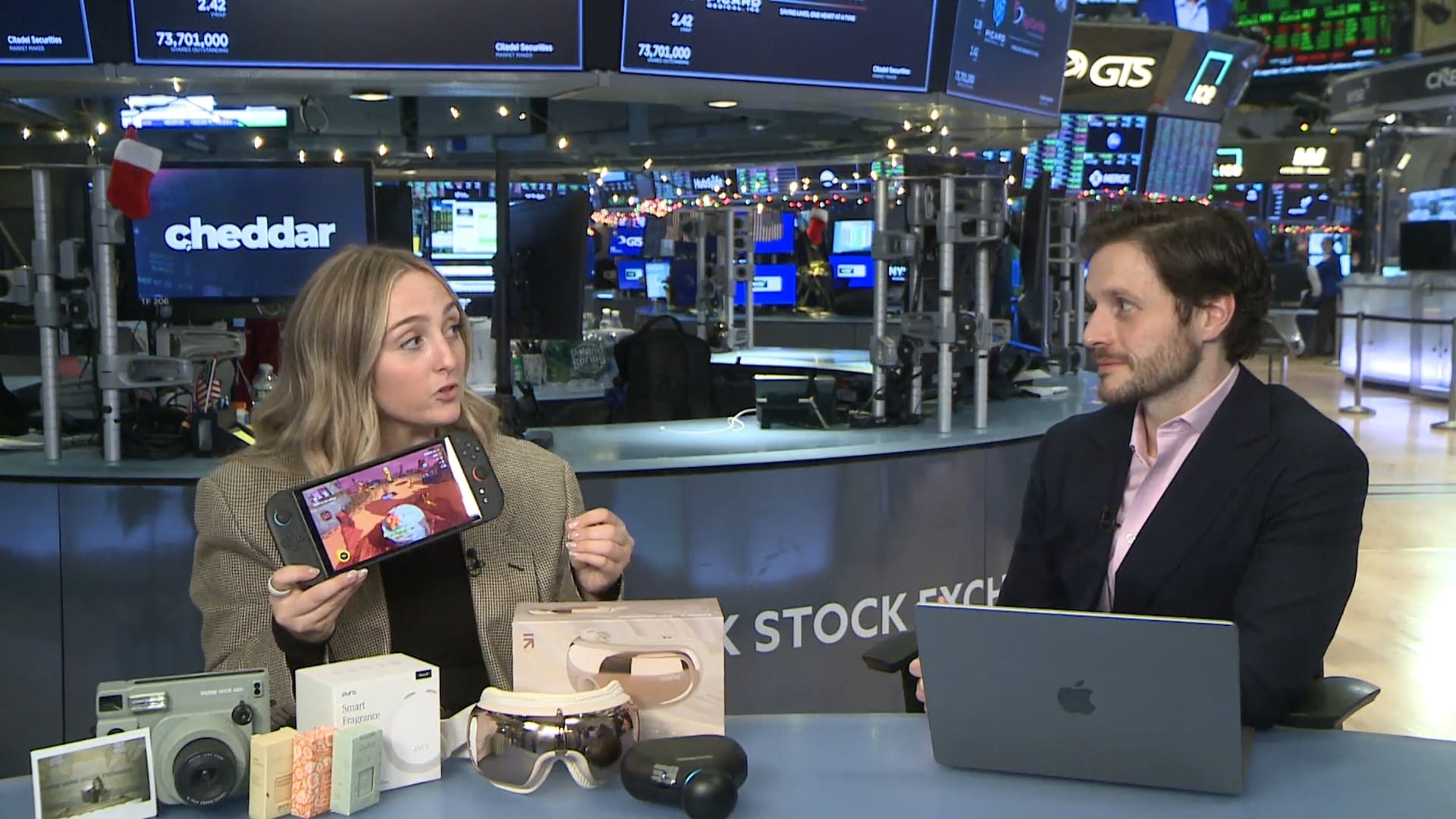
"We have a yield curve that is flattening in a way that has folks on watch and anxious about what that could potentially mean for the economy and therefore the stock market," Jason Ware, chief investment officer at Albion Financial, told Cheddar on Tuesday.
The Dow Jones Industrial Average, the S&P 500, and the Nasdaq all lost more than 3 percent on Tuesday. The Dow tumbled close to 800 points to 25,027.07. The S&P 500 and Nasdaq lost 90 and 283 points, respectively. All three indexes remained positive on the year, due to the recent rally that preceded Tuesday's rout.
What had investors spooked was the so-called "inversion" of a section of the U.S. Treasury yield curve. In theory, investors should be paid more in yield to hold debt for longer periods of time, since there's more risk over longer investment horizons. That means the yield on longer term notes (5-, 10-, and 30-year) should be higher than that for shorter term bonds (2- and 3-year).
But on Tuesday the yield on the 3-year rose above that of the 5-year Treasury, and the difference between the yield on a two-year note versus a 10-year note fell to a low not seen since 2007, [according to Reuters](https://www.reuters.com/article/usa-bonds-yield-curve/treasury-yields-extend-decline-2-yr-10-yr-spread-at-new-11-year-low-idUST9N1UQ055).
That "flattening" could be a bad sign ー the spread between the 2- and 10-year note has gone negative before the last three recessions.
"To be sure when the yield curve inverts, it's typically a warning sign. Going back to the early 1960s, nine out of the last nine times that has happened, it's been a tell for an economic downturn about 14 to 18 months down the road," Ware said.
"As far as high-quality economic indicators go, this is one that we look to as being up there with some of the best," he added.
Uncertainty around G20 and the future of U.S. trade with China is compounding concern over technical indicators. President Trump and China's Xi Jinping struck an agreement that guarantees a tariff ceasefire for the next 90 days. The agreement is meant to allow for more time for trade negotiations, but some worry 90 days simply isn't long enough.
"At first there was a bit of relief in terms of some positive headlines, but that quickly turned into, 'Is this even achievable in 90 days?' It's been a long slog until now. What's going to change so quickly within the next three months that we can get a positive result?" Ware asked.
And if trade talks sour in the long run, that promises a "material" impact on the economy, Ware said.
"If trade worsens, especially with China, I think one could argue it is a material headwind for the economy, it is a material headwind for corporate earnings growth," he said. "So as far as trade being an actual risk and a headwind to those fundamentals, it's an important one."
For full interview [click here](https://cheddar.com/videos/markets-close-lower-as-optimism-over-u-s-china-trade-truce-fades).
Chris Williamson, Chief Business Economist at S&P Global, breaks down September’s CPI print and inflation trends, explaining what it means for markets.
A big-screen adaptation of the anime “Chainsaw Man” has topped the North American box office, beating a Springsteen biopic and “Black Phone 2.” The movie earned $17.25 million in the U.S. and Canada this weekend. “Black Phone 2” fell to second place with $13 million. Two new releases, the rom-com “Regretting You” and “Springsteen — Deliver Me From Nowhere,” earned $12.85 million and $9.1 million, respectively. “Chainsaw Man – The Movie: Reze Arc” is based on the manga series about a demon hunter. It's another win for Sony-owned Crunchyroll, which also released a “Demon Slayer” film last month that debuted to a record $70 million.
The Federal Aviation Administration says flights departing for Los Angeles International Airport were halted briefly due to a staffing shortage at a Southern California air traffic facility. The FAA issued a temporary ground stop at one of the world’s busiest airports on Sunday morning soon after U.S. Transportation Secretary Sean Duffy predicted that travelers would see more flights delayed as the nation’s air traffic controllers work without pay during the federal government shutdown. The hold on planes taking off for LAX lasted an hour and 45 minutes and didn't appear to cause continued problems. The FAA said staffing shortages also delayed planes headed to Washington, Chicago and Newark, New Jersey on Sunday.
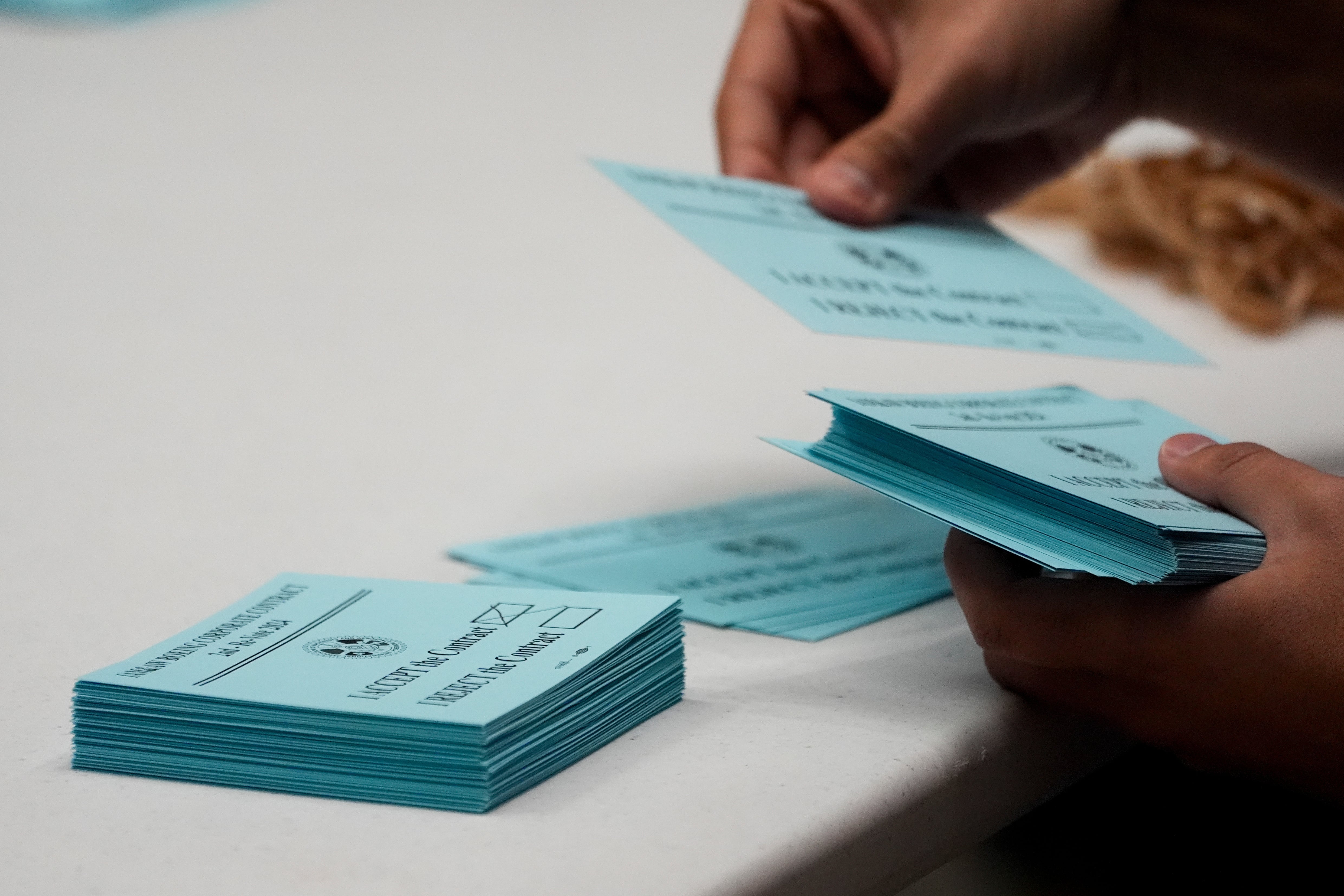
Boeing workers at three Midwest plants where military aircraft and weapons are developed have voted to reject the company’s latest contract offer and to continue a strike that started almost three months ago. The strike by about 3,200 machinists at the plants in the Missouri cities of St. Louis and St. Charles, and in Mascoutah, Illinois, is smaller in scale than a walkout last year by 33,000 Boeing workers who assemble commercial jetliners. The president of the International Association of Machinists says Sunday's outcome shows Boeing hasn't adequately addressed wages and retirement benefits. Boeing says Sunday's vote was close with 51% of union members opposing the revised offer.
The stunning indictment that led to the arrest of more than 30 people — including Miami Heat guard Terry Rozier and other NBA figures — has drawn new scrutiny of the booming business of sports betting in the U.S. The multibillion-dollar industry has made it easy for sports fans — and even some players — to wager on everything from the outcome of games to that of a single play with just a few taps of a cellphone. But regulating the rapidly-growing industry has proven to be a challenge. Professional sports leagues’ own role in promoting gambling has also raised eyebrows.
Tesla, the car company run by Elon Musk, reported Wednesday that it sold more vehicles in the past three months after boycotts hit hard earlier this year, but profits still fell sharply. Third-quarter earnings fell to $1.4 billion, from $2.2 billion a year earlier. Excluding charges, per share profit of 50 cents came in below analysts' estimate. Tesla shares fell 3.5% in after-hours trading. Musk said the company's robotaxi service, which is available in Austin, Texas, and San Francisco, will roll out to as many as 10 other metro areas by the end of the year.