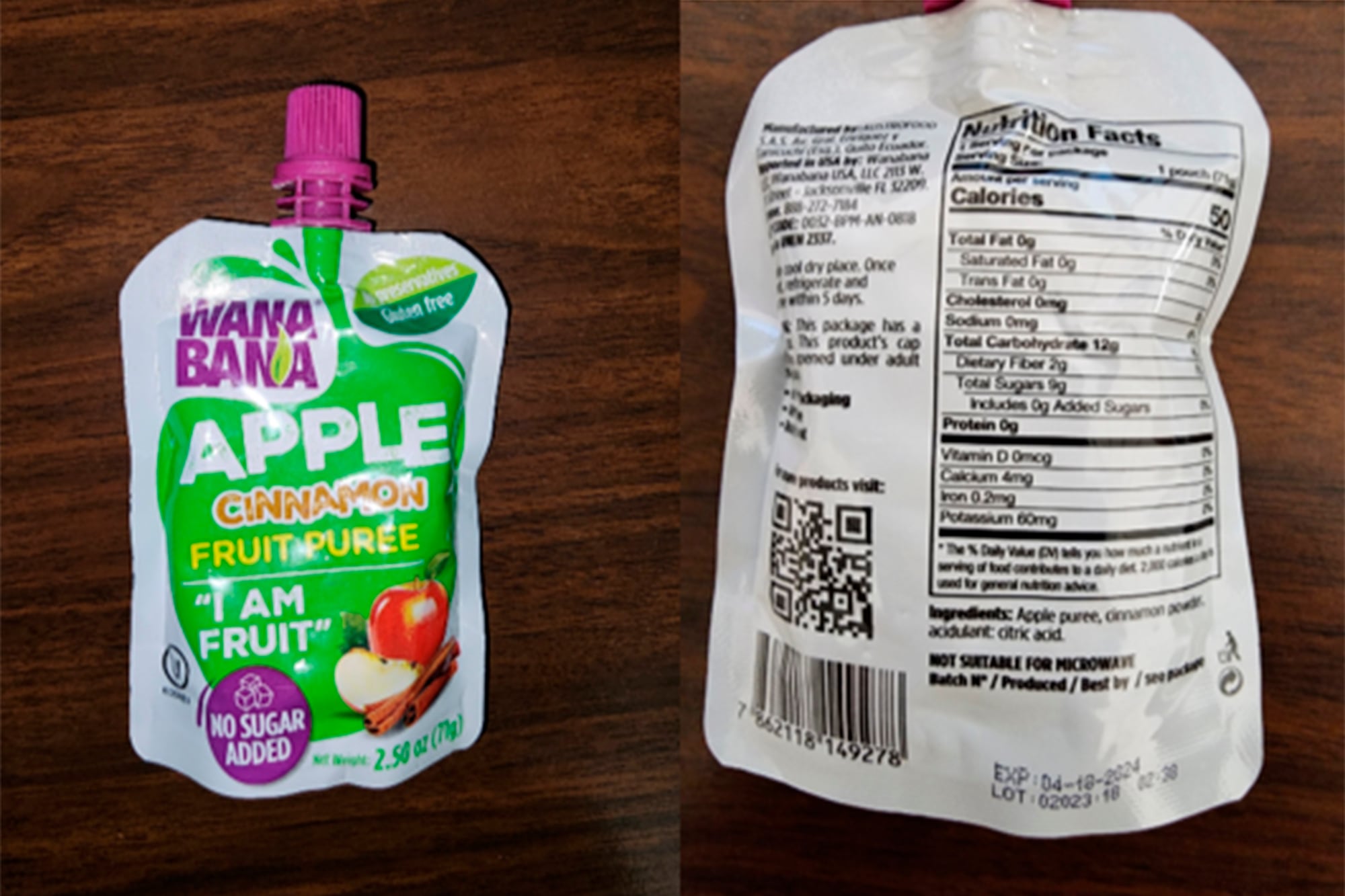
This photo provided by the U.S. Food and Drug Administration on Oct. 28, 2023, shows a WanaBana apple cinnamon fruit puree pouch. The FDA is warning parents and caregivers not to buy or serve certain pureed fruit pouches marketed to toddlers and young children because the food might contain dangerous levels of lead. Children who have eaten WanaBana apple cinnamon fruit puree pouches should be tested for possible lead poisoning, the agency said. (FDA via aP)
By Jonel Aleccia
The U.S. Food and Drug Administration is warning parents and caregivers not to buy or serve certain pureed fruit pouches marketed to toddlers and young children because the food might contain dangerous levels of lead.
Children who have eaten WanaBana apple cinnamon fruit puree pouches should be tested for possible lead poisoning, the agency said.
Four children in North Carolina were found to have high levels of lead in their blood linked to the puree products, health officials said. State health officials analyzed multiple lots of the product and detected “extremely high” concentrations of lead. The FDA confirmed the results and said they could lead to “acute toxicity.”
WanaBana, which is based in Coral Gables, Florida, has recalled all lot codes and expiration dates of the snack products, which are sold nationally, including at Sam's Club and Dollar Tree and on Amazon.
Lead is toxic to people of all ages, but can be especially harmful to children. Most children have no obvious symptoms, so it's important that kids who are exposed get tested to check levels of lead in their blood. Short-term exposure to lead can result in symptoms that include headache, abdominal pain, vomiting and anemia, the FDA said.
Heavy metals like lead can get into food products from soil, air, water or industrial processes, according to the American Academy of Pediatrics. Lead exposure can seriously harm children's health, causing damage to the brain and nervous system and slowed growth and development. There is no known safe level of lead exposure, the AAP said.
Former Cisco Systems CEO John Chambers learned all about technology’s volatile highs and lows as a veteran of the internet’s early boom days during the late 1990s and the ensuing meltdown that followed the mania. And now he is seeing potential signs of the cycle repeating with another transformative technology in artificial intelligence. Chambers is trying take some of the lessons he learned while riding a wave that turned Cisco into the world's most valuable company in 2000 before a crash hammered its stock price and apply them as an investor in AI startups. He recently discussed AI's promise and perils during an interview with The Associated Press.
Grove Collaborative’s CEO shares how the company is reinventing everyday goods with sustainability at the core and working toward a plastic-free future.
Atlanta Mayor Andre Dickens shares plans for affordable housing, community-led growth, and why private and public grocery stores could be key to food equity.
Tesla reported a surprise increase in sales in the third quarter as the electric car maker likely benefited from a rush by consumers to take advantage of a $7,500 credit before it expired on Sept. 30. The company reported Thursday that sales in the three months through September rose 7% compared to the same period a year ago. The gain follows two quarters of steep declines as people turned off by CEO Elon Musk’s foray into right-wing politics avoided buying his company’s cars and even protested at some dealerships. Sales rose to 497,099 vehicles, compared with 462,890 in the same period last year.
Tom’s Guide Editor-in-Chief Mark Spoonauer breaks down Apple & Amazon's latest product drops—what's hot, what's hype, and what really matters for users.
InnerPlant CEO Shely Aronov reveals how engineered crops like soybeans and corn emit signals when stressed—offering farmers early warnings to boost yields.