The Great Executive Shuffle of 2019 continued on Wednesday, with Expedia Group announcing the surprise departure of its CEO and CFO after clashing with the company's board over the travel company's direction. Chief Executive Mark Okerstrom and Chief Financial Officer Alan Pickerill will resign their posts effective immediately, with Chairman Barry Diller and Vice Chair Peter Kern managing the company while a new leadership team is chosen.
In a statement, Diller said that Expedia's reorganization, spearheaded by Okerstrom and Pickerill, was "sound in concept" but resulted in the company's disappointing third-quarter earnings results. Diller said the board "strongly [believes] the Company can accelerate growth in 2020" under new management.
Shares of Expedia ($EXPE) shot up more than 5 percent on the news. In contrast, shares of Alphabet ($GOOGL) moved only marginally higher on Tuesday's announcement that Google co-founders Larry Page and Sergey Brin were stepping aside and naming Sundar Pichai CEO of Alphabet.
From Expedia to Google, the year has been notable for how many chief executives have resigned, quit, or been forced out. It's happening across sectors like fast food (McDonald's), retail and apparel (Nike, Under Armour, Gap), cloud computing and enterprise software (SAP, ServiceNow), e-commerce (eBay). Some of those executives actually took each other's jobs, with Bill McDermott departing SAP for ServiceNow, and John Donahoe (who used to run eBay) leaving ServiceNow for Nike.
Even Expedia's rival in travel booking, Trivago, lost its CEO last month. And that's not to mention the collapse of WeWork, which forced out its founder and CEO over a disastrous IPO attempt. More than 170 chief executives left just in the month of October, according to Challenger, Gray and Christmas.
There is no single reason for the C-suite exodus. Some, like Steve Easterbrook at McDonald's, were fired over misconduct. Others, like Mark Parker at Nike and Adam Neumann at WeWork, departed amid other scandals. Still others, like Kevin Plank at Under Armour, resigned under the pressure of struggling businesses.
But for some of these executives, their influence in the companies they led doesn't follow them out the revolving door. Brin and Page of Google, for instance, still hold a majority of the voting power in Alphabet, about 25 percent a piece, according to regulatory filings. Because of how many businesses ー particular in Silicon Valley ー structure their Class A and Class B shares, a CEO can step down, but still never really be gone. Just ask WeWork, which had to pay Neumann $1.7 billion to give up his voting rights and walk away.
An economic development agency, the Northwest Arkansas Council, is looking to draw technology professionals to their region of the Southern state with incentives like $10,000 worth of Bitcoin and a new bicycle. Nelson Peacock, president and CEO of the private nonprofit made up of companies like Walmart and Tyson Foods, joined Cheddar to talk about the program to further power his local economy. "By offering the payment in Bitcoin, we're looking to identify those people with interest and expertise in the underlying technologies, the blockchain technologies," he said.
After months of investors turning to crypto as a hedge against inflation, instead of the traditional hedge of gold, one crypto exchange is working with a token creator to launch a digital coin backed by a physical asset. GCOIN gives customers a digital title of ownership to 99.99% pure physical gold which is stored in a secured vault. Brent de Jong, GCoin's founder and Kristin Boggiano, Co-Founder and President of CrossTower, a cryptocurrency exchange, join Cheddar News' Closing Bell to discuss the GCOIN rollout, customer interest, why crypto is used as an inflation hedge, and more.
Retail platform operator and delivery company, Foxtrot,
raised $100 million in a Series C round led by D1 Capital Partners. Foxtrot bills itself as the modern convenience store that combines what it calls in-store curated discovery with 30-minute delivery and 5-minute pickup. Since launching first as a digital-only delivery service, the company has since grown into a popular local retailer, opening 16 brick and mortar locations across Chicago, Dallas, and Washington, DC. Foxtrot co-founder and CEO Michael LaVitola joined Cheddar News' Closing Bell to discuss.
The January 6 committee has subpoenaed four tech giants for more information on what they did and didn't do leading up to last year's deadly Capitol insurrection. Google, Facebook, Twitter, and Reddit were asked to assist the investigation in August, but the committee says their responses have been 'inadequate.' Craig Timberg, a national technology reporter at the Washington Post, joins Cheddar News' Closing Bell for more details about the subpoenas, why this is happening now, and how it might impact social media companies moving forward.
As Meta and Microsoft ramp up their AR and VR tech futures, analysts have been waiting on word from Apple, but the consumer tech giant is reportedly delaying such an announcement. Doug Astrop, a managing partner at Exponential Investment Partners, joined Cheddar to dive into the rumors about the possibilities of a foray into the metaverse by Tim Cook's megacorp sometime in 2022 or 2023. "We can't really predict with a great deal of certainty how it's going to play out, but I'm confident Apple's going to be a big player and do very well in any scenario that unfolds," said Astrop.
Makena Kelly, politics reporter at The Verge, joins Cheddar News to discuss what's next for net neutrality as Biden's other nominee for the FCC, Gigi Sohn, awaits votes from the committee and Senate.
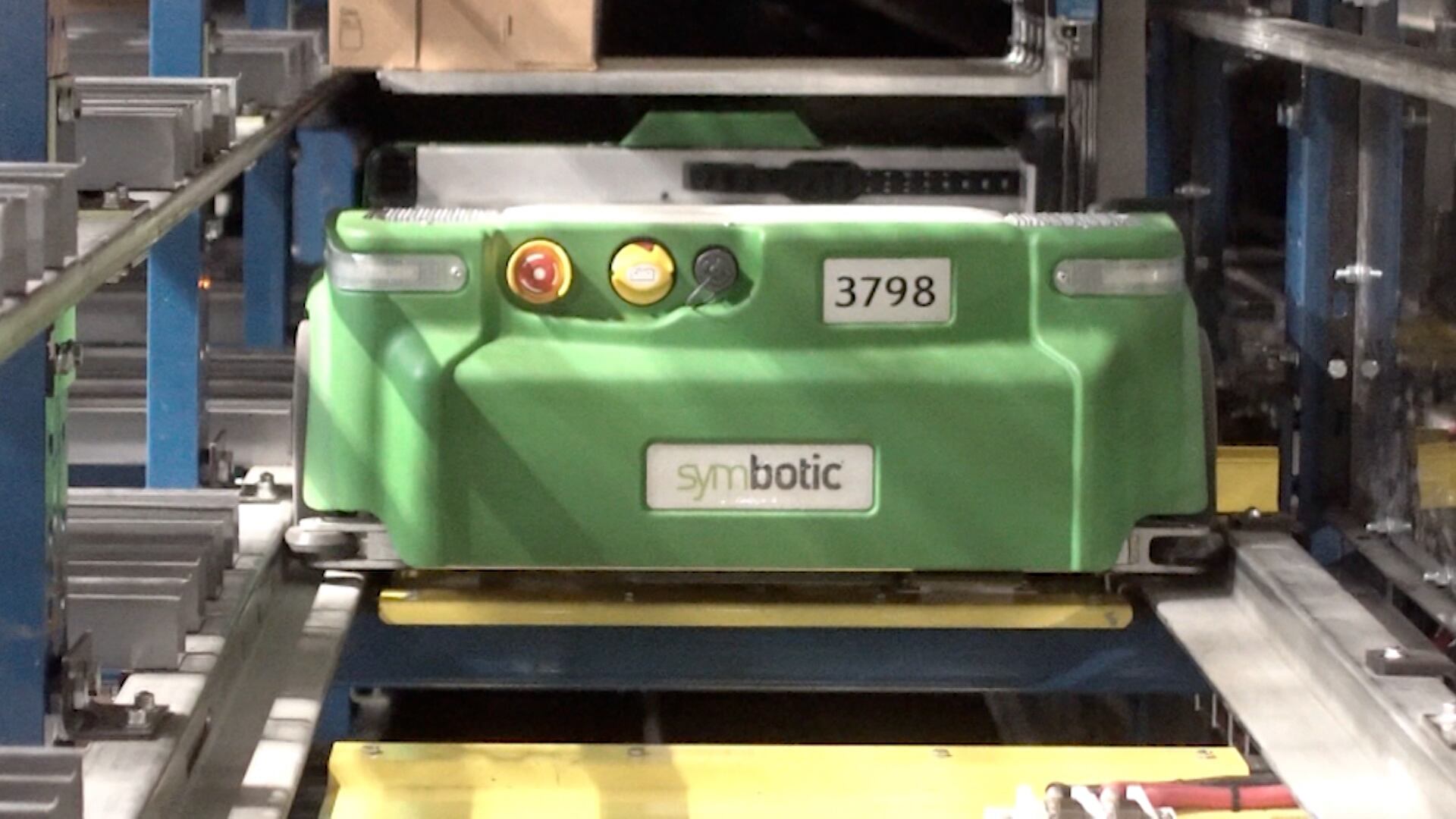
Specializing in AI, robotics, and automation for the global supply chain, Symbotic announced last month it will be tapping the public markets in a SPAC deal with investment giant SoftBank. Symbotic CFO Tom Ernst and Vikas Parekh, a managing partner at SoftBank Investment Advisers spoke with Cheddar about going public and the future of modernizing logistics amid the constrained supply networks. "The supply chain is fundamentally broken," said Ernst. "By employing the best in modern technology for autonomous vehicles and artificial intelligence, we're able to fundamentally rethink the way in which you receive and store and sort goods, making for a dramatically more efficient supply chain."
Michael Hershfield, Founder & CEO of Accrue Savings, joined Wake Up With Cheddar to discuss the company's new round of funding, and its core mission of rewarding consumers for saving rather than taking on more debt with buy now, pay later options.