The Great Executive Shuffle of 2019 continued on Wednesday, with Expedia Group announcing the surprise departure of its CEO and CFO after clashing with the company's board over the travel company's direction. Chief Executive Mark Okerstrom and Chief Financial Officer Alan Pickerill will resign their posts effective immediately, with Chairman Barry Diller and Vice Chair Peter Kern managing the company while a new leadership team is chosen.
In a statement, Diller said that Expedia's reorganization, spearheaded by Okerstrom and Pickerill, was "sound in concept" but resulted in the company's disappointing third-quarter earnings results. Diller said the board "strongly [believes] the Company can accelerate growth in 2020" under new management.
Shares of Expedia ($EXPE) shot up more than 5 percent on the news. In contrast, shares of Alphabet ($GOOGL) moved only marginally higher on Tuesday's announcement that Google co-founders Larry Page and Sergey Brin were stepping aside and naming Sundar Pichai CEO of Alphabet.
From Expedia to Google, the year has been notable for how many chief executives have resigned, quit, or been forced out. It's happening across sectors like fast food (McDonald's), retail and apparel (Nike, Under Armour, Gap), cloud computing and enterprise software (SAP, ServiceNow), e-commerce (eBay). Some of those executives actually took each other's jobs, with Bill McDermott departing SAP for ServiceNow, and John Donahoe (who used to run eBay) leaving ServiceNow for Nike.
Even Expedia's rival in travel booking, Trivago, lost its CEO last month. And that's not to mention the collapse of WeWork, which forced out its founder and CEO over a disastrous IPO attempt. More than 170 chief executives left just in the month of October, according to Challenger, Gray and Christmas.
There is no single reason for the C-suite exodus. Some, like Steve Easterbrook at McDonald's, were fired over misconduct. Others, like Mark Parker at Nike and Adam Neumann at WeWork, departed amid other scandals. Still others, like Kevin Plank at Under Armour, resigned under the pressure of struggling businesses.
But for some of these executives, their influence in the companies they led doesn't follow them out the revolving door. Brin and Page of Google, for instance, still hold a majority of the voting power in Alphabet, about 25 percent a piece, according to regulatory filings. Because of how many businesses ー particular in Silicon Valley ー structure their Class A and Class B shares, a CEO can step down, but still never really be gone. Just ask WeWork, which had to pay Neumann $1.7 billion to give up his voting rights and walk away.
A.I.-based entertainment company, Deedub, recently raised
$20 million in a Series A round, led by Insight Partners. Deepdub uses A.I. technology to automate the dubbing process for foreign-language movies or TV shows, while using actors' original voices. The company says it can take just two to three minutes of data from an actor's voice and transform the voice into a different language. The funding comes as foreign-language films and shows like Netflix's 'Squid Game' have recently become more popular with audiences in the U.S. and around the world. Oz Krakowski, Chief Revenue Officer at Deepdub, joins Cheddar News' Closing Bell to discuss.
Energy Vault, the company developing sustainable, grid-scale energy storage solutions, is now trading on the New York Stock Exchange following the completion of its business combination with Novus Capital Corporation II. Energy Vault develops sustainable, grid-scale energy storage solutions designed to advance the transition to a carbon free, resilient power grid. Robert Piconi, co-founder and CEO of Energy Vault, joins Cheddar News' Closing Bell to disucss.
A new mobile app has launched just in time for Valentine's Day. Our.Love bills itself as an A.I.-powered, gamified, relationship wellness app for couples. The app is set in what the company calls the Coupleverse, a virtual world where each couple can build a virtual relationship home as they also build their real-world relationship. Founder and CEO Tal Zlotnitsky joined Cheddar to discuss how the app works. "The concept behind Our.Love is to give people the opportunity to understand where they stand in their relationship through very simple metrics that we provide within the app that will help them in real-time, see where they stand, see where their partner is, and be able to get closer together," he said.
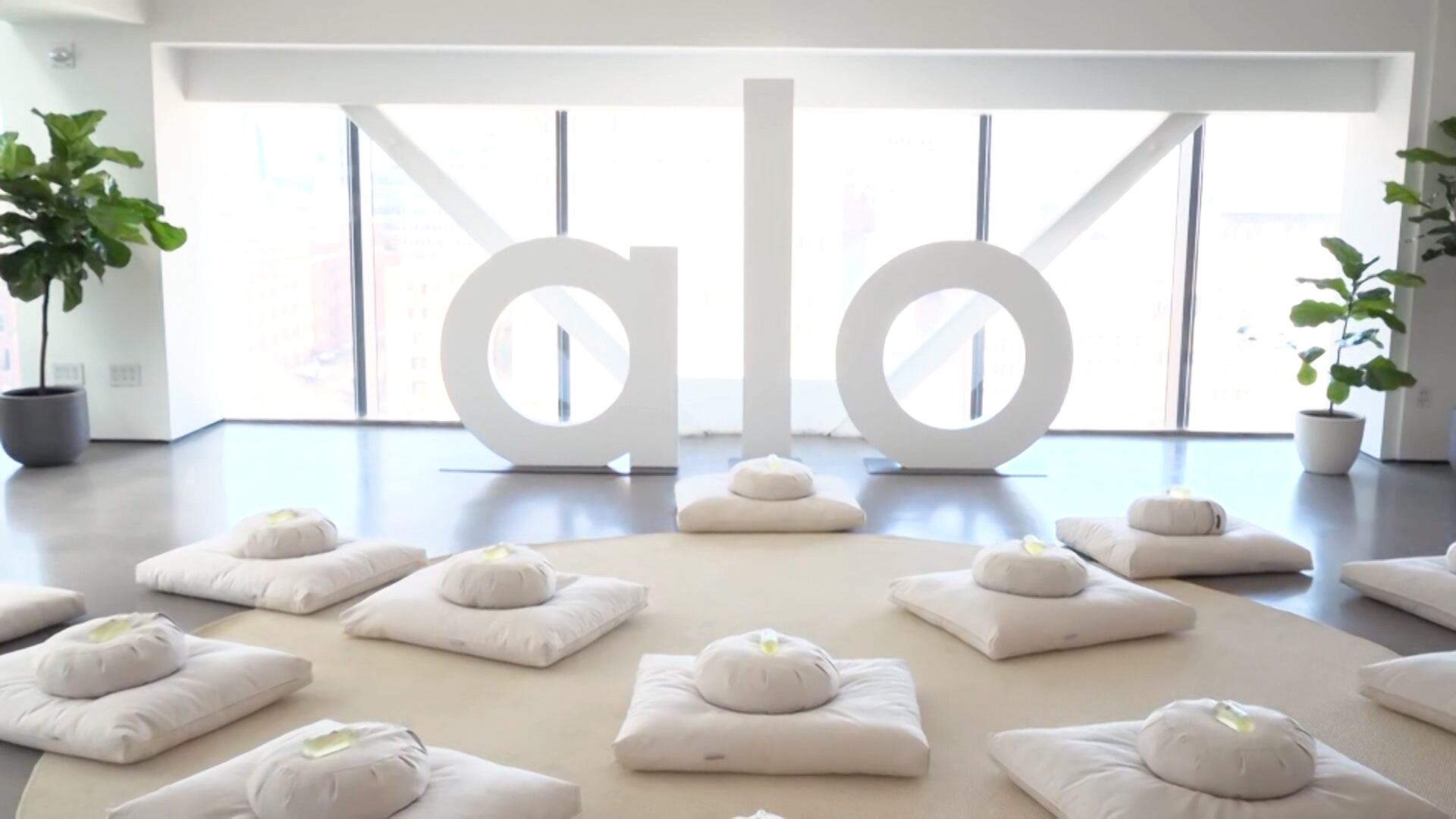
Alyson Wilson, VP of Brand Innovation at Alo Yoga, joins Cheddar News to discuss the yoga apparel company entering the metaverse and teaming up with Spring Studios for New York Fashion Week.
Sēkr, a mobile app that aims to improve and digitize the outdoor travel experience, announced this week that it raised a $2.25 million seed round. In the Sēkr app, users can get access to more than 50,000 campsites throughout the U.S. including the nation's largest database of free campsites. The company is saying it is on a mission to make every step of the planning experience for outdoor travel easier, safer, and more social. Breanne Acio, co-founder and CEO of Sēkr, and Jess Shisler, co-founder and COO, joined Cheddar News' Closing Bell to discuss.