By Michael Liedtke
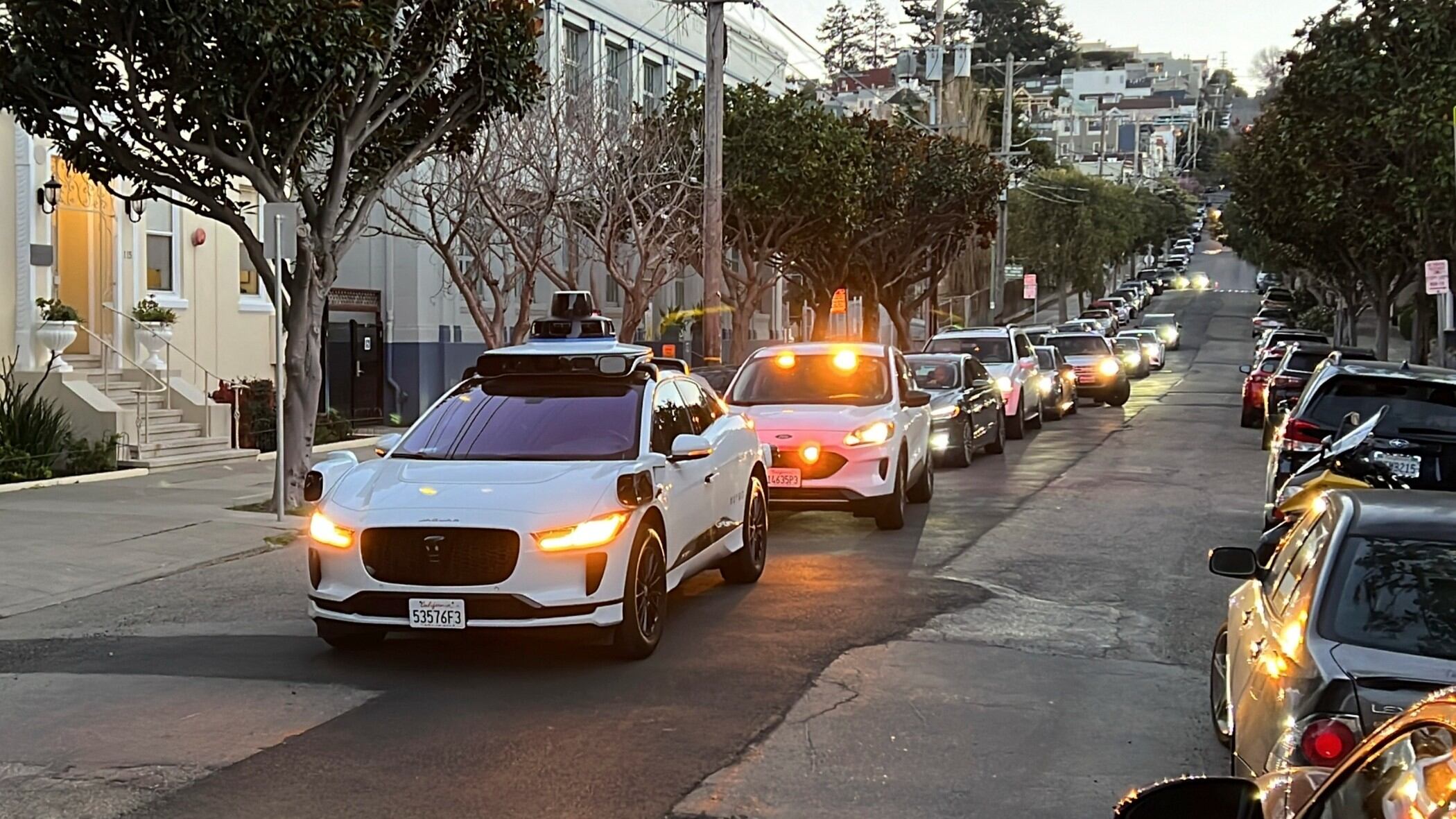
California regulators on Thursday approved an expansion that will allow two rival robotaxi services to operate throughout San Francisco at all hours, despite safety worries spurred by recurring problems with unexpected stops and other erratic behavior that resulted in unmanned vehicles blocking traffic, including emergency vehicles.
The state's Public Utilities Commission voted to approve rival services from Cruise and Waymo to operate around-the-clock service. It will make San Francisco first major U.S. city with two fleets of driverless vehicles competing for passengers against ride-hailing and taxi services dependent on humans to operate the cars.
It is a distinction that San Francisco officials didn’t want, largely because of the headaches that Cruise and Waymo have been causing in the city while testing their robotaxis on a restricted basis during the past year.
But it ended in a major victory for Cruise — a subsidiary of General Motors — and Waymo — a spinoff from a secret project at Google — after spending years and billions of dollars honing a technology that they believe will revolutionize transportation. Both companies view approval of their San Francisco expansions as a major springboard to launching similar services in other congested cities that would benefit from a technology that they contend will be more reliable, convenient and cheaper than ride-hailing and taxi services reliant on human drivers.
“We can’t wait for more San Franciscans to experience the mobility, safety, sustainability and accessibility benefits of full autonomy for themselves — all at the touch of a button,” Waymo co-CEO Tekedra Mawakana said in a blog post.
During five-and-half hours of public comments at Thursday’s meeting, many speakers derided the robotaxis as annoying nuisances at best and dangerous menaces at worst. Others vented their frustration about San Francisco being transformed into a “tech playground” and the equivalent of an “ant farm” for haphazard experimentation.
Supporters of the robotaxis also stepped up to passionately defend the technology as a leap forward that will keep San Francisco on the cutting edge of technology, while helping more disabled people who are unable to drive to get around town and reducing the risks posed by drunk driving. One speaker predicted that unleashing the robotaxis would create a tourist attraction that could become as popular as rides on the fabled cable cars that have been navigating the city’s streets for 150 years. Waymo says there is so much interest in its robotaxis that it has already built up a waiting list of more than 100,000 people vying to take a driverless ride through the streets of San Francisco.
The rising fears about the safety of the robotaxis had come into sharper focus during a preliminary hearing Monday that included a sobering appearance by San Francisco Fire Department Chief Jeanine Nicholson, who warned regulators that the robotaxis had been repeatedly undermining firefighters' ability to respond to emergencies. .
“They are still not ready for prime time because of the way they have impacted our operations,” Nicholson said during a four-hour hearing held Monday in advance of Thursday's pivotal vote.
To underscore her point, Nicholson cited 55 written reports of the robotaxis interfering with emergency responses. She said she is worried the problems will get worse if Cruise and Waymo are allowed to operate their services wherever and whenever they want in San Francisco — raising the risk of their disruptions resulting in injury, death or the loss of property that could have been saved.
The Public Utilities Commission still decided to approve the expansion by a 3-1 vote. Although the panel consists of five commissioners, only four voted on the proposed robotaxi expansion. Commissioner Karen Douglas was absent from Thursday's hearing for an undisclosed reason.
Both Cruise and Waymo cited their unblemished safety records as proof their robotaxis are less dangerous than vehicles operated by people who can be distracted, intoxicated or just lousy drivers.
Cruise has been currently testing 300 robotaxis during the day when it can only give rides for free, and 100 robotaxis at night when it has been allowed to charge for rides in less congested parts of San Francisco for the past 14 months. Waymo has been operating about 100 of the 250 robotaxis it has available to give free rides to volunteers and employees throughout San Francisco.
But the proposed San Francisco expansion has been facing increasingly staunch resistance, prompting regulators to postpone two previously scheduled votes on the issue in June and July.
In a May 31 letter urging state regulators to continue to restrict the operations of Cruise and Waymo, San Francisco transportation officials asserted the driverless vehicles rely on a “developmental technology that is not ready for unconstrainted commercial deployment.”
In a June 22 letter, the president of the union for San Francisco police officers warned of potentially dire consequences if Cruise and Waymo are allowed to expand throughout the city. Tracy McCray, the union president, cited a robotaxi obstructing emergency vehicles responding to a recent mass shooting that injured nine people as a chilling example of how the technology could imperil the public.
“While we all applaud advancements in technology, we must not be in such a rush that we forget the human element and the effects such technology unchecked can cause in dangerous situations," McCray wrote. “Delays of even seconds in our line of work can be a matter of life or death.”
Unless Cruise and Waymo are able to fix the problems that have been cropping up in their robotaxis, the San Francisco expansion could turn out to be a pyrrhic victory, warned Nico Larco, who has been tracking the progress of autonomous vehicles as director of the University of Oregon's Urbanism Next Center.
“There is a real public sentiment risk here,” Larco said. “If they don't figure some of these things out, there will be growing frustration from the general public. And it's tough to bring that back and put the genie back in the bottle.”