By Marina Villeneuve
Updated 2:32 pm ET
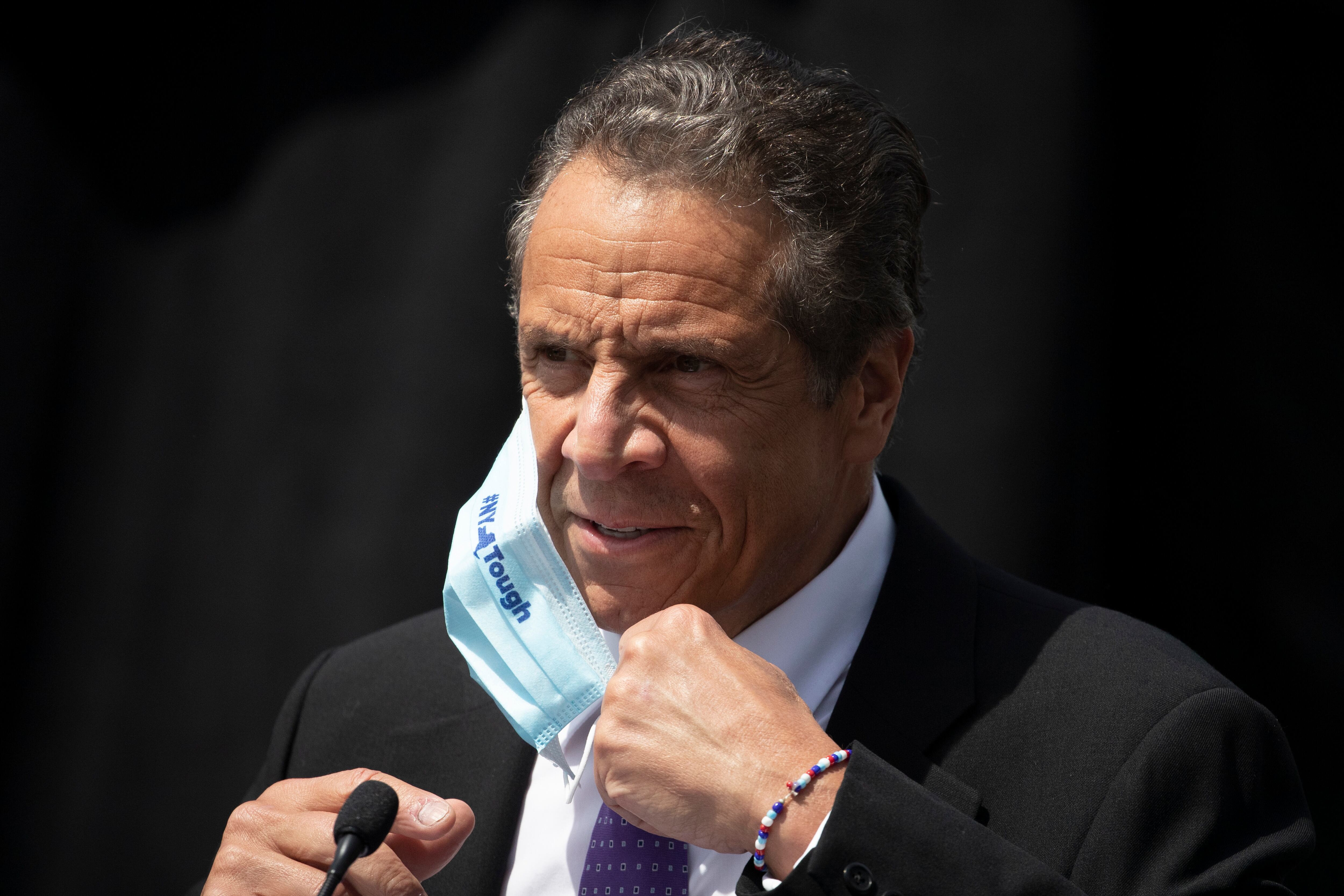
New York schools can bring children back to classrooms for the start of the school year, Gov. Andrew Cuomo announced Friday, citing success in battling the coronavirus in the state that once was the U.S. heart of the pandemic.
The Democratic governor's decision clears the way for schools to offer at least some days of in-person classes, alongside remote learning. Students will be required to wear masks throughout school day, and schools will urge parents to check children for symptoms.
"Everywhere in the state, every region is below the threshold that we established," Cuomo said during a conference call with reporters. He said New York can "revisit" if the infection rate spikes.
Many New York school districts have planned to start the year with students in school buildings only a few days a week, while learning at home the rest of the time. The state has left tough decisions — on everything from handling sick students, to boosting internet access, to delaying the first day, to addressing poor ventilation, to preventing spread by asymptomatic individuals — up to individual districts, which are demanding increased funding.
"If any state can do this, we can do this," Cuomo said.
More than 1 million public school students in New York City — the largest district in the U.S. — had their last day of in-class instruction on March 13, just as waves of sick people were beginning to hit city hospitals. All schools statewide were closed by March 18.
The city's mayor, Bill de Blasio, has been saying since the spring that his goal for fall was to bring students back on schedule, with as much classroom time as possible while still allowing for social distancing.
That plan has looked exceedingly ambitious as other large school systems have backed away from in-person instruction in recent weeks.
Chicago, Los Angeles, Miami, and Houston, among other places, all announced they would start the school year with students learning remotely.
"We will reopen safely," de Blasio tweeted Friday. "If COVID-19 positivity rate goes above 3 percent, we will not open."
He said a return to classroom instruction is vital to jump-starting the city's economy, now hobbled by parents being forced to stay home with their children.
"It will not be easy but I think most parents feel strongly that even some time in school is a lot better for their kids than none," de Blasio said Friday at a separate briefing earlier in the day.
School districts, though, face enormous hurdles.
Cuomo warned New York's roughly 700 districts still need to address the fears of parents and teachers that schools will be unsafe. He said school districts must post remote learning plans online and hold "discussion sessions" with parents and teachers to answer questions and explain plans.
The outbreak, while reduced, is not over in New York. Around 10,000 New York City residents tested positive for the virus in July.
On Wednesday, two unions, New York State United Teachers and the United Federation of Teachers, demanded clearer health protocols dictating that schools should shut down immediately for two weeks if any student or member of the staff contracts the virus.
"As Gov. Cuomo noted, parents and teachers must be confident that schools are safe before they can reopen," United Federation of Teachers President Michael Mulgrew said Friday. "In New York City that is still an open question."
Teachers are prohibited from striking in New York state, but it's unclear whether large numbers would either opt out of classroom instruction for medical reasons or simply refuse to work.
The governor said he doesn't want New York to get into a legal battle with teachers, adding: "You can't order a teacher into a classroom."
Parents, too, have struggled to decide whether to send their children to school or opt solely for online instruction at home.
Schools have spent the summer coming up with safety plans, securing protective gear, and figuring out how to fit fewer students into classrooms and school buses. Cuomo required all school systems to submit plans detailing their reopening plans, saying New York would not allow any district with an unsafe plan to bring students back to classrooms.
The governor said the Department of Health will continue to go through plans over the weekend, and will notify school districts where incomplete or deficient. He said about 50 school district health plans are incomplete or deficient. A district can't open if its health plan is rejected.
Earlier this summer, Cuomo set a general metric to help measure when it was safe to bring students back, saying the state would allow a return in regions where fewer than 5 percent of people tested for COVID-19 came back positive.
The entire state has been well under that threshold all summer.