By Claire Savage
A jury in Illinois has ordered Chicago-based Conagra Brands to pay $7.1 million to a Pennsylvania woman who was badly injured in 2017 when a can of commercial brand cooking spray ignited in a kitchen at her workplace and set her aflame.
The verdict, issued Monday in favor of Tammy Reese of Shippensburg, Pennsylvania, is the first of numerous other cases from burn victims across the country with similar stories citing accidents that occurred with Conagra-made cooking spray brands, including its popular grocery store brand Pam.
Reese was working at a social club kitchen in May 2017 when “suddenly and without warning” a can of Swell cooking spray “exploded into a fireball, causing burns and injuries,” according to a lawsuit filed on her behalf. She suffered deep second-degree burns on her head, face, arms and hands, and scar tissue continues to constrict her movement six years later, according to one of her lawyers, Craig Smith.
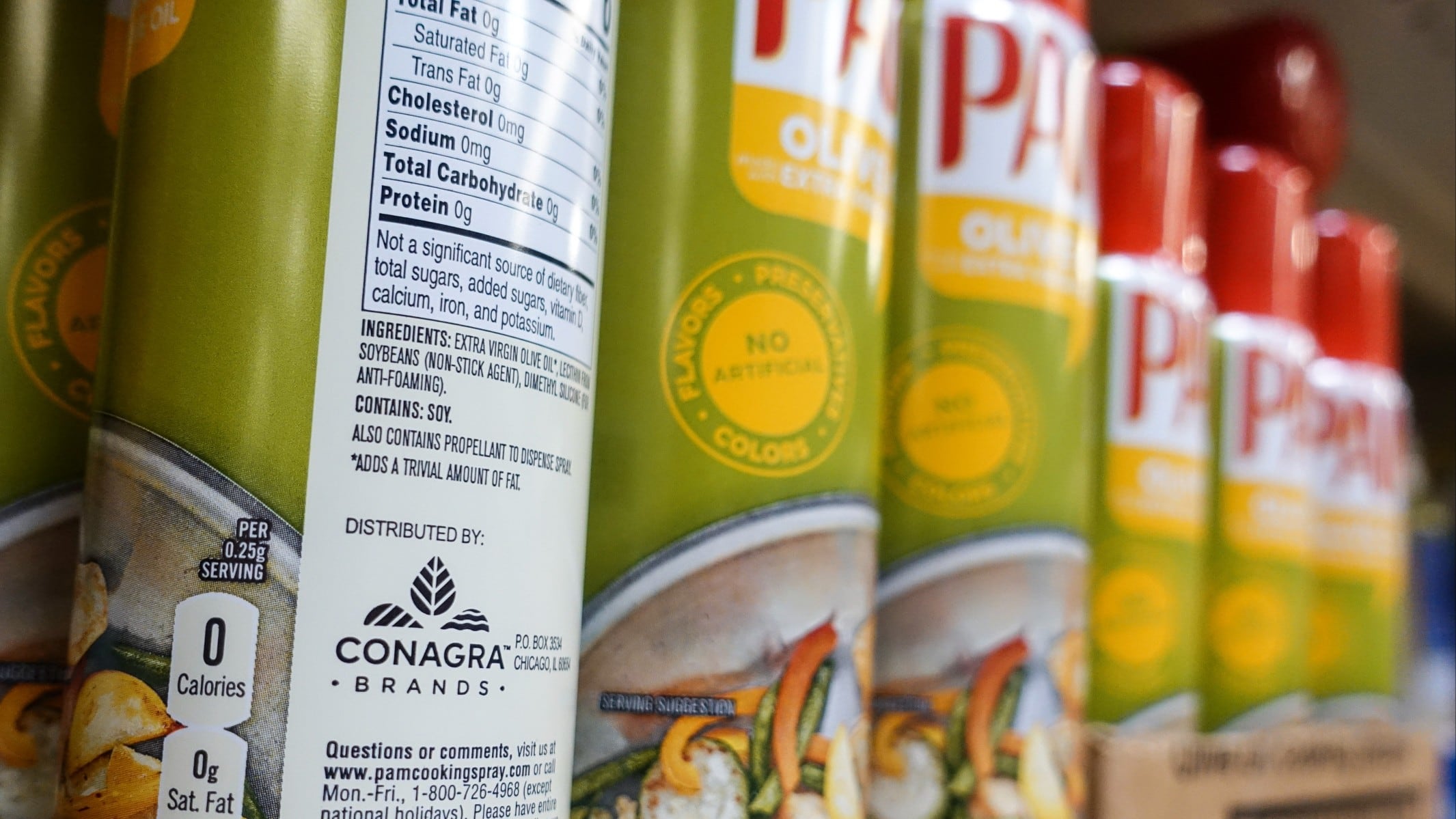
Chicago-based Conagra Brands must pay out $3.1 million in compensatory damages and $4 million in punitive damages to Reese, according to the Cook County Circuit Court verdict. Conagra Brands is the parent company of Pam and many other high-profile food brands including Marie Callender’s, Reddi-wip, Swiss Miss, Hunt’s, Chef Boyardee and Slim Jim.
The company said in an emailed statement that it disagreed with the jury’s verdict and that the “safety of our products and our consumers is always a top priority of Conagra.”
“We continue to stand by our cooking spray products, which are safe and effective when used correctly, as instructed. We are evaluating our legal options, including appeal,” the statement said.
Smith said there are more than 50 pending cases against Conagra from other burn victims across the country, and that the company has refused to issue a product recall for the “defective” cans.
“This is really the beginning of a serious problem for Conagra,” Peter Flowers, another attorney for Reese, said Tuesday.
The accidents involved spray can models of various brands manufactured between 2011 and 2019 that used a venting system with a lower threshold for heat than previous versions, Smith explained. When the can gets too hot, the vents on the bottom open to release pressure, discharging its very flammable contents into the air, according to the lawsuit.
Consumers can check if their cooking spray cans are vented by looking at whether the bottom of the can has four small U-shaped slits, Smith said. In general, larger spray cans — 10 oz. (0.3 liters) or more — rather than the commonly-sold 6 oz. (0.18 liters) cans are affected, he said.
The cooking spray that exploded near Reese had been stored on a shelf about 18 inches (46 centimeters) above the stove, according to Flowers.
“In a commercial kitchen, that’s a sort of normal place where people leave their cooking spray cans when they’re actually using them. And the same thing has happened all across the country, not necessarily on shelves above stoves, but on shelves near stoves, on countertops," he said.
In response to similar lawsuits in 2019, Conagra said the vent system was used on a limited number of cans but was eliminated during a product redesign that year. The redesign was not related to the lawsuits and was part of an effort to standardize the company’s cans, Conagra said.
Conagra says Pam and other cooking sprays have clear warning labels on the front and back telling consumers the product is flammable and should not be left on or near a stove or heat source. Cooking spray shouldn’t be stored above 120 degrees or sprayed near an open flame, the company said.
Savage is a corps member for the Associated Press/Report for America Statehouse News Initiative. Report for America is a nonprofit national service program that places journalists in local newsrooms to report on undercovered issues.