By Maria Cheng
The number of confirmed COVID-19 cases across the planet has surpassed 40 million, but experts say that is only the tip of the iceberg when it comes to the true impact of the pandemic that has upended life and work around the world.
The milestone was hit Monday morning, according to Johns Hopkins University, which collates reports from around the world.
The actual worldwide tally of COVID-19 cases is likely to be far higher, as testing has been uneven or limited, many people have had no symptoms and some governments have concealed the true number of cases. To date, more than 1.1 million confirmed virus deaths have been reported, although experts also believe that number is an undercount.
The U.S., India and Brazil are reporting by far the highest numbers of cases — 8.1 million, 7.5 million, and 5.2 million respectively — although the global increase in recent weeks has been driven by a surge in Europe, which has seen over 240,000 confirmed virus deaths in the pandemic so far.
In the U.S., some states are trying more targeted measures as cases continue to rise across the country. New York’s new round of virus shutdowns zeroes in on individual neighborhoods, closing schools and businesses in hot spots measuring just a couple of square miles.
As of last week, new cases per day were on the rise in 44 U.S. states, with many of the biggest surges in the Midwest and Great Plains, where resistance to wearing masks and taking other precautions has been running high and the virus has often been seen as just a big-city problem. Deaths per day were climbing in 30 states.
Dr. Anthony Fauci, the U.S. government’s top infectious-disease expert, said Americans should think hard about whether to hold Thanksgiving gatherings next month.
The World Health Organization said last week that Europe had a reported a record weekly high of nearly 700,000 cases and said the region was responsible for about a third of cases globally. Britain, France, Russia, and Spain account for about half of all new cases in the region, and countries like Belgium and the Czech Republic are facing more intense outbreaks now than they did in the spring.
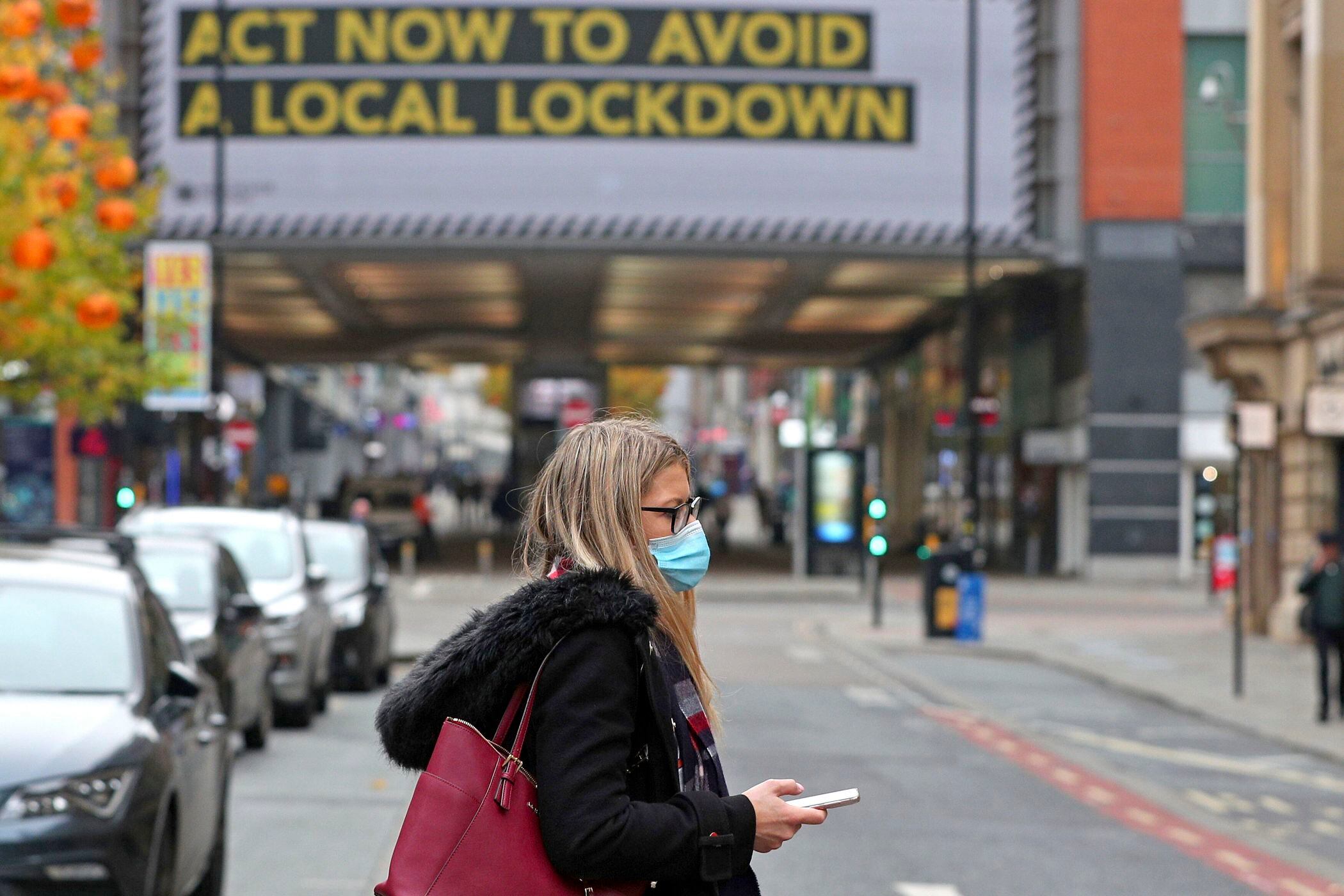
WHO said the new measures being taken across Europe are “absolutely essential” in stopping COVID-19 from overwhelming its hospitals. Those include new requirements on mask-wearing in Italy and Switzerland, closing schools in Northern Ireland and the Czech Republic, closing restaurants and bars in Belgium, implementing a 9 p.m. curfew in France, and having targeted limited lockdowns in parts of the U.K.
The agency said several European cities could soon see their intensive care units overwhelmed and warned that governments and citizens should take all necessary measures to slow the spread of the virus, including bolstering testing and contact tracing, wearing face masks, and following social distancing measures.
WHO has previously estimated about 1 in 10 of the world's population — about 780 million people — have been infected with COVID-19, more than 20 times the official number of cases. That suggests the vast majority of the world's population is still susceptible to the virus.
Some researchers have argued that allowing COVID-19 to spread in populations that are not obviously vulnerable will help build up herd immunity and is a more realistic way to stop the pandemic instead of the restrictive lockdowns that have proved economically devastating.
But WHO Director-General Tedros Adhanom Ghebreyesus has warned against the belief that herd immunity might be a viable strategy to pursue, saying this kind of protection needs to be achieved by vaccination, not by deliberately exposing people to a potentially fatal disease.
“Allowing a dangerous virus that we don’t fully understand to run free is simply unethical,” Tedros said last week.
The U.N. health agency said it hopes there might be enough data to determine if any of the COVID-19 vaccines now being tested are effective by the end of the year. But it warned that first-generation vaccines are unlikely to provide complete protection and that it could take at least two years to bring the pandemic under control.
Logistics experts also say that some 3 billion of the world's 7.8 billion people live in areas that lack the infrastructure to refrigerate new vaccines safely, a challenge that is sure to slow down the delivery of vaccines to those areas. This includes most of Central Asia, much of India and Southeast Asia, Latin America except for the largest countries, and all but a tiny corner of Africa.