By Melina Walling
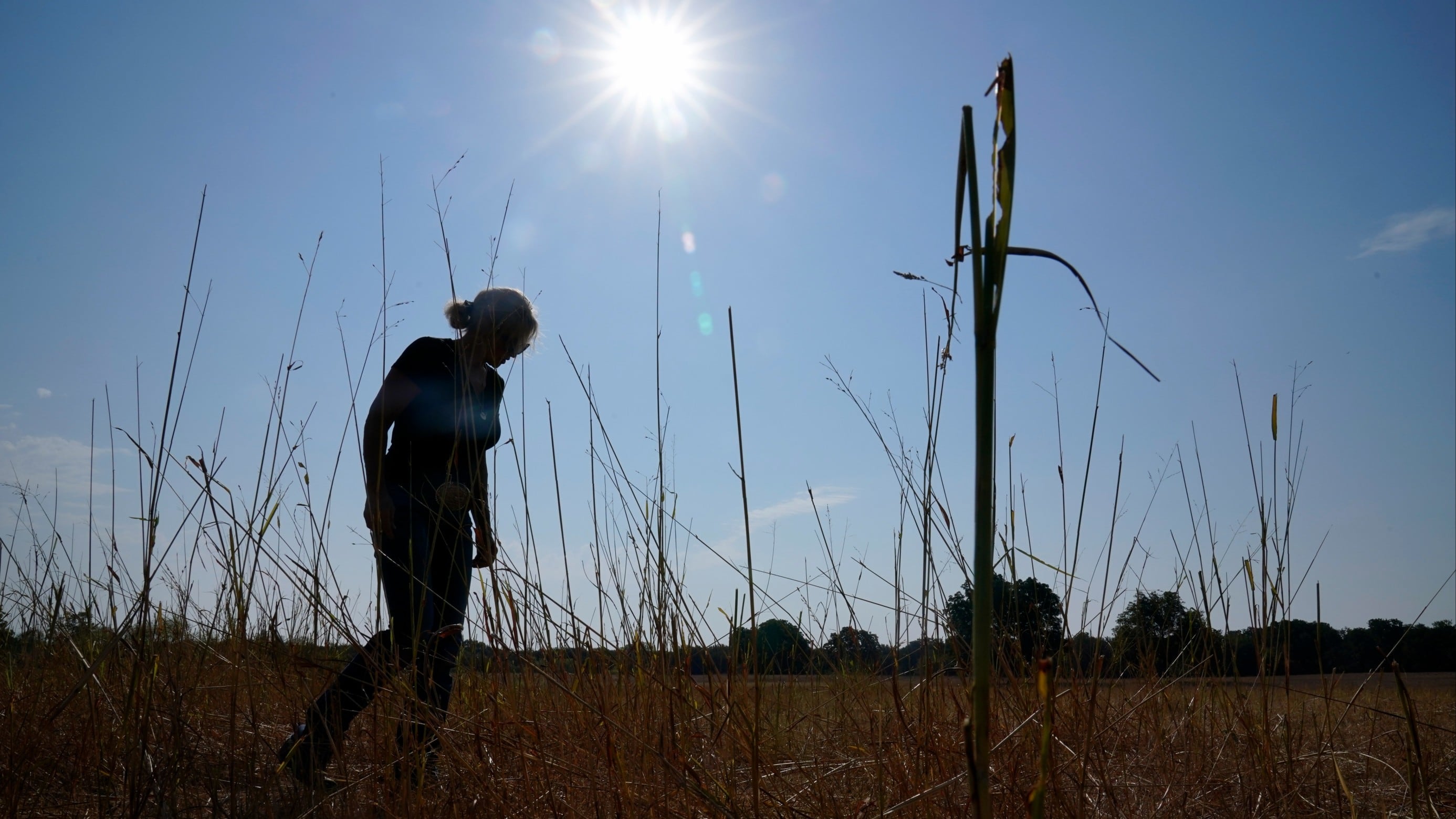
The Texas ranch where Gilda Jackson trains and sells horses has been plagued by grasshoppers this year, a problem that only gets worse when the hatch quickens in times of heat and drought. Jackson watched this summer as the insects chewed through a 35-acre pasture she badly needs for hay; what they didn't destroy, the sun burned up.
Irrigation might have saved Jackson's hay, but she and her husband rejected the idea about 10 years ago over the cost: as much as $75,000 for a new well and all the equipment. But now — with an extended drought and another U.S. heat wave this week that will broil her land about an hour northwest of Dallas for days in 100-degree-plus temperatures — Jackson said she is “kind of rethinking.”
Many other farmers and ranchers in the U.S. might be forced to do the same in coming decades, according to recent research into the expected effects of the rising heat and more frequent weather extremes associated with climate change.
That's if they even can. Some places in the U.S. are already struggling with groundwater depletion, such as California, Arizona, Nebraska and other parts of the central Plains.
“There’s no surprise that in the future when it gets hotter and there’s more demand for water, people are going to be using more water,” said Jonathan Winter, an associate professor of geography at Dartmouth College and an author on a new study on future U.S. irrigation costs and benefits in Communications Earth & Environment.
Winter and his team used a computer model to look at how heat and drought might affect crop production by the middle and end of this century, given multiple scenarios for the emissions of warming greenhouse gases. In places like California and Texas where “everyone is dropping their straw into the glass” of groundwater, as Winter put it, current levels of irrigation won't be viable in the long term because there isn’t enough water.
But use of irrigation may grow where groundwater supply isn’t presently an issue.
In much of the Midwest, including the corn- and soybean-rich states of Iowa, Illinois, Indiana and the Dakotas, farmers might see a benefit in the next 50 years from installing irrigation infrastructure. That’s an expensive investment, and whether it will pay off may depend on humans' ability to stem the worst effects of climate change. A worst-case scenario would involve one generation investing in costly irrigation equipment, only for the next to see them fail to keep crops alive through extreme heat and weather.
There are many irrigation methods for row crops, but the most common is pivot irrigation — the long strands of pipes mounted on wheels that are pulled in a circle around a water source to sprinkle water onto a field. The equipment can easily cost hundreds of thousands of dollars, plus the cost of drilling a new well if needed, along with the electricity to pull up the water.
But if the system boosts yields and provides a return of $50 an acre or more, it can pay off well for a farmer, said Brady Brewer, an associate professor of agricultural economics at Purdue University.
While scientists are confident in the warming effects of greenhouse gas emissions, precipitation is harder to nail down, especially in the Midwest, said Dave Gochis, a senior scientist with the National Center for Atmospheric Research who was not involved with Winter’s study.
Climate change produces more weather extremes, meaning both an increased risk of flash droughts — quick, intense periods of short-term heat and dry weather — and more heavy rain and flooding events as precipitation increases with more water in the atmosphere.
“That means we need to be more nimble and agile in how we manage water resources,” Gochis said.
Brewer hasn't seen much increased interest in irrigation from Midwest farmers yet. So far, a surplus of water has been the bigger issue in many places, but if yields start showing losses in the coming years due to worsening heat and flash droughts, “that's when farmers will invest,” he said.
Farmers who don't choose irrigation, for now, might cope by planning ahead.
They could choose different crops with different water needs from season to season or be compensated for fallowing fields in times of water stress. Or they might use tools like the one developed by North Carolina State researchers Sankar Arumugam, a professor, and Hemant Kumar, a Ph.D. candidate.
They recently helped create a computer modeling tool, outlined in the journal Water Resources Research, which they hope will help farmers and water managers use a combination of seasonal forecasts and other data to find a sweet spot for balancing crop revenue and water use.
In the Southeast, where they focused their work and where water resources are plentiful, “it’s more of a proactive strategy” for people who already have irrigation equipment, Arumugam said, “so that we don’t overexploit the resources that are in place.”
Irrigation, used responsibly, can be part of adapting to climate change, but “it’s a moving target,” Winter said.
He called for supporting farmers who have to make hard decisions as they adapt to climate change — for instance, training them to grow less water-intensive crops or giving them low-cost loans to improve irrigation efficiency.
But he also urged action to limit climate change’s worst effects. Farmers need resources to make adjustments, but especially in the West, “there’s only so much water,” he said.
Upmanu Lall, director of the Columbia Water Center, said climate change isn't the only thing driving farmers' decisions. Lall, who wasn't involved in Winter's work, said crop insurance and government subsidies can push farming methods in one direction or another.
Brewer, the Purdue professor, agreed.
“What we’re seeing is because we have crop insurance that reduces the farmers’ risk, that’s probably what’s driving some of these farmers to plant soybeans or corn” rather than more drought-tolerant crops such as wheat or sorghum in places like the western Plains, Brewer said.
He added that research shows if farmers have crop insurance and feel more secure in planting crops that use more water, that "may lead to higher irrigation uptake as well.”
Associated Press climate and environmental coverage receives support from several private foundations. See more about AP’s climate initiative here. The AP is solely responsible for all content.