In this May 27, 2019, file photo, a bird flies with Mount Everest seen in the background from Namche Bajar, Solukhumbu district, Nepal. (AP Photo/Niranjan Shrestha, File)
By Binaj Gurubacharya
China and Nepal jointly announced a new official height for Mount Everest on Tuesday, ending a discrepancy between the two nations.
The new height of the world's highest peak is 8,848.86 meters (29,031.7 feet), which is slightly more than Nepal’s previous measurement and about four meters (13 feet) higher than China’s.
Chinese Foreign Minister Wang Yi and his Nepalese counterpart, Pradeep Gyawali, simultaneously pressed buttons during a virtual conference and the new height flashed on the screen.
The height of Everest, which is on the border between China and Nepal, was agreed on after surveyors from Nepal scaled the peak in 2019 and a Chinese team did the same in 2020.
There had been debate over the actual height of the peak and concern that it might have shrunk after a major earthquake in 2015. The quake killed 9,000 people, damaged about 1 million structures in Nepal and triggered an avalanche on Everest that killed 19 people at the base camp.
There was no doubt that Everest would remain the highest peak because the second highest, Mount K2, is only 8,611 meters (28,244 feet) tall.
Everest's height was first determined by a British team around 1856 as 8,842 meters (29,002) feet.
But the most accepted height has been 8,848 meters (29,028 feet), which was determined by the Survey of India in 1954.
In 1999, a National Geographic Society team using GPS technology came up with a height of 8,850 (29,035 feet). A Chinese team in 2005 said it was 8,844.43 meters (29,009 feet) because it did not include the snow cap.
A Nepal government team of climbers and surveyors scaled Everest in May 2019 and installed GPS and satellite equipment to measure the peak and snow depth on the summit.
Chinese President Xi Jinping visited Nepal later that year and the leaders of the two countries decided that they should agree on a height.
A survey team from China then conducted measurements in the spring of 2020 while all other expeditions were canceled due to the coronavirus pandemic.
Nepal's climbing community welcomed the end of confusion over the mountain's height.
“This is a milestone in mountaineering history which will finally end the debate over the height and now the world will have one number,” said Santa Bir Lama, president of the Nepal Mountaineering Association.
China's official Xinhua New Agency quoted Xi as saying the two sides are committed to jointly protecting the environment around Everest and cooperating in scientific research.
For China, the announcement appeared to be as much about politics as geography. China has drawn Nepal ever closer into its orbit with investments in its economy and the building of highways, dams, airports and other infrastructure in the impoverished nation.
That appears to serve China’s interests in reducing the influence of rival India, with which it shares a disputed border, and Nepal’s role as a destination for refugee Tibetans.
The Xinhua report said nothing about the technical aspects but heavily emphasized the joint announcement’s geopolitical weight.
China and Nepal will establish an “even closer community of a shared future to enrich the countries and their peoples,” Xinhua quoted Xi as saying.
On this episode of Cheddar Innovates: Yat Labs Co-Founder breaks down how a 'Yat' is changing the way people think about their online identities; Scythe Robotics CEO explains how it's bringing innovation to the landscaping industry with its autonomous, all-electric mowers; Founder of California Cowboy discusses how its creating clothing designed for creating in-person connections with others with features like a beverage pocket, bottle opener, and conversation cards; Cheddar gets a look at Curiosity Stream's 'Beyond the Spotlight' biography series.
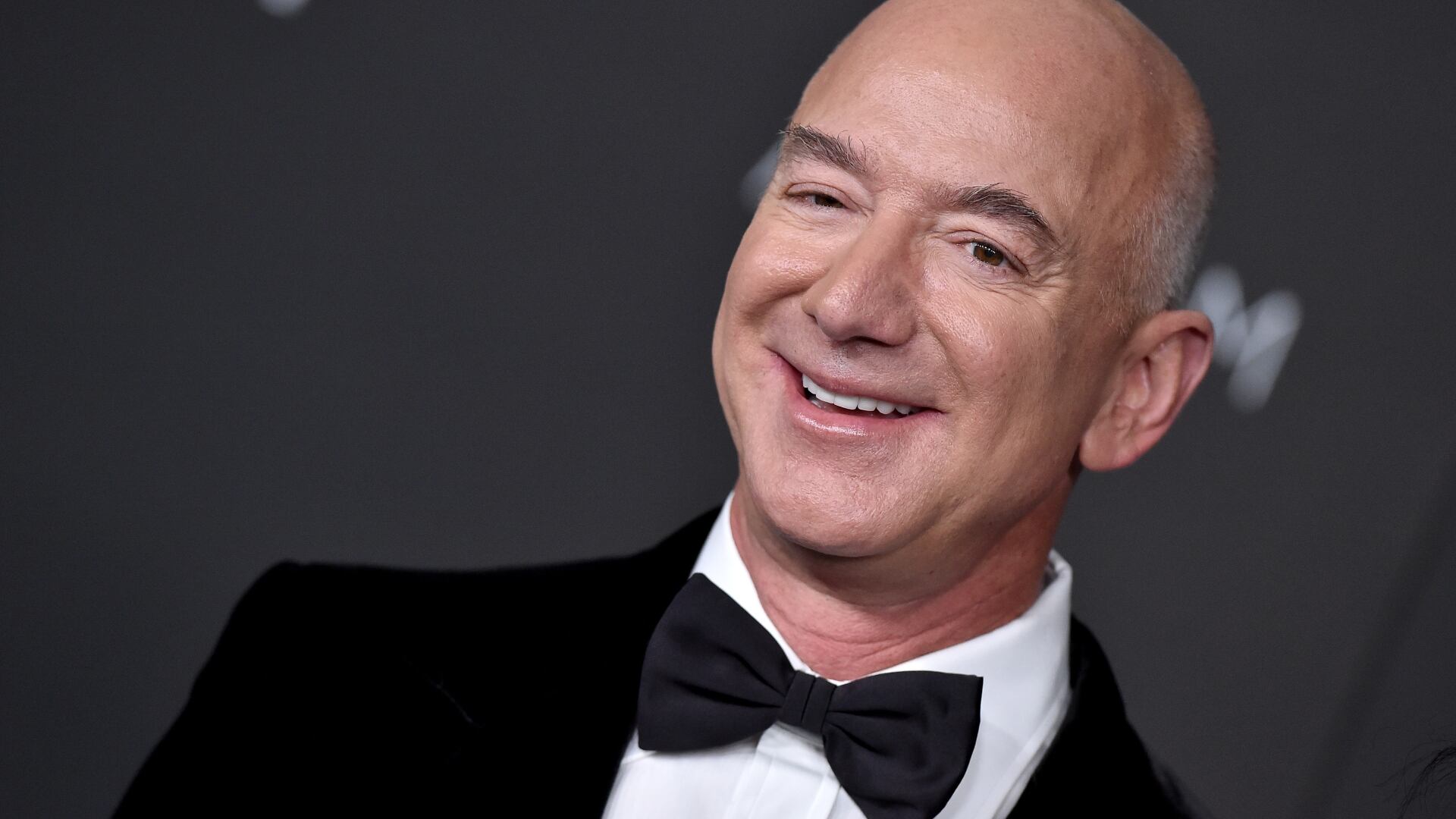
Amazon founder Jeffrey Bezos took to the stage at the U.N.'s COP26 Climate Summit to unveil a new plan to combat climate change, but some say it might do more harm than good. Justine Calma, Science Reporter at The Verge, joined Cheddar to discuss.
Pfizer has asked the FDA to expand authorization of COVID booster shots for all adults. The agency is expected to grant the request in the coming weeks, allowing vaccinated Americans as young as 18 to get boosted before the holidays. Dr. Bayo Curry-Winchell, Regional Clinical Director at Carbon Health, joined Cheddar to discuss.
Wood modification technology company Kebony recently raised $34 million in its latest funding round. The company's patented technology transformed sustainable softwood using leftover materials and makes it into a product that behaves like premium hardwood. The process has the potential to transform the global construction industry, as it is cost-effective and eco-friendly. Kebony CEO Norman Willemsen joined Cheddar News' Closing Bell to discuss.
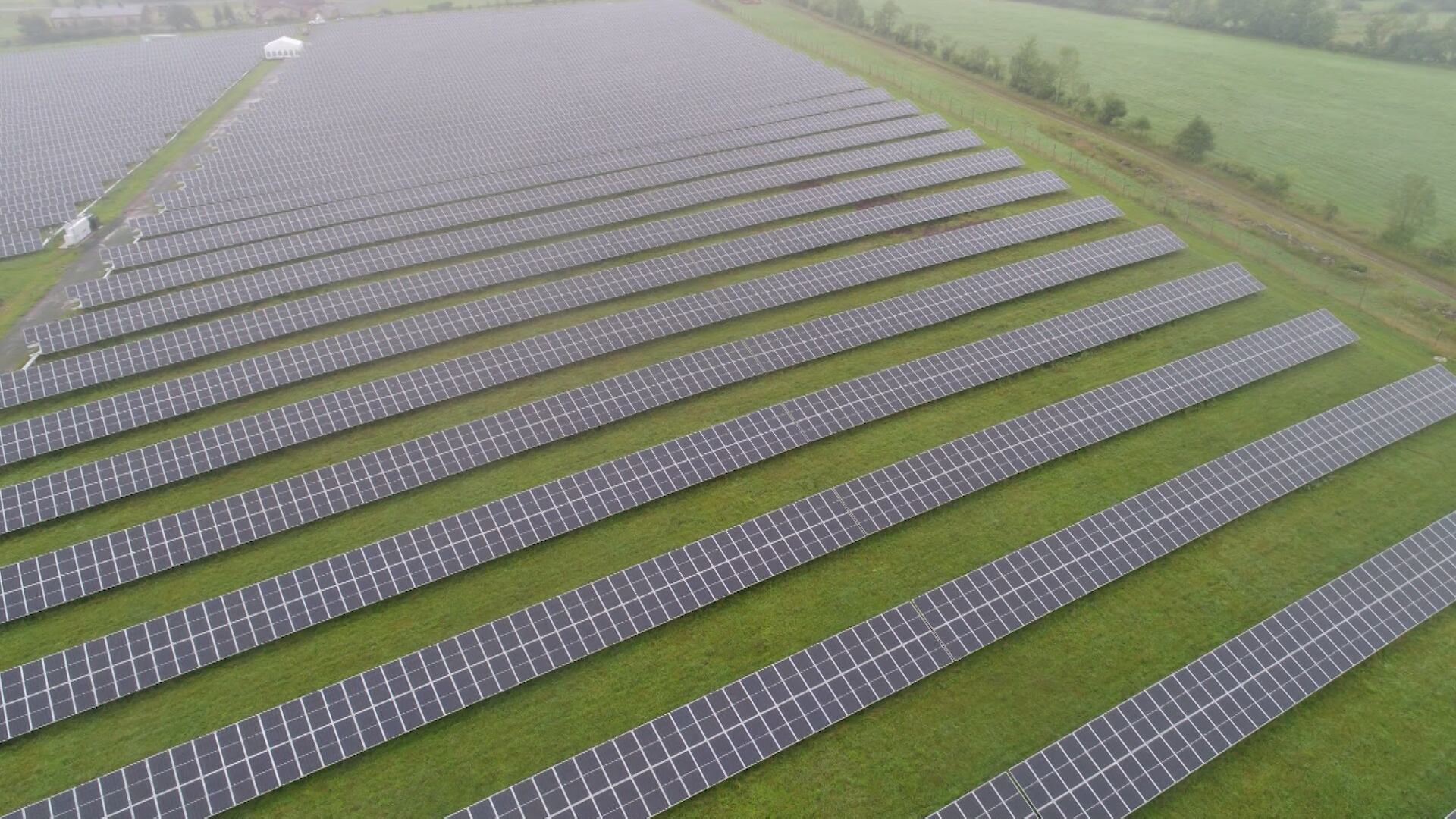
Emma Searson, an author on the just-released Renewables on the Rise report and the director, 100% Renewable Campaign at Environment America, joined Cheddar to discuss the rapidly growing renewable energy sector. Between 2011 and 2020, the report shows that wind, solar, and geothermal energy production grew about 15 percent annually and that wind and solar alone account for 11 percent of electricity in the country. "There are a few really important drivers of the renewable energy progress that we're seeing all across the country," Searson said, highlighting falling prices, technology improvements, and supportive policies.
On this episode of 'Cheddar Reveals', Lydia McMullen-Laird and Samuel McMullen, co-founders of Live Zero Waste, discuss the sum of humanity's 'trash addiction' and lifestyle changes people can make to help reduce their individual trash output; Ryan Lupberger, Sustainability Pioneer and CEO of Cleancult, breaks down how Cleancult is redefining cleaning products and solutions to reduce their impact on the planet; Cheddar gets a look at Curiosity Stream's 'Going Circular.'
The U.S. has reopened its borders for fully vaccinated international visitors, ending a ban on foreign travelers that started more than a year ago. It's a welcome change for families separated by the pandemic and a sign of hope for the battered travel industry. Steve Shur, president of the The Travel Technology Association, discusses the new rules and how they could propel the travel industry into a post-pandemic boom.