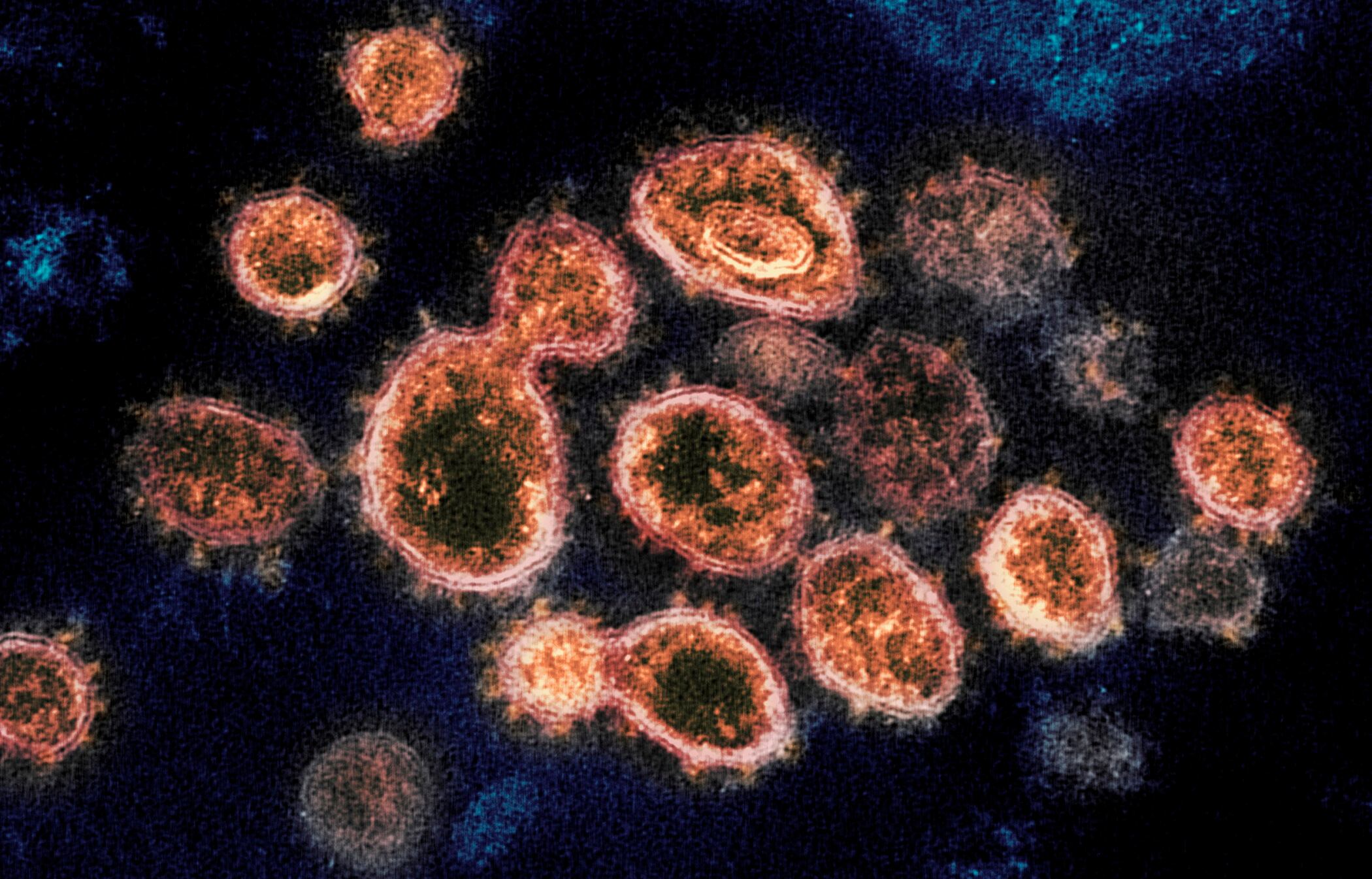
This 2020 electron microscope image provided by the National Institute of Allergy and Infectious Diseases - Rocky Mountain Laboratories shows SARS-CoV-2 virus particles which cause COVID-19, isolated from a patient in the U.S., emerging from the surface of cells cultured in a lab. According to a study released in The Lancet Global Health on Wednesday, Oct. 27, 2021, Fluvoxamine, a cheap antidepressant, reduced the need for hospitalization among high-risk adults with COVID-19. (NIAID-RML via AP)
By Carla K. Johnson
A cheap antidepressant reduced the need for hospitalization among high-risk adults with COVID-19 in a study hunting for existing drugs that could be repurposed to treat coronavirus.
Researchers tested the pill used for depression and obsessive-compulsive disorder because it was known to reduce inflammation and looked promising in smaller studies.
They've shared the results with the U.S. National Institutes of Health, which publishes treatment guidelines, and they hope for a World Health Organization recommendation.
“If WHO recommends this, you will see it widely taken up,” said study co-author Dr. Edward Mills of McMaster University in Hamilton, Ontario, adding that many poor nations have the drug readily available. “We hope it will lead to a lot of lives saved.”
The pill, called fluvoxamine, would cost $4 for a course of COVID-19 treatment. By comparison, antibody IV treatments cost about $2,000 and Merck's experimental antiviral pill for COVID-19 is about $700 per course. Some experts predict various treatments eventually will be used in combination to fight the coronavirus.
Researchers tested the antidepressant in nearly 1,500 Brazilians recently infected with coronavirus who were at risk of severe illness because of other health problems, such as diabetes. About half took the antidepressant at home for 10 days, the rest got dummy pills. They were tracked for four weeks to see who landed in the hospital or spent extended time in an emergency room when hospitals were full.
In the group that took the drug, 11% needed hospitalization or an extended ER stay, compared to 16% of those on dummy pills.
The results, published Wednesday in the journal Lancet Global Health, were so strong that independent experts monitoring the study recommended stopping it early because the results were clear.
Questions remain about the best dosing, whether lower risk patients might also benefit and whether the pill should be combined with other treatments.
The larger project looked at eight existing drugs to see if they could work against the pandemic virus. The project is still testing a hepatitis drug, but all the others — including metformin, hydroxychloroquine and ivermectin — haven't panned out.
The cheap generic and Merck's COVID-19 pill work in different ways and “may be complementary,” said Dr. Paul Sax of Brigham and Women’s Hospital and Harvard Medical School, who was not involved in the study. Earlier this month, Merck asked regulators in the U.S. and Europe to authorize its antiviral pill.
___
The Associated Press Health and Science Department receives support from the Howard Hughes Medical Institute’s Department of Science Education. The AP is solely responsible for all content.
Carlo and Baker wrap up another week discussing the latest explosion in new Covid cases in the Northeast, President Biden's stalled agenda and more. Plus, Love, Hate, Ate featuring the question: why did movie dialogue get so hard to understand?
From extreme cold in Texas to devastating wildfires in California to the recent tornadoes in the Midwest, the U.S. experienced a string of severe weather events in 2021. Cheddar News speaks with climate expert Sweta Chakraborty on how these disasters are linked to climate change.
The sports world has been at the forefront of dealing with the pandemic ever since the NBA temporarily halted operations in March 2020 and opted to play in their Florida bubble. As the omicron variant and current COVID surge forces game postponements and player quarantines, how leagues manage to continue operations through the outbreaks could be a sign of what is to come for the general public. Dr. Robby Sikka, chair of the COVID Sports Society Workgroup and a former VP with the Minnesota Timberwolves, joined Cheddar's "Closing Bell" to talk about the ways in which the NBA, NHL, and NFL are innovating amid the disruptions.
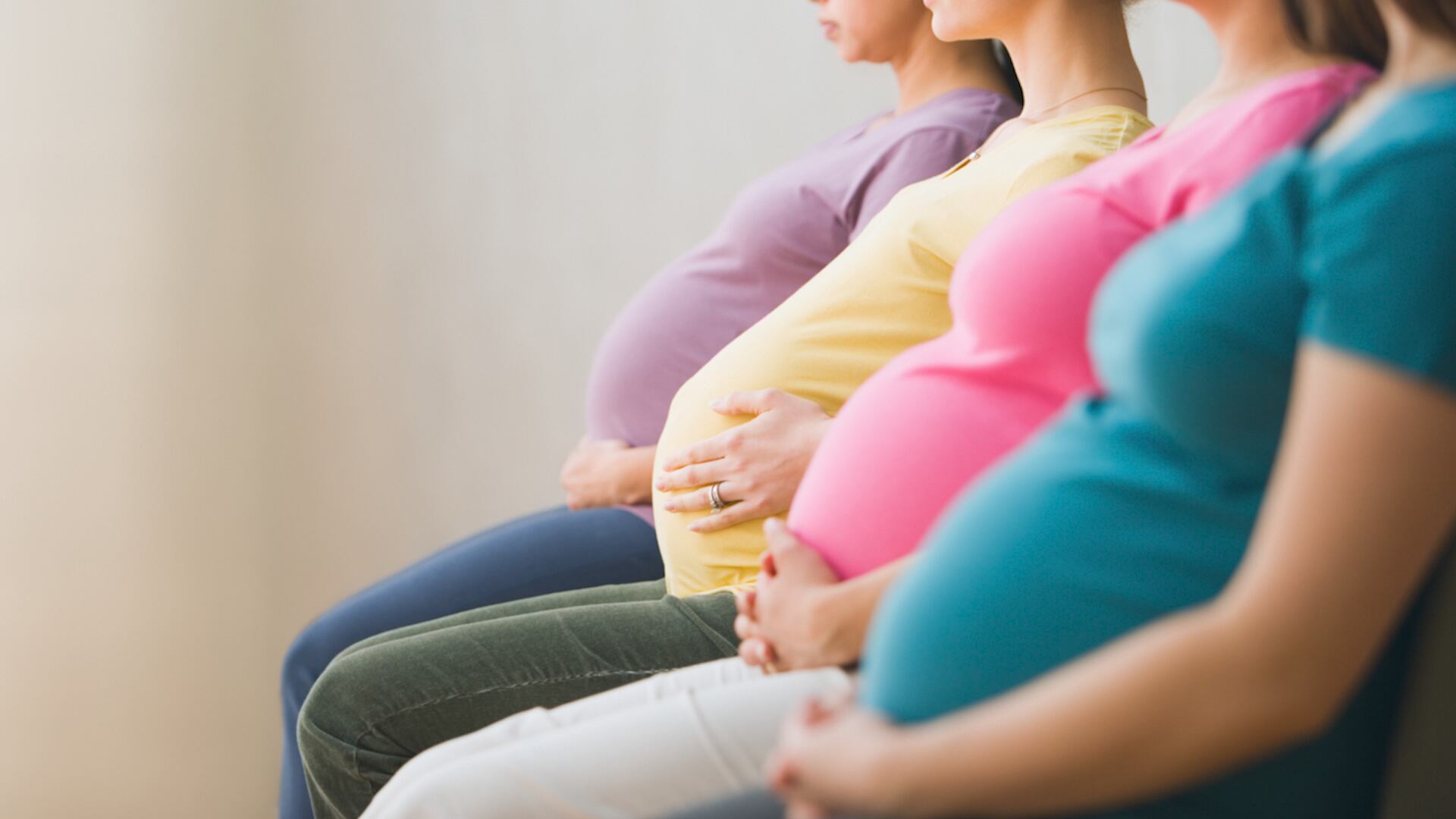
According to the CDC, Black women are three to four times more likely to die from pregnancy-related causes than white women. The grim statistic is one of the main reasons why two organizations came together to do something. The Bump and the National Medical Association are partnering to launch The Black Maternal Health hub. The online resource will help expecting mothers feel supported, informed, and empowered throughout pregnancy and the early days of parenting. Jennifer Lee at The Bump and Dr. Rachel Villanueva, a clinical assistant professor of OB/GYN and member of the National Medical Association join Cheddar News to talk about the initiative.
Michelle Egger and Leila Strickland, Co-Founders of Biomilq, join Cheddar Innovates to discuss how their women-led team is recreating the process of milk production outside the body to combine both nutrition and practicality for new moms.
On this episode of Cheddar Innovates: Nucleus CEO breaks down what the future of the genomics industry looks like; Biomilq Co-Founders explains how they are is recreating the process of milk production outside the body to combine both nutrition and practicality for new moms; A look at Curiosity Stream's 'Top Science Stories 2021.'
Kian Sadeghi, Founder and CEO of Nucleus, joins Cheddar Innovates to discuss how he's making genetic analysis more accessible, what our genetic code can teach us about ourselves, and what the future of the genomics industry looks like.
On this episode of Cheddar Innovates: Omorpho Co-Founder explains the innovation driving gravity sportswear; Cool Beans CEO breaks down the science behind 'good mood food;' A look at Curiosity Stream's 'Building The James Webb Telescope.'