By Lisa Mascaro
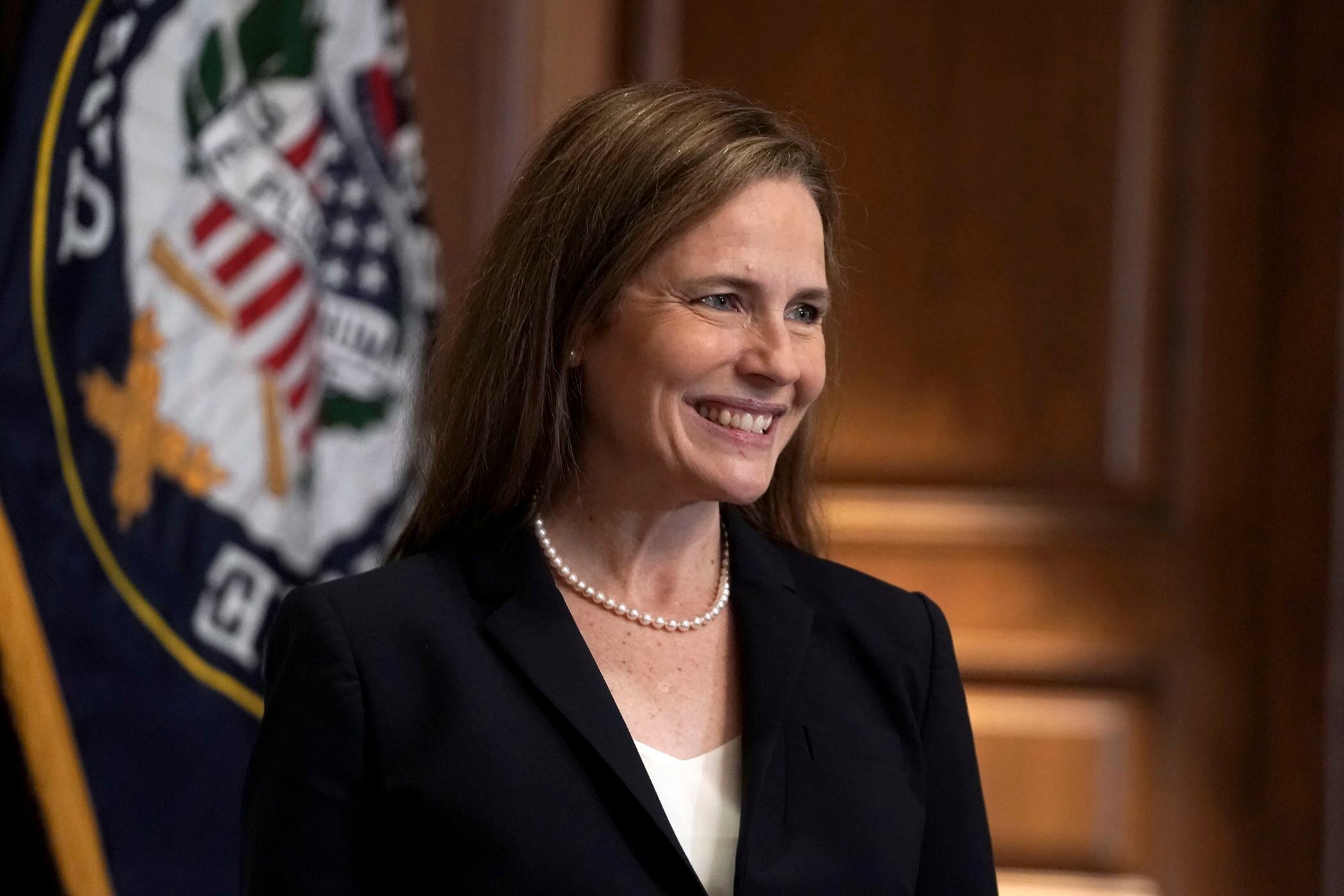
Amy Coney Barrett was confirmed to the Supreme Court late Monday by a deeply divided Senate, Republicans overpowering Democrats to install President Donald Trump’s nominee days before the election and secure a likely conservative court majority for years to come.
Trump's choice to fill the vacancy of the late liberal icon Ruth Bader Ginsburg potentially opens a new era of rulings on abortion, the Affordable Care Act and even his own election. Democrats were unable to stop the outcome, Trump's third justice on the court, as Republicans race to reshape the judiciary.
Barrett is 48, and her lifetime appointment as the 115th justice will solidify the court's rightward tilt.
Monday's 52-48 vote was the closest high court confirmation ever to a presidential election, and the first in modern times with no support from the minority party. The spiking COVID-19 crisis has hung over the proceedings. Vice President Mike Pence's office said Monday he would not preside at the Senate session unless his tie-breaking vote was needed after Democrats asked him to stay away when his aides tested positive for COVID-19. His vote was not necessary.
With Barrett's confirmation assured, Trump was expected to celebrate with a primetime swearing-in event at the White House. Justice Clarence Thomas was set to administer the Constitutional Oath, a senior White House official said.
“This is something to be really proud of and feel good about,” Senate Majority Leader Mitch McConnell said during a rare weekend session Sunday ahead of voting. He scoffed at the “apocalyptic” warnings from critics that the judicial branch was becoming mired in partisan politics and declared that "they won’t be able to do much about this for a long time to come.”
Pence's presence presiding for the vote would have been expected, showcasing the Republican priority. But Senate Democratic leader Chuck Schumer and his leadership team said it would not only violate virus guidelines of the Centers for Disease Control and Prevention, “it would also be a violation of common decency and courtesy.”
Some GOP senators tested positive for the coronavirus following a Rose Garden event with Trump to announce Barrett’s nomination last month, but they have since said they have been cleared by their doctors from quarantine. Pence was not infected and his office said the vice president tested negative for the virus Monday.
Democrats argued for weeks that the vote was being improperly rushed and insisted during an all-night Sunday session it should be up to the winner of the Nov. 3 election to name the nominee. However, Barrett, a federal appeals court judge from Indiana, is expected to be seated swiftly, and begin hearing cases.
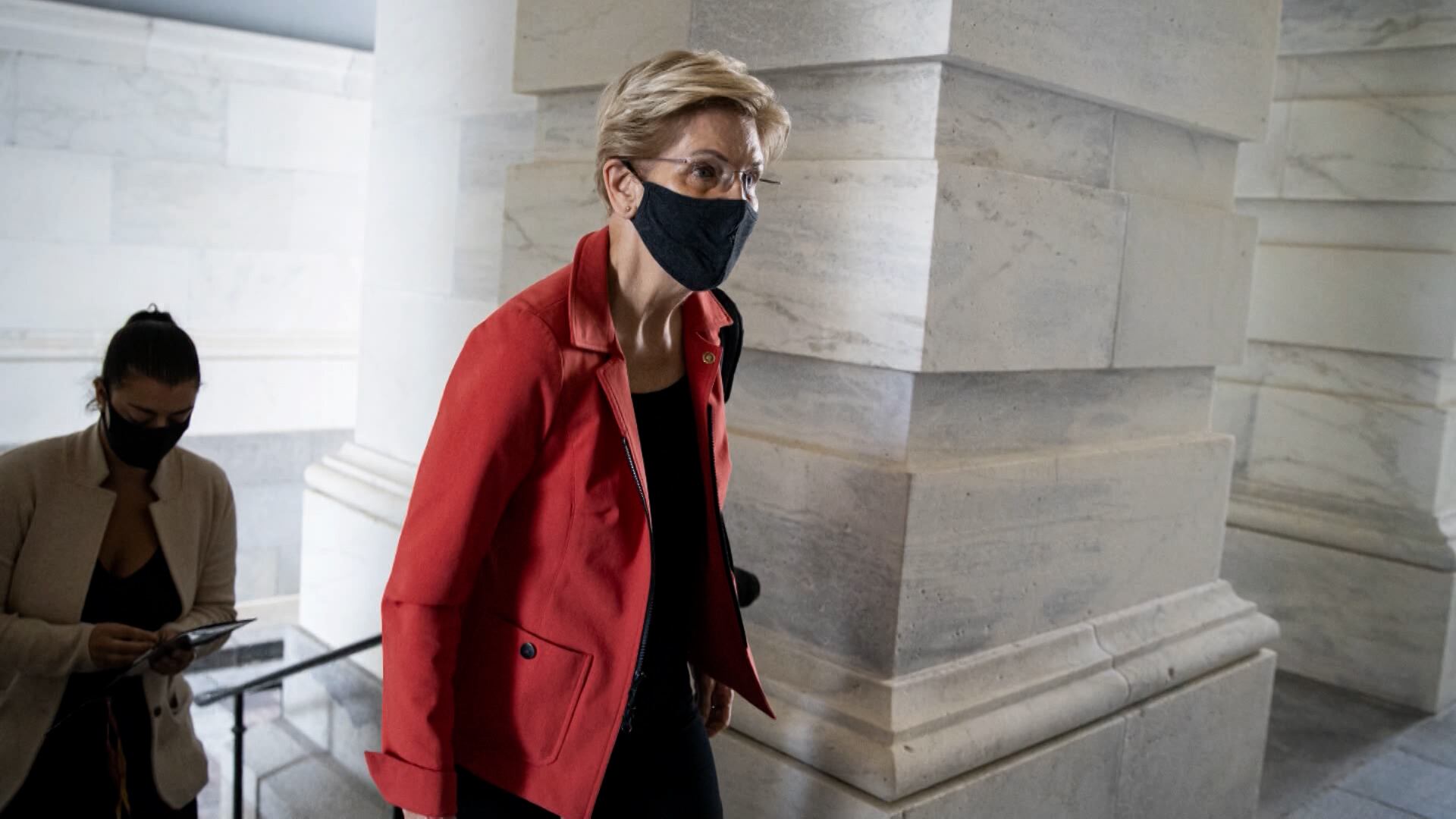
Speaking near midnight Sunday, Sen. Elizabeth Warren, D-Mass., called the vote “illegitimate” and “the last gasp of a desperate party.”
Several matters are awaiting decision just a week before Election Day, and Barrett could be a decisive vote in Republican appeals of orders extending the deadlines for absentee ballots in North Carolina and Pennsylvania.
The justices also are weighing Trump’s emergency plea for the court to prevent the Manhattan District Attorney from acquiring his tax returns. And on Nov. 10, the court is expected to hear the Trump-backed challenge to the Obama-era Affordable Care Act.
Trump has said he wanted to swiftly install a ninth justice to resolve election disputes and is hopeful the justices will end the health law known as “Obamacare.”
During several days of public testimony before the Senate Judiciary Committee, Barrett was careful not to disclose how she would rule on any such cases.
She presented herself as a neutral arbiter and suggested, “It’s not the law of Amy.” But her writings against abortion and a ruling on “Obamacare” show a deeply conservative thinker.
Sen. Lindsey Graham, R-S.C., the chairman of the Judiciary Committee, praised the mother of seven as a role model — “a conservative woman who embraces her faith.” Republicans focused on her Catholic religion, dismissing earlier Democratic questions about her beliefs. Graham said Barrett is "unabashedly pro-life, but she’s not going to apply ‘the law of Amy’ to all of us.”
At the start of Trump’s presidency, McConnell engineered a Senate rules change to allow confirmation by a majority of the 100 senators, rather than the 60-vote threshold traditionally needed to advance high court nominees over objections. That was an escalation of a rules change Democrats put in place to advance other court and administrative nominees under President Barack Obama.
Republicans are taking a political plunge by pushing for confirmation days from the Nov. 3 election with the presidency and their Senate majority at stake.
Only one Republican — Sen. Susan Collins, who is in a tight reelection fight in Maine — voted against the nominee, not over any direct assessment of Barrett. Rather, Collins said, “I do not think it is fair nor consistent to have a Senate confirmation vote prior to the election.”
Trump and his Republican allies had hoped for a campaign boost, in much the way Trump generated excitement among conservatives and evangelical Christians in 2016 over a court vacancy. That year, McConnell refused to allow the Senate to consider then-President Barack Obama's choice to replace the late Justice Antonin Scalia, arguing the new president should decide.
Most other Republicans facing tough races embraced the nominee to bolster their standing with conservatives. Sen. Thom Tillis, R-N.C., said in a speech Monday that Barrett will “go down in history as one of the great justices.”
But it's not clear the extraordinary effort to install the new justice over such opposition in a heated election year will pay political rewards to the GOP.
Demonstrations for and against the nominee have been more muted at the Capitol under coronavirus restrictions.
Democrats are unified against Barrett. While two Democratic senators voted to confirm Barrett in 2017 after Trump nominated the Notre Dame Law School professor to the appellate court, none voted to confirm her to the high court.
In a display of party priorities, California Sen. Kamala Harris, the vice presidential nominee, returned to Washington from the campaign trail to join colleagues with a no vote.
No other Supreme Court justice has been confirmed on a recorded vote with no support from the minority party in at least 150 years, according to information provided by the Senate Historical Office.
___
Associated Press writers Mary Clare Jalonick, Andrew Taylor, Mark Sherman, Zeke Miller, and Aamer Madhani in Washington and Kathleen Ronayne in Sacramento, Ca., contributed to this report.