By Larry Lage and Mike Householder
College football tailgates are as synonymous with the game as blocking and tackling. Burgers, brats and beer go along with the cornhole and camaraderie for tens of thousands of people every Saturday, a beloved tradition seen outside stadiums big and small.
“My dad almost gets more excited for football season than I do because of the tailgating and stuff like that,” said J.J. McCarthy, the star quarterback for No. 2 Michigan.
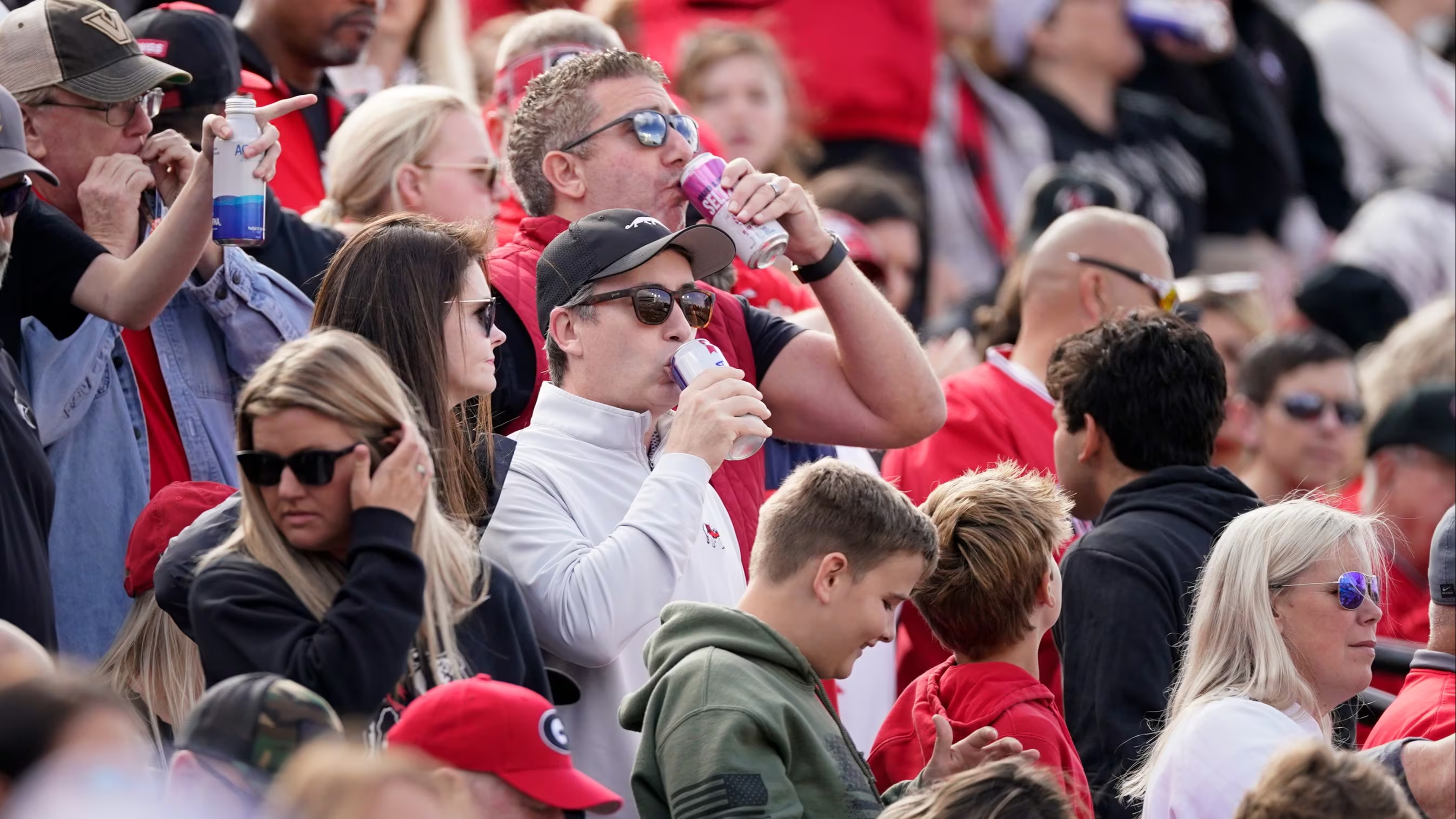
For many years, the booze flowed only outside of stadiums. Not anymore: Selling beer and wine inside college football stadiums has become the norm over the past decade, a way for schools to bring in more revenue and attract fans who might otherwise be inclined to stay home.
According to a survey by The Associated Press of Power Five conference schools and Notre Dame, 55 of 69 of them — 80% — now sell alcohol in the public areas of their stadiums on game days. Of the remaining schools, some sell alcoholic drinks in non-public areas of the venue such as suites; others do not sell booze at all.
The University of Wisconsin is one of the institutions that do not sell alcohol to the general public at football games, but it will begin selling booze at basketball and hockey games this season.
“If our fan experience metrics increase, then it certainly warrants a conversation," said Mitchell Pinta, Wisconsin’s deputy athletic director. “`Hey, we did this at Kohl Center (and) LaBahn Arena. What would it take? What will it look like? Is that something we want to do at Camp Randall?'”
Alcohol has been sold in football stadiums in various ways for years, but the number of schools willing to do it picked up dramatically in the late 2010s. Adam Barry, a health behavior social scientist at Texas A&M, said after the Southeastern Conference allowed schools to sell alcohol in 2019, booze started to flow in stadiums from coast to coast.
“Since the SEC made that decision, other Power Five conferences followed suit, and we’ve seen an exponential rise,” Barry said.
The AP survey found that 19 schools that currently are in Power Five conferences began selling alcohol to the public during football games in 2019. Before that, just 20 such schools permitted the practice.
Since 2019, another 16 schools have come on board, including Michigan State, Kentucky and Stanford, all of which started selling booze in their football stadiums during the current season.
Michigan Gov. Gretchen Whitmer signed legislation in July lifting the state’s ban on alcohol being sold at college sporting events. Michigan State made moves relatively quickly in response.
“I didn’t have much trepidation because we’re not the first," said Marlon Lynch, Michigan State's chief safety officer. "It’s been done for years.”
The University of Michigan, meanwhile, did not make alcohol available at the Big House this fall, waiting to see how it goes at basketball and hockey games later this winter. The school has also conducted community surveys.
“We have to take slow steps in order to implement this because it hasn’t been a part of our culture," athletic director Warde Manuel said. "This is a way to phase that in, see what the data says and then talk to the regents and the president again.”
University of Michigan Regent Paul Brown said he was not sure about the idea.
“One of the things that makes us unique is a collegiate atmosphere," Brown said last month as the board approved applying for liquor licenses at the school's football, basketball and hockey venues. "It is different than the pro sports that always serve alcohol. I think that difference is one thing that creates value for our institution. And so, I don’t want to destroy that value.”
The University of North Carolina, meanwhile, is in its fifth season of selling Twisted Tea, Modelo, White Claw and other booze.
“Based upon the people that I attend games with sometimes, I think that they will still prefer tailgating over the in-game,” said Jonathan Williams, gripping a Coors Light after buying it at a cart station during a recent Tar Heels game. “They’re going to want to buy and pay grocery-store prices versus stadium prices and try to get as much in as they can before coming in.”
At North Carolina, alcohol has helped the bottom line with about $4 million in sales. After having $320,213 in net sales during the 2019-20 athletic year, the school quadrupled that number last year and will see an increase again after this season.
“Athletic departments typically are not profitable,” Barry said. “So, selling alcohol has simply become a new revenue stream.”
Before Pittsburgh upset Louisville at home last month, Jen Margot and her family played cornhole, noshed on barbecue and drank an array of mostly domestic beers on the fourth level of a parking garage adjacent to Acrisure Stadium.
“We always joked the prices at the tailgate were better,” Margot said with a laugh.
Margot said the adults will buy a beer or two when they’re inside but prefer the atmosphere at the tailgate.
“We don’t go to the games so we can get beer,” she said. “It’s nice that it’s an option especially because it’s pretty common at most other stadiums we’ve been to.”
AP Sports Writers Steve Megargee in Wisconsin, Aaron Beard in North Carolina, Will Graves in Pennsylvania and Teresa M. Walker in Tennessee contributed.