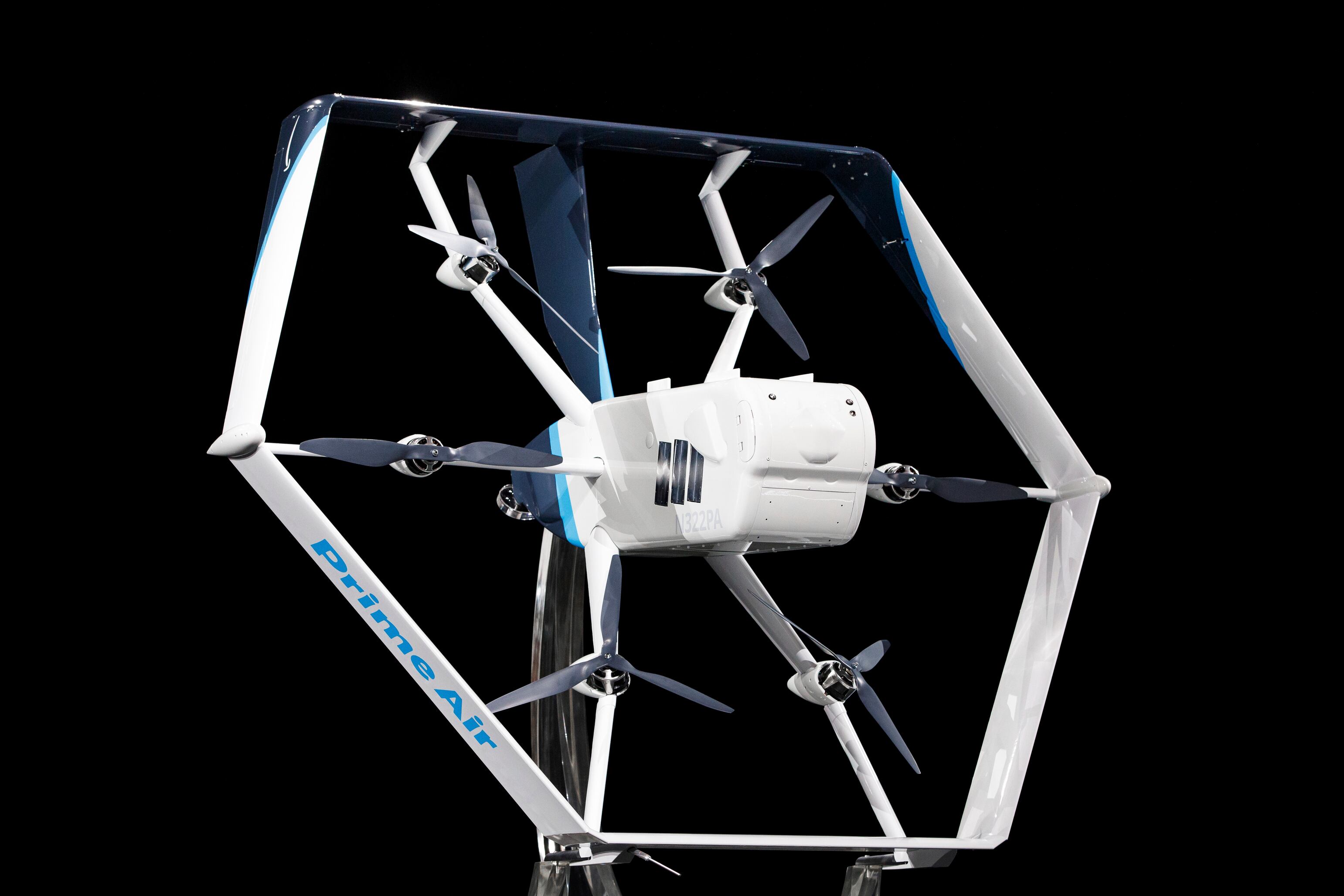
This undated image provided by Amazon shows one of the company's delivery drones. Amazon won approval to deliver packages by drones from the Federal Aviation Administration, the agency said Monday, Aug. 31, 2020. (Jordan Stead/Amazon via AP, File)
By Joseph Pisani
Getting an Amazon package delivered from the sky is closer to becoming a reality.
The Federal Aviation Administration said Monday it had granted Amazon approval to deliver packages by drones.
Amazon said that the approval is an "important step," but added that it is still testing and flying the drones. It did not say when it expected drones to make deliveries to shoppers.
The online shopping giant has been working on drone delivery for years, but it has been slowed by regulatory hurdles. Back in December 2013, Amazon CEO and founder Jeff Bezos said in a TV interview that drones would be flying to customer's homes within five years.
Last year, Amazon unveiled self-piloting drones that are fully electric, can carry 5 pounds of goods, and are designed to deliver items in 30 minutes by dropping them in a backyard. At the time, an Amazon executive said deliveries to shoppers would be happening "within months," but more than 14 months have passed since then.
Seattle-based Amazon is the third drone delivery service to win flight approval, the FAA said. Delivery company UPS and a company owned by search giant Google won approval last year.
While tech employees worry about artificial intelligence taking over their jobs, Microsoft says Iran, North Korea, and more U.S. adversaries are beginning to use AI in cyber spying.
The self-proclaimed "only Post who worked at Kellogg" was a military veteran who fought in World War II before inventing everyone’s favorite fruit-filled breakfast ravioli.
Kevin Gordon, Senior Investment Research Manager at Charles Schwab, shares his thoughts on how investors can take advantage of the current bull market while keeping in mind the impacts of Fed policy and inflation.
Lab-created diamonds come with sparkling claims: that they are ethically made by machines running on renewable energy. But many don't live up to these claims or don't respond to questions about their electricity sources, and lab diamonds require a lot of electricity.
Geoff Freeman, president and CEO of the U.S. Travel association, explains why other nations are outcompeting the U.S., and the innovations that would put American back on top.
Tony Drake, founder of Drake & Associates, breaks down the latest CPI report, why ‘inflation is still trending down,’ and why the Fed doesn’t want to cut rates too soon.