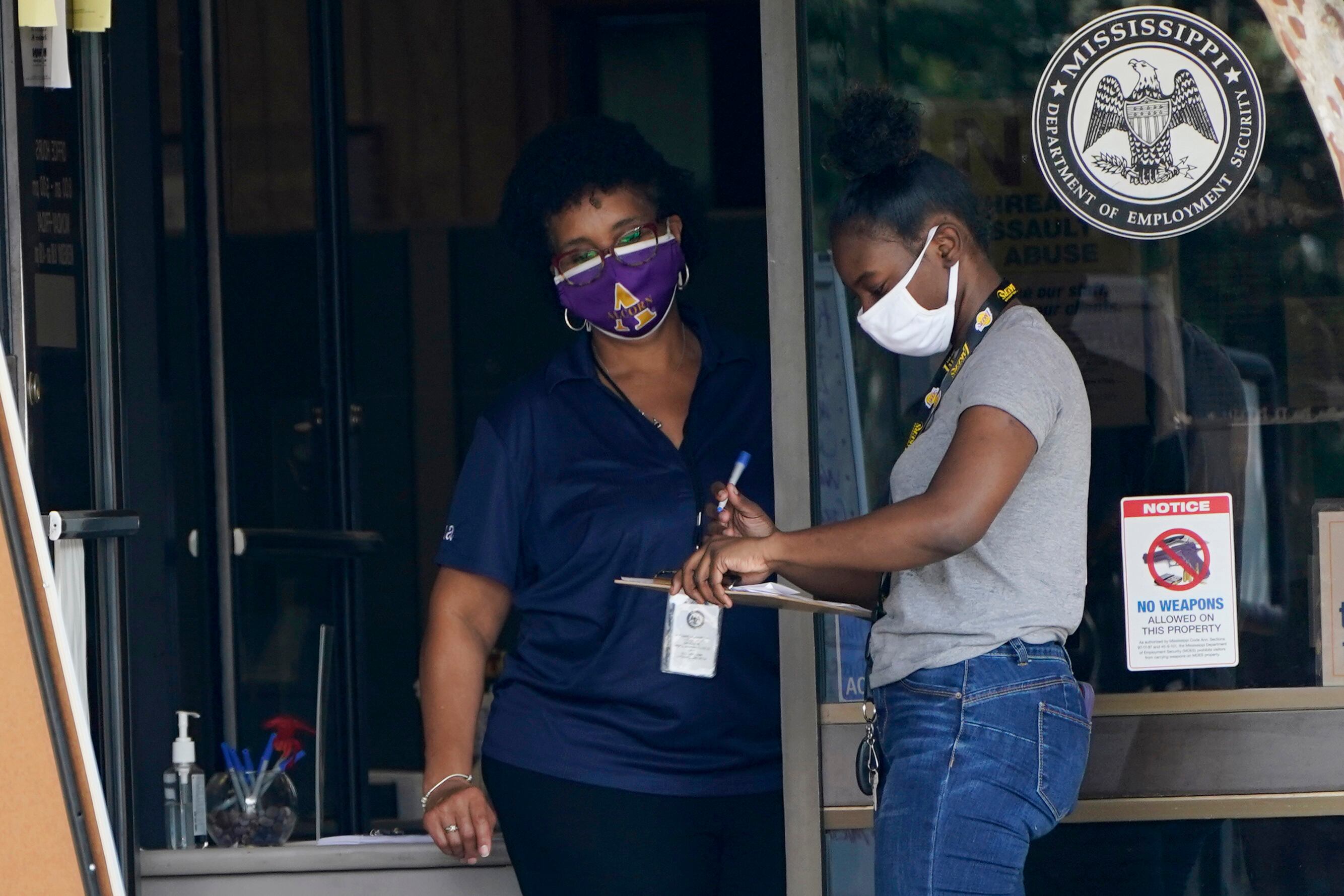
n employee of the Mississippi Department of Employment Security WIN Job Center in Pearl, Miss., left, assists a client fill out paperwork, Monday, Aug. 31, 2020. Payroll processor ADP said Wednesday, Sept. 2, that businesses added 428,000 jobs in August, a figure that before the pandemic would have represented a healthy gain. But the increase represents a small slice of the 12 million jobs that have been lost to the spread of the coronavirus.(AP Photo/Rogelio V. Solis)
By Christopher Rugaber
U.S. companies added jobs at a modest pace last month, a private survey found, a sign that while hiring continues, it is only soaking up a relatively small proportion of the unemployed.
Payroll processor ADP said Wednesday that businesses added 428,000 jobs in August, a figure that before the pandemic would have represented a healthy gain. But the increase represents a small slice of the 12 million jobs that have been lost to the spread of the coronavirus.
ADP said the bulk of the gains were at large companies, which added 298,000 jobs. Small businesses with less than 50 employees gained just 52,000 positions, while medium-sized firms — with between 50 and 499 employees — added 79,000 jobs.
"Given the enormous job losses during the Viral Recession, job growth of around 400,000 per month means that it would take years for the labor market to recover from the coronavirus pandemic," Gus Faucher, an economist at PNC, said.
ADP's figures do not include government workers and frequently diverge from the Labor Department's official jobs report. The August jobs report from the government will be released Friday. ADP revised up its July job gain to 212,000, but that is still far below the 1.8 million additional jobs that month reported by the federal government.
Economists forecast that the Labor Department on Friday will report that 1.4 million jobs were added in August, while the unemployment rate is expected to have fallen to 9.8 percent from 10.2 percent, according to data provider FactSet.
Alexander Reed, CFA and CIO for Envisage Wealth, breaks down why he thinks rates could stay higher for longer and why real estate, utilities, and regional banks are sectors to avoid.
Big brands that have relied on TikTok videos to reach younger consumers do not appear to be panicking as they wait to see what happens. But they have started planning.
It's been 15 years since the last fatal crash of a U.S. airliner, but you wouldn't know that from a torrent of flight problems that made news in the last three months.
Abortion opponents want the high court to ratify a ruling from a conservative federal appeals court that would limit access to a medication called mifepristone, which was used in nearly two-thirds of abortions last year.
Annie Chechitelli, chief product officer at Turnitin, breaks down how students and teachers alike can learn from artificial intelligence – while still maintaining academic integrity.
Neiman Marcus Group CEO Geoffroy van Raemdonck talks luxury shopping and TikTok, why the company prefers to be private for now, and the benefits of flexible work arrangements.
Rebecca Walser, founder and CEO of Walser Wealth Management, discusses how geopolitical conditions, the bifurcated economy, and other volatility could weigh on markets.