By Derek Gatopoulos and Ciaran Giles
Tourists in central Athens huddled under mist machines and zoo animals in Madrid were fed fruit popsicles Thursday as southern Europeans suffered through a heat wave that was projected to get much worse heading into the weekend.
Temperatures in parts of Mediterranean Europe were forecast to reach as high as 45 degrees Celsius (113 F) starting Friday.
The high-pressure system affecting the region, which crossed the Mediterranean from north Africa, has been named Cerberus after the three-headed dog in ancient Greek mythology who guarded the gates to the underworld.
Officials in several countries were preparing emergency measures, cellphone alerts and adjustments to staffing levels.
In Athens and other Greek cities, working hours were changed for the public sector and many businesses to avoid the midday heat, while air-conditioned areas were opened to the public.
“It’s like being in Africa,” 24-year-old tourist Balint Jolan, from Hungary, told The Associated Press. “It’s not that much hotter than it is currently at home, but yes, it is difficult.”
Cerberus is being tracked by the European Space Agency, which warned that the heat wave will also be felt in parts of northern Europe.
“Italy, Spain, France, Germany and Poland are all facing a major heat wave, with temperatures expected to climb to 48 degrees Celsius on the islands of Sicily and Sardinia – potentially the hottest temperatures ever recorded in Europe” the agency said Thursday.
In the Arctic, a record high temperature of 28.8 degrees Celsius (83.8 degrees F) was measured at Slettness Fyr on the northern tip of the Norway, Norwegian meteorologists said Thursday. This tops a previous record from July 1964 when the thermometer reached 27.6 degrees Celsius (81.7 degrees F). The United Nation’s World Meteorological Organization on Monday said global temperatures recorded in early July were among the hottest on record. As Spain's politicians fret about how the high temperatures might affect turnout in a general election this month, animals in Madrid’s Zoo were being treated this week to frozen food to cool off amid the sweltering heat. Zookeepers fed pandas and bears with watermelon popsicles, seals with frozen sardines and lions with frozen buckets of meat. Television ads in Italy reminded city dwellers to look after their pets and check in regularly with elderly relatives. Authorities were awaiting an autopsy of a 44-year-old roadworker who collapsed near Milan and later died in hospital. Storms overnight felled trees in an Italian region bordering Slovenia and Austria, while baseball size hail fell in valleys near Bergamo in Lombardy.
Rainfall provided some respite in Croatia, but evacuation orders were issued in several areas as a wildfire swept through coastal areas of the country. In North Macedonia, the high heat triggered a spike in emergency calls for health assistance, while residents in Kosovo, which is also landlocked, flocked to an artificial beach near the capital Pristina. Authorities in Cyprus urged the Mediterranean island's residents to avoid forest areas where wildfires could be caused unintentionally.
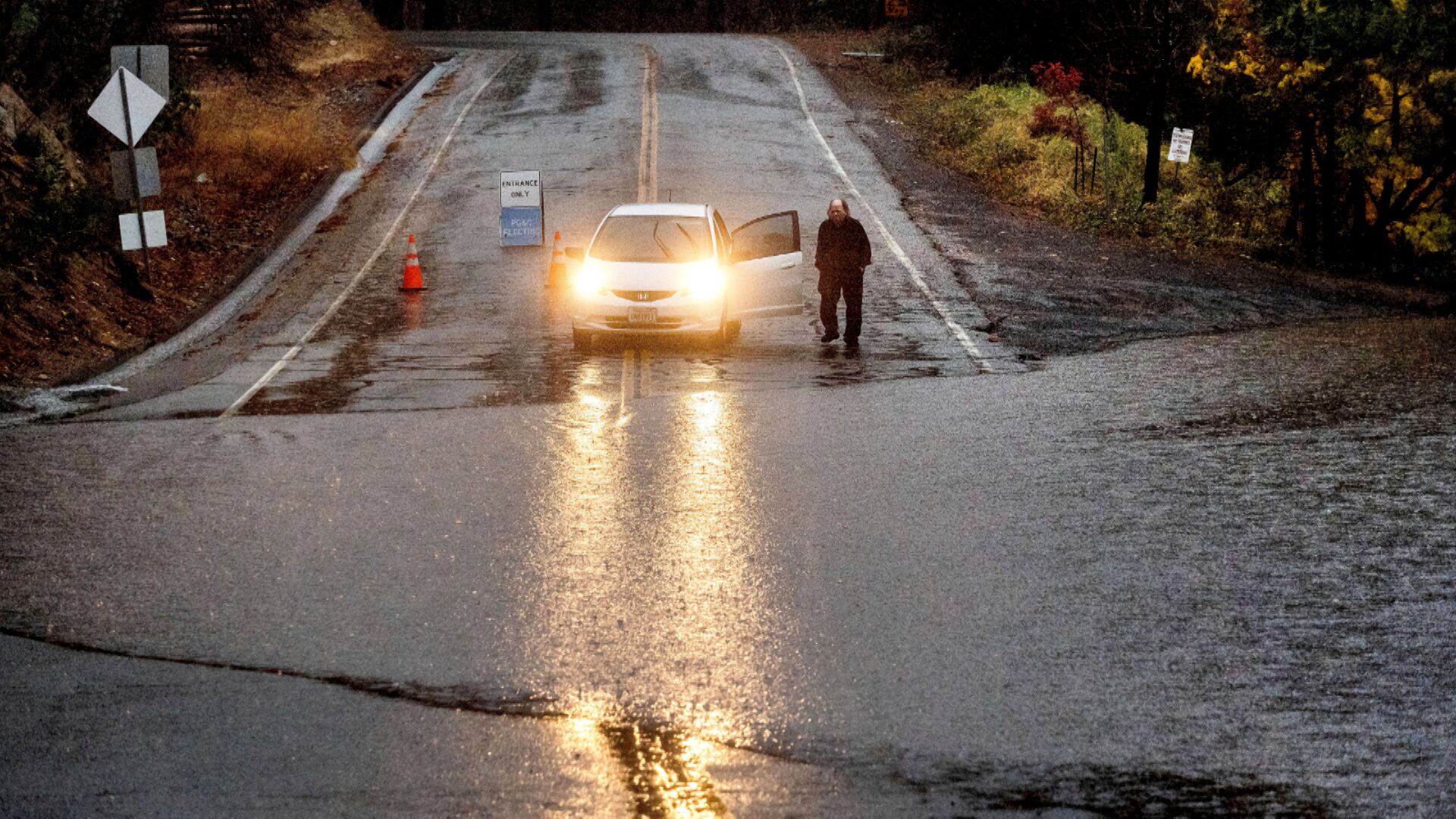
Meanwhile, emergency services in nearby Turkey also grappled with simultaneous fires and floods. Flooding in the northern Black Sea coast claimed three lives. In the southwest Milas region, 26 water-dropping planes and helicopters helped 600 firefighters contain a wildfire. “While there are heat and fires on one side of the country, there are floods and deluges on the other,” Turkish Deputy Agriculture Minister Veysel Tiryaki said Thursday. "In our country as well as around the world, we are struggling with climate change." ___ Ciaran Giles reported from Madrid. Jovana Gec on Belgrade, Serbia Srdjan Nedeljkovic in Athens, Menelaos Hadjicostis in Nicosia Cyprus, Jan M. Olsen in Copenhagen, Denmark, Andrew Wilks in Ankara, Turkey, Konstantin Testorides in Skopje, North Macedonia, Colleen Barry in Milan, Italy and Florent Bajrami in Pristina, Kosovo contributed.