By Derek Gatopoulos and Ciaran Giles

Tourists in central Athens huddled under mist machines and zoo animals in Madrid were fed fruit popsicles Thursday as southern Europeans suffered through a heat wave that was projected to get much worse heading into the weekend.

Temperatures in parts of Mediterranean Europe were forecast to reach as high as 45 degrees Celsius (113 F) starting Friday.

The high-pressure system affecting the region, which crossed the Mediterranean from north Africa, has been named Cerberus after the three-headed dog in ancient Greek mythology who guarded the gates to the underworld.

Officials in several countries were preparing emergency measures, cellphone alerts and adjustments to staffing levels.

In Athens and other Greek cities, working hours were changed for the public sector and many businesses to avoid the midday heat, while air-conditioned areas were opened to the public.

“It’s like being in Africa,” 24-year-old tourist Balint Jolan, from Hungary, told The Associated Press. “It’s not that much hotter than it is currently at home, but yes, it is difficult.”

Cerberus is being tracked by the European Space Agency, which warned that the heat wave will also be felt in parts of northern Europe.

“Italy, Spain, France, Germany and Poland are all facing a major heat wave, with temperatures expected to climb to 48 degrees Celsius on the islands of Sicily and Sardinia – potentially the hottest temperatures ever recorded in Europe” the agency said Thursday.

In the Arctic, a record high temperature of 28.8 degrees Celsius (83.8 degrees F) was measured at Slettness Fyr on the northern tip of the Norway, Norwegian meteorologists said Thursday. This tops a previous record from July 1964 when the thermometer reached 27.6 degrees Celsius (81.7 degrees F). The United Nation’s World Meteorological Organization on Monday said global temperatures recorded in early July were among the hottest on record. As Spain's politicians fret about how the high temperatures might affect turnout in a general election this month, animals in Madrid’s Zoo were being treated this week to frozen food to cool off amid the sweltering heat. Zookeepers fed pandas and bears with watermelon popsicles, seals with frozen sardines and lions with frozen buckets of meat. Television ads in Italy reminded city dwellers to look after their pets and check in regularly with elderly relatives. Authorities were awaiting an autopsy of a 44-year-old roadworker who collapsed near Milan and later died in hospital. Storms overnight felled trees in an Italian region bordering Slovenia and Austria, while baseball size hail fell in valleys near Bergamo in Lombardy.

Rainfall provided some respite in Croatia, but evacuation orders were issued in several areas as a wildfire swept through coastal areas of the country. In North Macedonia, the high heat triggered a spike in emergency calls for health assistance, while residents in Kosovo, which is also landlocked, flocked to an artificial beach near the capital Pristina. Authorities in Cyprus urged the Mediterranean island's residents to avoid forest areas where wildfires could be caused unintentionally.

Meanwhile, emergency services in nearby Turkey also grappled with simultaneous fires and floods. Flooding in the northern Black Sea coast claimed three lives. In the southwest Milas region, 26 water-dropping planes and helicopters helped 600 firefighters contain a wildfire. “While there are heat and fires on one side of the country, there are floods and deluges on the other,” Turkish Deputy Agriculture Minister Veysel Tiryaki said Thursday. "In our country as well as around the world, we are struggling with climate change." ___ Ciaran Giles reported from Madrid. Jovana Gec on Belgrade, Serbia Srdjan Nedeljkovic in Athens, Menelaos Hadjicostis in Nicosia Cyprus, Jan M. Olsen in Copenhagen, Denmark, Andrew Wilks in Ankara, Turkey, Konstantin Testorides in Skopje, North Macedonia, Colleen Barry in Milan, Italy and Florent Bajrami in Pristina, Kosovo contributed.

Share:
More In Science
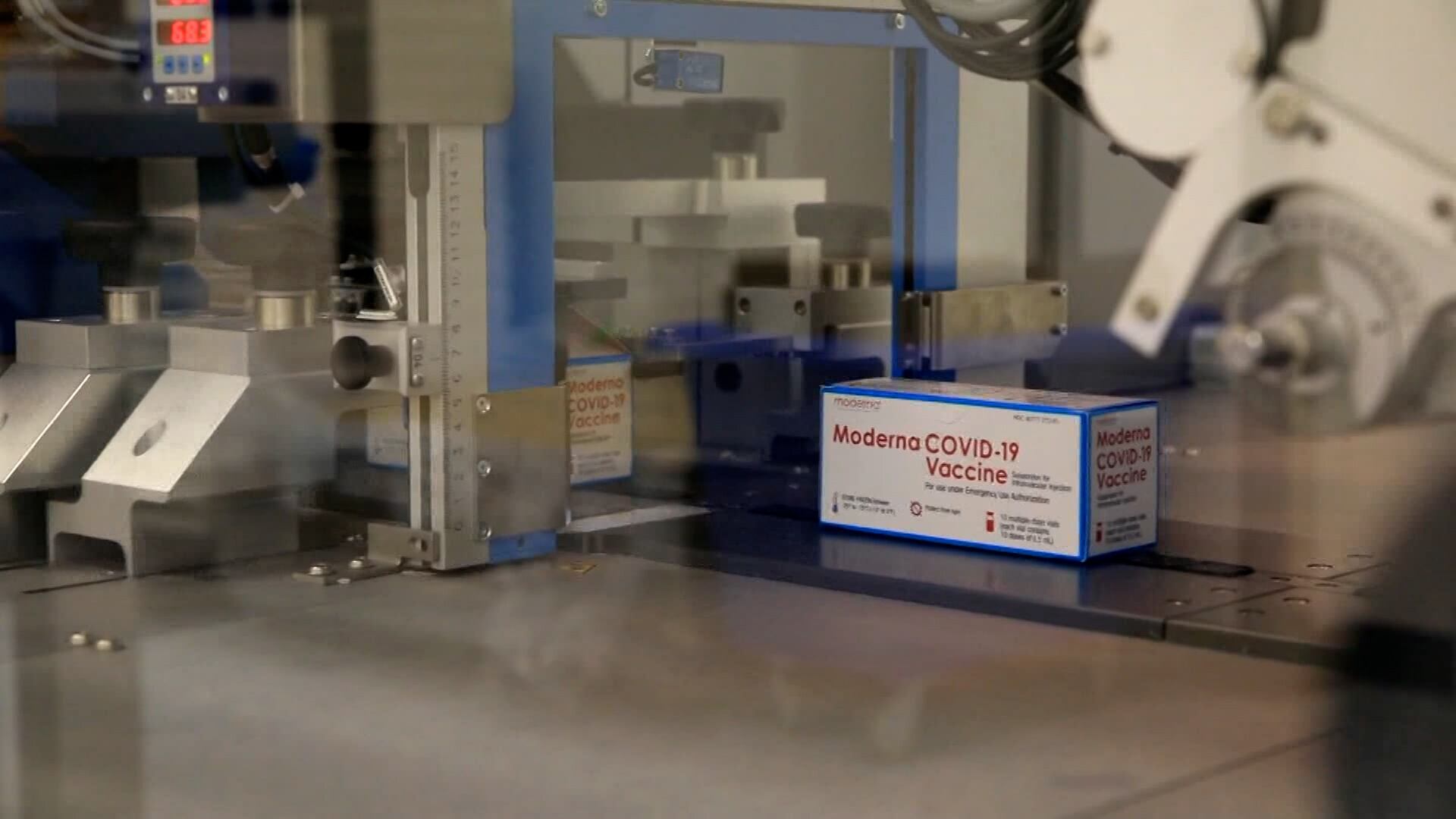
Moderna Seeks FDA Authorization of Omicron-Specific Booster
The pharmaceutical giant Moderna says its updated 'bivalent' booster shot provides a stronger immune response against the Omicron variant of COVID-19 specifically. This week, Moderna plans to submit preliminary data to U.S. health officials in the hopes that its new booster will be available later this summer. Dr. Sampson Davis, emergency medicine physician, joins Cheddar News to discuss.
JWST's Gregory Robinson Expects to See 'Universe Different' in New Images
NASA has announced that the first official full-color images will be beamed back to Earth from the James Webb Telescope on July 12. Gregory L. Robinson, the director of the James Webb Space Telescope Program in the NASA Science Mission Directorate, joined Cheddar News to discuss the anticipated image drop. “We expect to see the universe different," he said. "Webb will allow us to see much, much clearer and deeper into the universe."
Human Evolution Speeding Up; Advancements in Genetic Engineering
On this episode of Cheddar Reveals, Professor Laurence Hurst, Director of The Milner Centre for Evolution, discusses the mystery of human evolution that's still baffling scientists: why are humans still evolving, and why has the process sped up? Neville Sanjana, faculty member at NY Genome and New York University, breaks down the latest innovations in CRISPR genetic engineering and its applications from 'designer babies' to curing genetic conditions and diseases; Cheddar gets a look at Curiosity Stream's 'The Butterfly Effect.'
Editing the Human Genome
Neville Sanjana, faculty member at NY Genome and New York University, joins Cheddar Reveals to break down the latest innovations in CRISPR genetic engineering and its applications from 'designer babies' to curing genetic conditions and diseases.
Why Humans are Evolving Faster Than Ever Before
Professor Laurence Hurst, Director of The Milner Centre for Evolution, joins Cheddar Reveals to discuss the mystery of human evolution that's still baffling scientists: why are humans still evolving, and why has the process sped up?
'Designed to Disappear': Loliware's Seaweed-Based Straws Offer Eco-Friendly Alternative
It can be tough to make sustainable choices, and even harder when sustainable materials don't hold up. Loliware has a solution to the plastic straw problem: its seaweed-based straws are stronger than paper alternatives and once used, can be composted and return to the earth or sea without causing harm. Sea Briganti, CEO of Loliware, joins Closing Bell to discuss the tech behind the straws, new product launches, and more.
Anja Health Raises $4.5 Million to Offer Parents Technology to Freeze Umbilical Cord's Stem Cells for Future Disease Treatment
Umbilical cord blood banking platform Anja Health raised $4.5 million dollars in a seed round led by Seven Seven Six, a venture capital firm founded by Reddit co-founder Alexis Ohanian. Anja Health offers a personalized, doctor-backed cord blood bank, which lets new parents freeze stem cells from their child's umbilical cord so they can be used to treat diseases in the future. It's a process Anja has called 'Hollywood's best-kept secret,' as celebrities like Kylie Jenner, Serena Williams, and more have all banked their umbilical cord blood. Kathryn Cross, the founder of Anja Health, joins Cheddar News' Closing Bell to discuss.
Calls Grow for Social Media to Flag Threats in Wake of School Shooting
After learning that the suspect in the Uvalde school shooting posted about his intentions on Facebook, activists are urging social networks to make changes. Lena Derhally, a licensed psychotherapist and author of "The Facebook Narcissist," joined Cheddar News to discuss the role social media plays in school shootings. "They're not really invested in taking down hateful content," she said about social platforms."In regards to the shooting, it was 15 minutes before that actual threat. It would be pretty hard for a social media company to trace that threat that quickly. But what they can do better is take down threats and hateful content much faster and more than they're doing now."
Load More